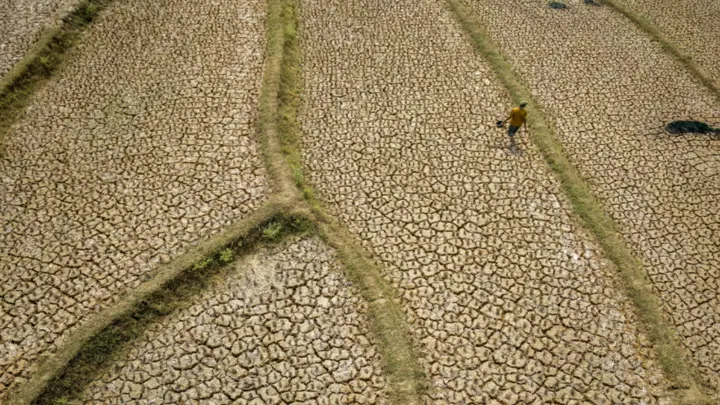
Countries across Asia are preparing for drought, extreme heat, wildfires, typhoons, floods and food shortages from the effects of a possibly strong El Nino late this year and in 2027. Alongside the human-made climate crisis, unusually warm sea conditions in the tropical Pacific make it likely that this El Nino will be a strong one.
A strong El Nino is not simply a matter of rising temperatures or a single oceanic event; it can create several risks at once, including for agriculture, water, food, health, flooding, wildfires and cyclones. Through the interaction of atmosphere and ocean it has far-reaching effects on weather, rainfall, temperature, agriculture, health and the economy worldwide.
The World Food Programme (WFP) has warned that about 50 million people could face severe food shortages because of these extreme weather conditions. The United Nations secretary general, Antonio Guterres, said this month that El Nino appeared to be growing stronger before people’s eyes.
China has begun a 100-day campaign to deal with the risk of extreme weather. Measures are being taken to protect crops in opposite conditions such as drought and excessive rain. Beijing has plans to improve early warning and monitoring systems. In July the Chinese government adopted a national plan to produce a “climate risk map” identifying areas of cities at risk from flooding and extreme heat.
Hong Kong has also changed workplace policy to deal with extreme heat, after record temperatures on August 9. Employers have been told to change working hours and provide cooling equipment and rest breaks during periods of excessive heat. Provision has also been made to take action against employers who fail to give that support.
Taiwan is treating possible extreme weather as an emergency. An exercise was held at the start of September on the basis of three consecutive days of temperatures above 40 degrees Celsius. It rehearsed conditions including power and water supply failures, disruption to rail services, air conditioning systems breaking down and widespread heatstroke. The government is also testing an online platform called Cool Map to get people at risk to cool places.
The effects of El Nino are already visible in South Asia. In some parts of India the shortfall in monsoon rainfall in September has reached about 50 percent, raising concern about important crops such as rice, pulses, cotton and maize. Food prices are feared to rise further because of the possible shortfall in production.
The Indian government has taken steps to increase water conservation and water harvesting infrastructure in more than 350 districts at risk. Farmers are being encouraged to grow short-duration crops that need less water, such as pulses and millet.
The situation is harder in Sri Lanka, which is facing its worst drought in a decade. With several important reservoirs drying up, more than 160,000 people face a shortage of drinking water. The tourist area of Yala national park has been closed. Water is being brought in by tanker there to supply wildlife including leopards, elephants, crocodiles and deer. Thousands of fish have also died in the Mullaitivu lagoon in the north-east of the country for lack of fresh water.
Concern about food production is also growing in South-East Asia. Air pollution is rising in Malaysia and Indonesia from the smoke of seasonal wildfires. Alongside that, reports say regional rice production could fall by 8 to 10 percent. The Philippines, Malaysia and Indonesia are particularly at risk from rising food prices. Farmers in those countries are being encouraged to manage water, change crop timings and use environmentally friendly farming methods.
South Korea has also seen major changes in the weather. July was the driest on record in the south-east of the country. Unusually heavy rain followed. Reports have also described farmers’ potatoes effectively cooking underground because of the severe heat. The country’s weather agency has changed its heatwave warning system for the first time in 18 years, adding a new top alert level to order the halting of non-essential outdoor work when the felt temperature reaches 38 degrees Celsius.
Japan is also preparing for possibly strong typhoons. The combined effect of El Nino and human-made global warming is increasing extreme heat and humidity in the country. In July Japan used the term “kokushobi”, or day of cruel heat, at government level for the first time, for temperatures above 40 degrees Celsius. Now, as the summer heat eases, the country is preparing for possibly strong typhoons.
Japanese authorities have advised people to follow official evacuation instructions during cyclones and to store food and water in advance. Plans have also been made to close several vulnerable underpasses on national highways in advance during heavy rain.