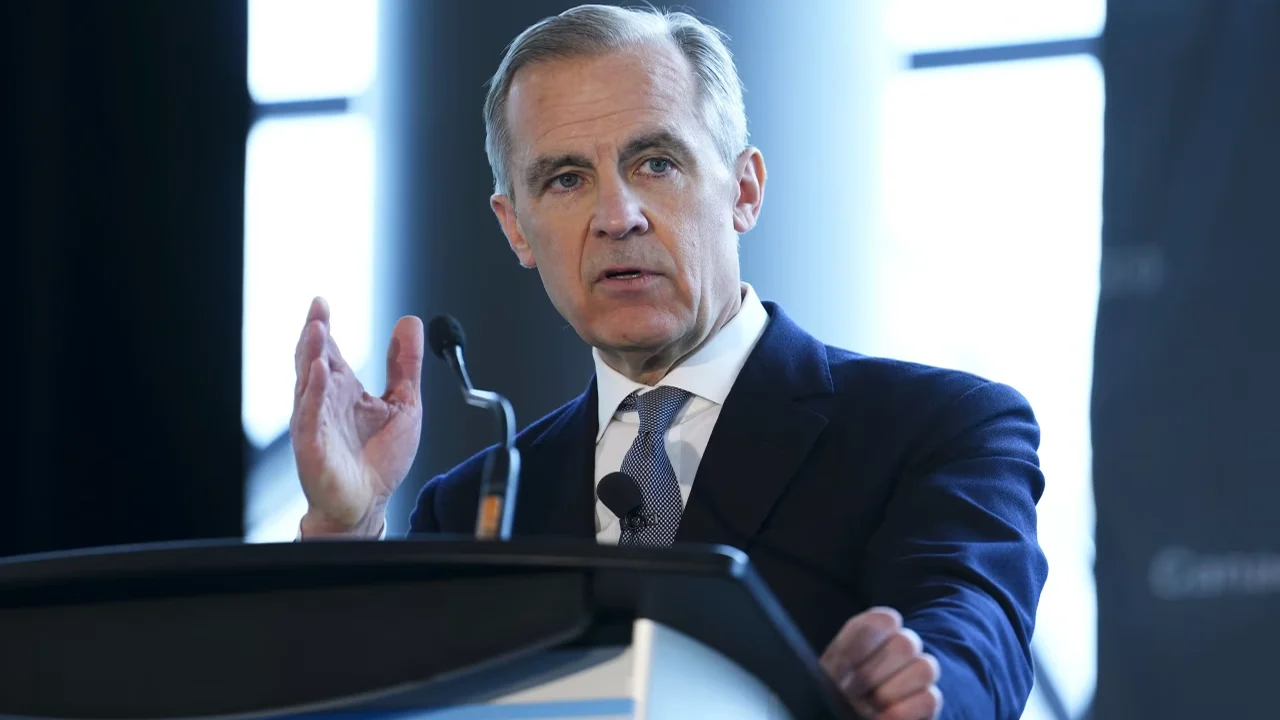
Canadian Prime Minister Mark Carney has announced retaliatory tariffs matching the value of new U.S. tariffs on Canadian goods, after last-minute trade talks with the United States collapsed. Ottawa said the tariffs would be imposed on a “dollar-for-dollar” basis.
According to a BBC report, Canada decided to retaliate immediately after the United States implemented new tariffs on Canadian goods starting Saturday at midnight. Carney had announced a suspension of talks with the United States on Friday night, just before the deadline set for the negotiations expired.
Carney said the terms proposed by the United States were altered late in the talks in a way that Canada considered unfair and economically unreasonable. He said such last-minute changes had raised questions about the reliability of any prospective agreement.
Representatives of the two countries had been engaged in intensive trade talks since last July. U.S. President Donald Trump had earlier threatened a 50 percent tariff on about $20 billion worth of Canadian goods, before temporarily suspending that tariff and saying the two countries were close to a mutually beneficial deal.
However, just minutes before the deadline expired, Carney said that although progress had been made in the talks, it had not produced enough of a compromise to meet Canada’s expectations. He then ordered the negotiators to return to Ottawa.
Washington’s counter-accusation
After Canada’s announcement, U.S. Trade Representative Jamieson Greer alleged that Canada ultimately refused to finalize a deal on the terms both sides had agreed to earlier in the week.
He claimed the United States had offered Canada the most favorable tariff terms among its major trading partners, but that new demands from Canada and its retreat from several earlier commitments destroyed the understanding reached in the talks.
Earlier in the talks, the discussion had included lowering U.S. tariffs on Canadian steel and aluminum from 50 percent to 25 percent, and cutting the 25 percent tariff on Canadian cars to 15 percent. In exchange, Canada’s provinces were to move to lift their bans on the sale of U.S. liquor.
Rising trade tension between the two countries
Trade tension between the two neighboring countries has persisted since Trump became U.S. president for a second term. With the latest round of talks also having failed, there are concerns the situation could become even more complicated.
After the talks collapsed, the Trump administration is planning to impose fresh 50 percent tariffs on various Canadian goods using the Tariff Act of 1930, a Depression-era law. Products that could be affected include wine, dairy goods, cement, apparel and hockey equipment. Existing U.S. tariffs on Canadian steel, aluminum, cars and lumber will also remain in place.
Doug Ford, premier of Ontario, Canada’s largest province, has backed the decision to impose retaliatory tariffs. In his words, the U.S. tariffs should be answered with tariffs of their own, dollar for dollar.
Several Canadian provinces had banned the sale of U.S. liquor last year in response to U.S. tariffs. Washington has been pushing for those bans to be lifted.
A recent opinion poll in Canada found that about 36 percent of citizens favor retaliating against U.S. tariffs, while about 30 percent believe the government should stick to negotiations.
However, if the retaliatory tariffs take effect, tensions between the U.S. and Canada could rise further. U.S. Trade Representative Jamieson Greer also warned that the United States will not accept the imposition of retaliatory tariffs.
বাংলায় মূল প্রতিবেদন পড়ুন · Read the original Bengali report