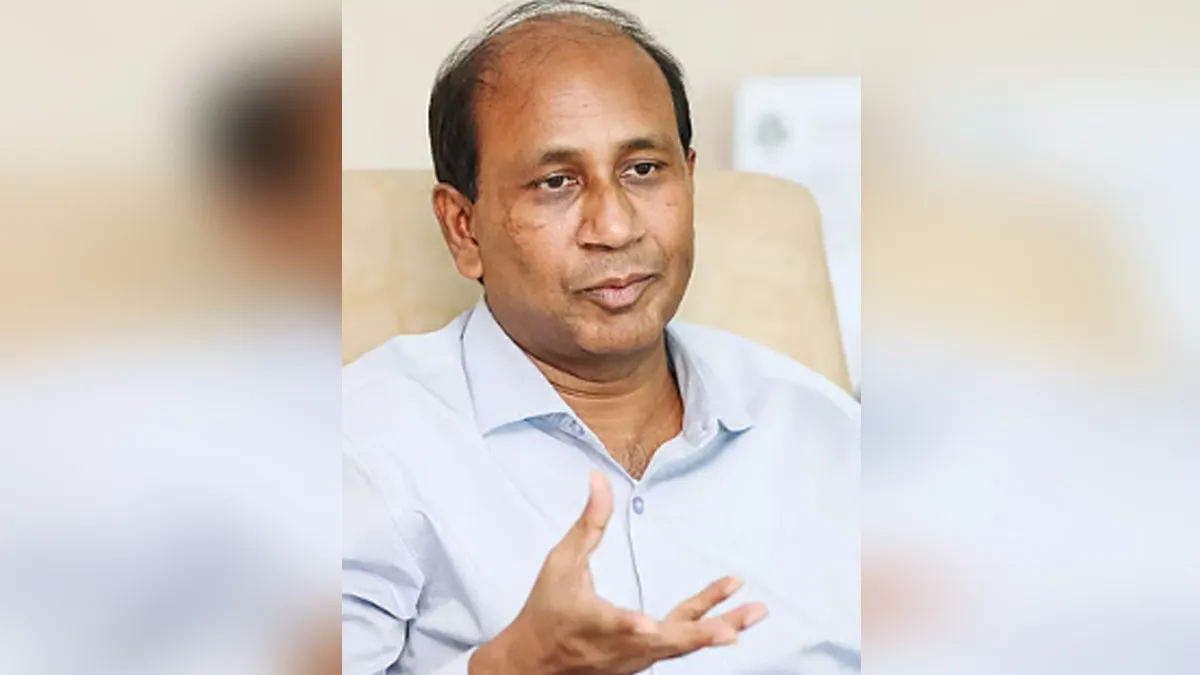
Monirul Islam, who headed the Special Branch (SB) of Police at the time, has claimed that he warned then-Prime Minister Sheikh Hasina as early as 2023 that efforts were under way to install a government led by Dr Muhammad Yunus. The former police official made the claim in an interview on journalist Masuda Bhatti’s YouTube channel.
Asked by Bhatti about a report he had submitted in March 2023 outlining a possible change of government in 2024, and whether it named who might be involved, Monirul Islam said: “Yes. And many of the people named in that report went on to become advisers. Some became chairmen of various commissions, chairpersons, chairmen, or members. Others didn’t, but names of editors of one or two newspapers were also on that list. Later, though, they too weren’t spared in the end. They too became targets of this tainted government, these corrupting agents. Their names were on that list as well.”
He continued: “In 2023, when visa sanctions were imposed on various individuals, this was around late May, when the US government, or the US Embassy in Dhaka, issued them, a day or two before that, I submitted another report saying something was coming. We were aware of this, including which countries might be involved. That report, somehow, remained on one of my devices. I later cross-checked it. Since this dates to 2023, I was able to retrieve the report around September or October 2024. Since the copy was a draft, I compared it, and I’d say it matched roughly 90 percent of what actually happened.”
Asked what the government’s response was after that report, the former police official said: “Since I’m no longer in government service, I can say this now. That first report I mentioned, from March, I handed directly to the honorable prime minister at the time. She read it after I gave it to her personally. What’s interesting, and worth sharing, is that the report noted Dr Yunus, due to his age, was unlikely to lead directly himself. At the time, my assessment was that it would be a ‘national government.’ What actually emerged was an interim government, but everything else lined up. The report suggested that, because of his age, he might not head it himself, and named two or three others as possible representatives who could be made head of this national government, as a kind of depoliticization. The honorable prime minister read the entire report, I believe it was seven or eight pages, something like a research paper. She read the whole thing. When she got to that part, she told me: ‘You don’t know it, a man as greedy as Yunus, power-hungry. He will want to be it himself, he’ll want to become it himself.’ I was a bit taken aback at the time, because I had never seen Dr Yunus in person. I had never spoken with him. I never had the chance to attend any of his talks or seminars. I had only observed him from a distance. But at the time, I genuinely hadn’t recognized who he truly was. The honorable prime minister told me then: ‘You don’t know him, a man as greedy as him won’t give up his hunger for power until the day before he dies. Watch, that will turn out to be the crux of it, if something like this happens.’ That comment has stayed with me ever since, that Prime Minister Sheikh Hasina alone, it seems, truly understood Dr Yunus: that he was, as she put it, a pathological liar.”
Asked what action the government took after she learned of the report, he said: “At the time, she fully endorsed the report and acknowledged most of its points. It was a prediction that the 2024 election itself might not be allowed to happen, that this would occur either before or after that election. The election did ultimately take place, and this kind of attempt happened before it.”
He continued: “What we later cross-checked was the BNP-Jamaat rally of October 28, 2023. That was targeted, because it was possible to bring it under control. Because it was contained, that plan, that blueprint, wasn’t carried out at the time. But a problem arose afterward: the government, the ruling party, and the entire government machinery, including the intelligence agencies, grew somewhat complacent once the election had taken place and a new government had been formed.”
Asked by Bhatti whether they had “let their guard down,” he said: “It’s probably fair to say we let our guard down. Even when a movement does happen, historically we’ve seen it tends to happen three years in, in the fourth or final year of a term, that’s the pattern we’d observed. That kind of complacency had crept in. Because of that complacency, many said at the time that the government would hold on. But we couldn’t make the pieces fit. Looking back later, what we found was that this process actually began back in 2019. What’s called the ‘deep state,’ this so-called deep state, isn’t official, exactly, and yet it is, in a way. This process, as such, escalated from 2026 onward. We saw it fail around seven or eight years in. After it failed, they concluded that since the Awami League government needed to be changed, and they had believed it would change in 2018 through the election, they realized after 2018 that this government could not be removed through elections.”
The former police official said: “Through their own research and observation, and with their people scattered across various levels, the deep state concluded that no political party could bring down the government through conventional means, and that a conventional movement wouldn’t succeed either. That’s why they treated two earlier movements as test cases: the Safe Roads movement, which put the government in a difficult spot, and later the 2018 quota-reform movement. It was then that the deep state, and those acting as their agents within Bangladesh, concluded that if any change was to be brought about, it would have to be done by mobilizing students and young people.”
Describing the lead-up to the August 5 mass uprising, Monirul Islam said: “Around the 26th or 27th, as far as I recall, when Mirza Fakhrul announced the one-point movement demanding the government’s fall, the movement wasn’t being led by students at that point. By then, the army had become largely inactive.”
Asked how, if the SB had already picked up signs of a plot to topple the government, the state collapsed so quickly on August 5, he said: “This, in truth, has to be attributed to the deep state’s influence, including within the Bangladesh Army itself. There was a deep state within the army too, since the army, compared with the administrative service, police, or judiciary, is a relatively more institutionalized organization in Bangladesh. A powerful organization. After the fifth, even school headmasters were changed. But the chiefs of all three services remained in place. The director general of the Border Guard Bangladesh (BGB), who was reportedly the most eager and active in suppressing the movement, also remained in his post. In other words, a deep state operates within both the retired and serving ranks. They have a kind of mini deep state of their own, one that doesn’t always work for the government, it sometimes works against it too. They operate in coordination with the larger deep state.”
He added: “What we saw was that a section within the army effectively stabbed the government’s plan to suppress the movement in the back.”
বাংলায় মূল প্রতিবেদন পড়ুন · Read the original Bengali report