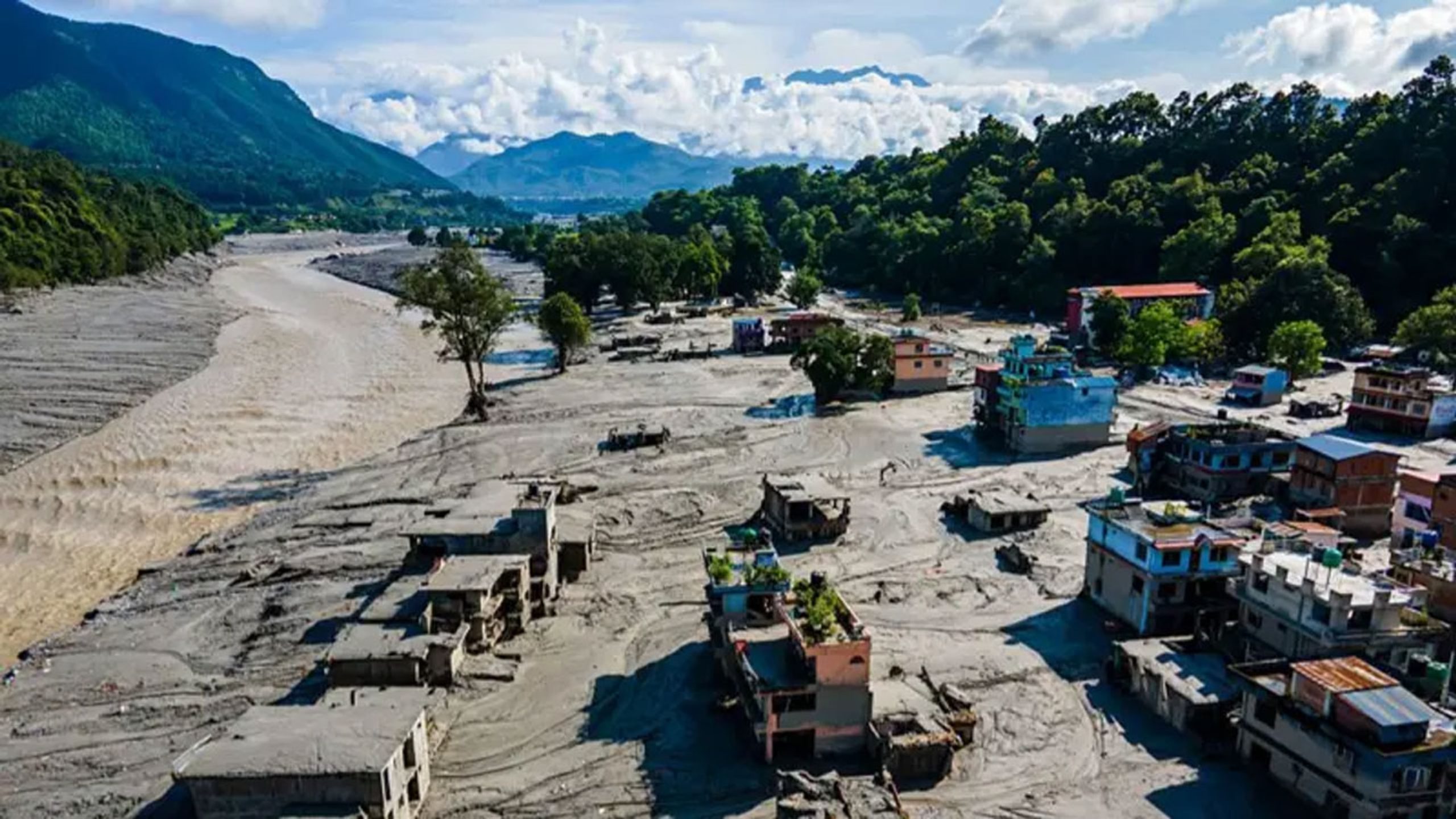
More than 1,300 deaths have been confirmed in devastating flooding and landslides that swept down from the Himalayas. More than 5,500 people remain missing. Even after 12 straight days of rescue operations, hope of finding them alive is fading fast. Nepal has asked the United Nations for $20 million in compensation for the disaster. At the same time, the country has called on the world’s biggest polluters to “wake up.”
The British daily The Guardian reported the news on Sept. 8. In an interview with the paper, Nepal’s Foreign Minister Shishir Khanal said it is essential for the world’s major economies to step up to help Nepal recover and rebuild after the disaster. In his words, Nepal’s contribution to climate change is negligible, yet it is bearing the brunt of its devastating consequences. Scientists believe the climate crisis played a role in this flood. In late August, part of a glacier running through Chinese-controlled Tibet and Nepal partially melted and collapsed. Devastating landslides and flash floods followed.
Nepal contributes less than 0.1% of global greenhouse gas emissions. By contrast, neighboring India and China are among the world’s largest emitters. The Himalayan mountain range, spanning India, China, Nepal and Bhutan, is warming about 50% faster than the global average. According to U.N. figures, Nepal’s mountains lost nearly a third of their ice in just over 30 years, through 2023. Khanal said this disaster is far more devastating than the region’s regular monsoon flooding. The scale of the damage, he said, is comparable to the 2015 earthquake. Describing the situation, he said, “It felt like a tsunami was rushing down from the Himalayas.” In some places, waves 60 to 70 feet high, carrying mud, rocks and debris, rushed forward at speeds of nearly 180 kilometers per hour. Towns, villages and highways were wiped out; some areas remain cut off.
Nepal’s finance and environment ministries have jointly written to the U.N.’s “Loss and Damage” fund requesting $20 million. The fund was established under the 2022 Paris climate agreement. Khanal acknowledged, though, that this amount is “clearly not enough” given the scale of the damage. Total losses from the flooding could exceed $5 billion. More than 20,000 homes and major highways may need to be rebuilt. Some villages on vulnerable riverbanks have been completely swept away and may need to be relocated to safer, higher ground. Khanal initially called on India and China specifically to come forward with help. But he later said, “This isn’t about blaming any one country; we all need to work together.”
The U.N. fund itself is also facing a major funding shortfall. About 119 countries have requested a combined $2.8 billion, but the international community has so far provided only about $400 million. The United States has contributed $17 million.
Khanal’s remarks on climate change deniers were also sharp: “There are people who deny even that the Earth is round.” He said Nepal’s appeal isn’t just about compensation; it’s a “wake-up call” for building stronger systems to stand by the world’s small and vulnerable countries.