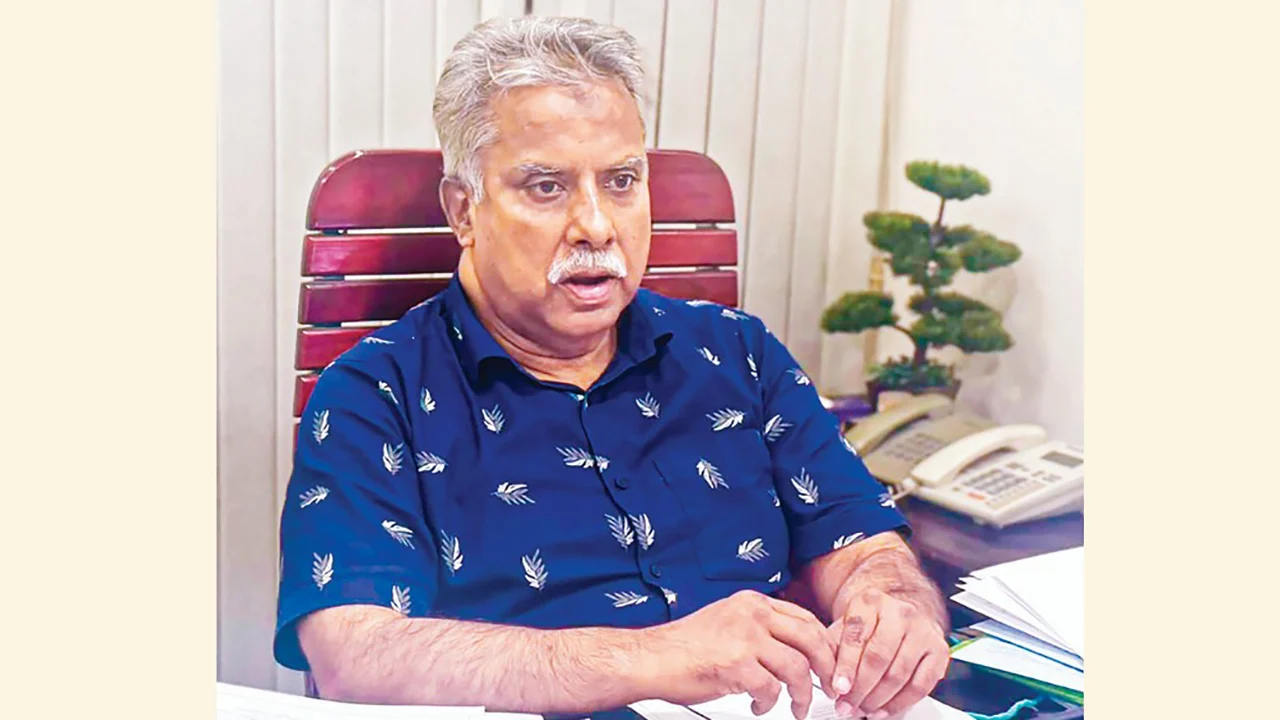
Md Fazlul Haque, a former president of the Bangladesh Knitwear Manufacturers and Exporters Association (BKMEA), has taken charge as administrator of the country’s top trade body, the Federation of Bangladesh Chambers of Commerce and Industry (FBCCI). During his time leading BKMEA, he made significant contributions to raising the global image and competitiveness of the country’s garment industry, particularly the knitwear sector. In a recent interview, he spoke about the FBCCI role and the current state, export prospects and future course of the garment industry.
On the responsibility given to him as FBCCI administrator, Fazlul Haque said he would make his utmost effort to properly carry out the task the government had given — restoring elected business leadership to the FBCCI through a fair and impartial election within 120 days. He said he hoped for the cooperation of federation members, the business community and all concerned parties.
Comparing the garment sector today with his time as BKMEA president, he said that when he left that role about 16 years ago, total garment exports were $11–12 billion, and that they had since grown several times over. The biggest change had come in knitwear: thanks to strong backward linkage, most fabric was now made domestically, making quality control easier and saving 20 to 30 days of lead time compared with woven products. But after Rana Plaza, improved compliance, safety and workplace standards had also raised entrepreneurs’ costs, he said.
On the sector’s biggest challenges, he said it should be called not merely a crisis but a multi-layered challenge. Global demand had fallen; new US tariff policy and the war in the Middle East had heightened uncertainty; and energy and transport costs were rising. As living costs rose for consumers in developed countries, demand for clothing was falling. At home, there was weakness in the banking sector, high interest rates, a dollar shortage and uncertainty in energy supply. Export growth had slowed under the combined effect of an international downturn and domestic weaknesses, he said.
On global competition and expanding into new markets, he said it was not enough to worry only about tariffs. Competitor countries such as India, Vietnam and China were moving ahead on price, marketing and service, he said, and Bangladesh needed to raise productivity, quality and the ability to deliver quickly. Consistent effort was also needed to build new markets. As BKMEA president, he recalled, after nearly a year of seminars, business meetings and exchanges of delegations targeting Japan, 63 Japanese buyers had been brought to Bangladesh for business matchmaking, boosting exports to that market. Rather than scattered efforts in many countries at once, he said, work should focus steadily on one or two promising markets each year.
On coping with high interest rates, the energy crisis and production-cost pressures, he said many firms in competitor countries got loans at 4 to 5 percent interest, while entrepreneurs in Bangladesh had to pay about 15 percent, on top of import, transport and energy costs. Without uninterrupted gas and electricity, timely production and delivery became difficult, which could affect buyers’ confidence. So the energy supply had to be secured, interest rates lowered, port and communications efficiency improved and business complications reduced, he said.
On the industry’s future prospects, he said the potential was certainly there, but that the government and entrepreneurs had to work in a coordinated way. Alongside raising productivity and technology use, the sector had to move into higher-value and more diverse products. After Bangladesh’s graduation from least-developed-country status, tariff benefits could shrink, he said, so alongside free and preferential trade agreements, the industry’s capacity had to be built up from now. With coordinated preparation, he said, the garment industry could overcome its current challenges and return to a stronger position in future.
বাংলায় মূল প্রতিবেদন পড়ুন · Read the original Bengali report