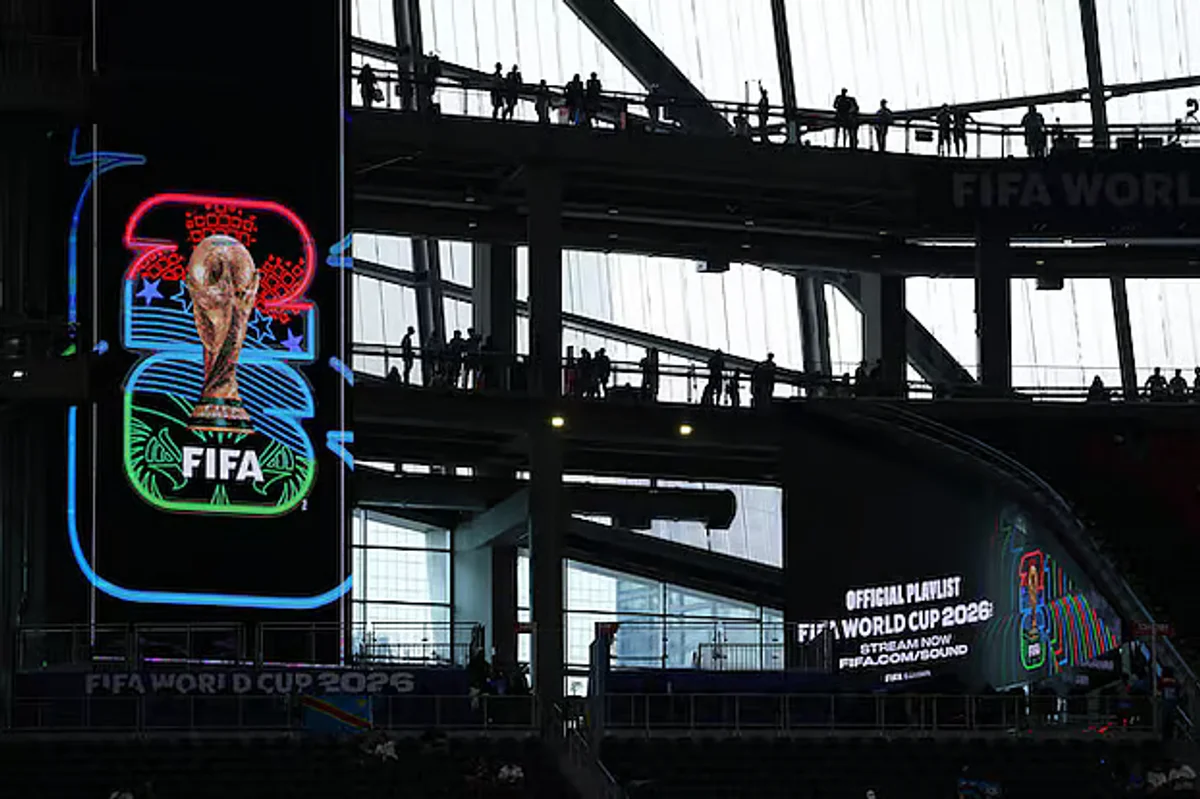
FIFA has been forced to drop a plan to part-privatise the World Cup in the face of fierce opposition. Several countries had threatened to boycott future World Cups over the move, and there had been calls for FIFA president Gianni Infantino to resign. The question is why tech investors became interested in the World Cup — and whether such offers will return.
Artificial intelligence (AI) could radically change how people are entertained and spend their leisure time, and reality is heading that way. Against that backdrop, officials at Thrive Eternal — an affiliate of the venture-capital firm Thrive Capital — wanted to invest in the world’s biggest sporting event and formed a consortium of investors, seeing the football World Cup as part of a new investment strategy in the belief that sport will not only survive the AI revolution but grow more valuable.
Thrive Capital is led by Joshua Kushner, brother of Jared Kushner, son-in-law and adviser to US President Donald Trump. Thrive mainly invests in AI-focused tech companies and is one of OpenAI’s biggest backers. In April this year the New York-based firm launched a new investment arm, Thrive Eternal, aiming to invest in things technology “cannot replicate.”
Sport is at the centre of that strategy, which is where the chance to invest in football arose; taking a stake in the World Cup through FIFA’s proposed Forward Enterprise (FFE) became attractive. Investors believe football’s deep ties to tradition, culture and identity will shield it from AI-driven upheaval, unlike film and music, where technology has already begun to displace people.
Sports analysts say investment interest and commercialisation mean many decisions about football and its fans are now taken “on Wall Street and in Silicon Valley,” a shift that has crept in without much real scrutiny. Whatever people think of FIFA’s governance, they say, private capital in sport is now a reality.
While this World Cup showed clear signs of commercialisation, the BBC has learned that talks with Thrive over the FFE proposal began last year. Greg Maffei, former head of Formula One owner Liberty Media, was brought in as a commercial adviser, and Thrive had also hired former Disney chief executive Bob Iger. Thrive Eternal is already investing in other sports, having said at launch that it had agreed to buy a stake in the Major League Baseball team the San Francisco Giants, and is reported to be interested in a possible new NBA franchise in Las Vegas.
Thrive Eternal’s website says such “renowned cultural institutions,” built on tradition, identity and shared experience, will not merely survive the AI revolution but grow more important. Kushner and Thrive Eternal did not comment on the FIFA investment plan or the ensuing controversy. But sources close to the firm said the plan, subject to approval by FIFA’s member associations, was not aimed at quick profit but at long-term investment to fund football’s development.
Investors preparing to put in an initial 4.2 billion dollars assumed there would be no profit for decades, the sources said, since Thrive Eternal was set up as a holding company. If the FFE proposal had gone ahead, each member association would have received a stake worth up to 91 million dollars, based on a 2 billion-dollar valuation, though FIFA — not the investors — would have kept control of those stakes, with each association deciding whether to sell any part later. The main aim of outside investment, the sources said, was to put more money up front into countries that normally cannot access foreign financing, so they could invest in stadiums, training infrastructure and football development at home. FIFA said the FFE aimed to “separate the business of football from the running of the game.”
US investment in football is nothing new. Since the Glazer family bought Manchester United more than two decades ago, US investment in English and other European clubs has steadily grown. But the question is why FIFA and the World Cup need this money. FIFA has claimed the World Cup does not earn as much as it could, yet record revenue is reported from the 2026 World Cup, from water-break advertising, changes in ticket prices, and broadcasting and sponsorship rights. A 48-team World Cup, and a possible 64-team World Cup in future, could create still more commercial opportunity — more countries meaning more viewers and more income.
Christina Philippou, associate professor of accounting and sport finance at the University of Portsmouth, said such outside investment had been taken in other sports and privately owned football clubs when cash-flow problems arose, but FIFA’s case was different. “FIFA is not in a position where it needs to be desperate for money; if anything, it could give member associations more from the money it already has. There is no need to bring in outside money,” she said. Thrive Eternal is said to have respected the decision to cancel the plan — but the interest in investing in football, it is clear, remains strong.
বাংলায় মূল প্রতিবেদন পড়ুন · Read the original Bengali report