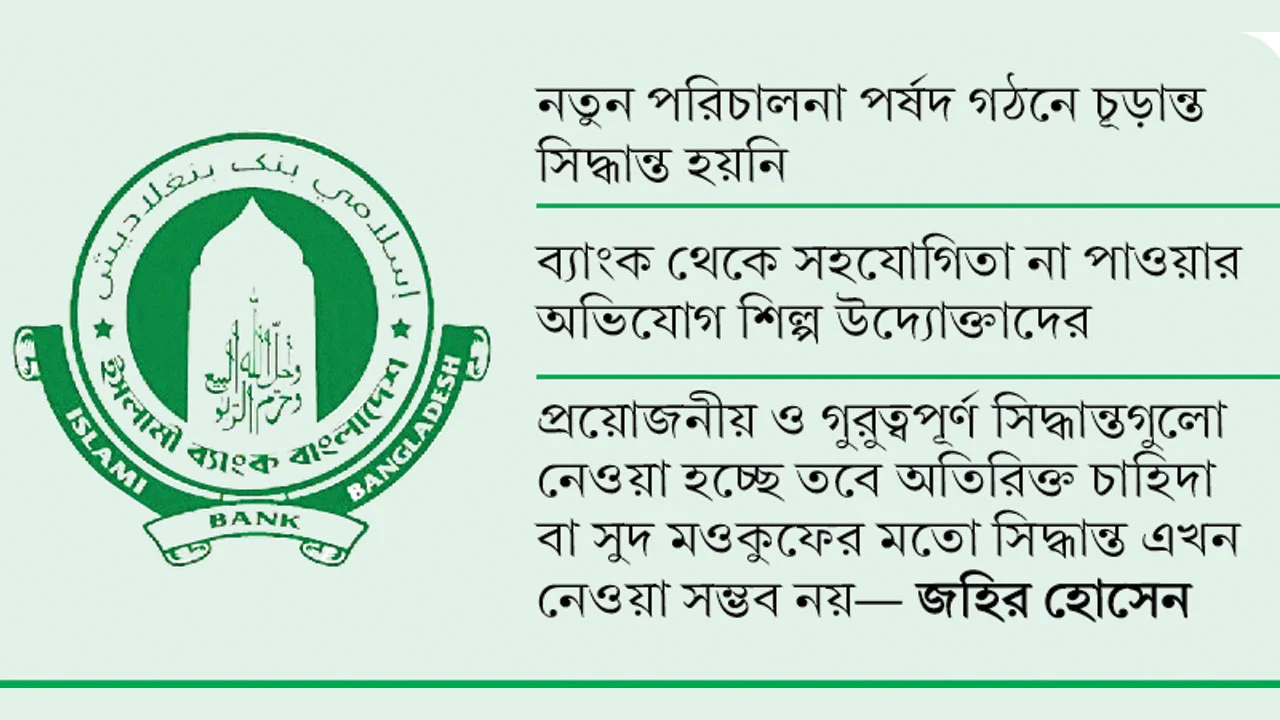
Corporate clients say major decisions at Islami Bank Bangladesh have slowed since its board was dissolved, delaying letters of credit, loan renewals and working-capital approvals.
Bangladesh Bank Executive Director Mohammad Jahir Hossain is performing the board’s duties after the previous board was dissolved amid controversy. Clients said the absence of a full board, a chairman and a permanent managing director had slowed major decisions. Bank officials said they were operating cautiously and expected activity to accelerate once a full board was appointed.
Hundreds of garment factories and other industrial companies still pay workers through Islami Bank, according to sources familiar with the matter. Those businesses also need letters of credit and working capital for routine imports and exports. Some companies said they were not receiving enough financing, while others reported delays opening letters of credit.
A major industrialist, speaking on condition of anonymity because of the sensitivity of his banking relationship, said Islami Bank handled payroll and letters of credit for his four garment factories, which employ more than 4,000 workers. He said the bank had recently failed to provide the support he needed and that employees who had long handled his files said they were unable to help.
He said gas and electricity shortages had already made business difficult and reduced bank support had added pressure. If the situation continued, paying workers could become difficult and unpaid employees might protest, he said.
Several large corporate clients said major loans, letters of credit and other important financial decisions required an effective board and top executive. They said the leadership gap had complicated decisions, disrupted exporters and industrial companies, and made some entrepreneurs hesitant to make major business commitments.
Hossain said the bank’s condition was much better than before. Deposits had begun returning, and the bank had not needed liquidity support from Bangladesh Bank for a long time, he said.
He rejected complaints that letters of credit and business decisions were being held up. Necessary decisions were being made and larger issues were being resolved, he said. The board was approving reasonable applications but could not grant excessive requests or waive interest, he added.
A senior Islami Bank official said the liquidity shortage had largely eased and routine banking continued despite the lack of a full board. The one-member board had been given the authority to approve all necessary daily decisions, the official said.
The official said a one-member board could nevertheless cause confusion among customers and business partners because boards normally have several members. That uncertainty could make them hesitant about important decisions, the official added.
A branch manager said liquidity assistance provided by Bangladesh Bank carried restrictions and could not be used for new investments or working capital. The funds had to be used under the central bank’s conditions, the manager said.
The manager said the bank also had to proceed cautiously because disbursing large sums to several borrowers at once could quickly exhaust available liquidity. A sudden increase in withdrawals at branch counters could then become difficult to manage, the manager added.
Economists said a prolonged leadership vacuum could weaken customer confidence. Corporate clients expect quick decisions and service and could move to other banks if delays persisted, hurting Islami Bank’s business over the long term, they said.
Former Bangladesh Bank Chief Economist Dr. Mustafa K. Mujeri said Islami Bank still lacked a regular board and managing director. He urged the authorities to appoint a full board and a qualified permanent managing director as quickly as possible to restore normal operations and strengthen confidence among customers and businesses.
New board still pending
Central bank officials said no final decision had been made on a new board and the required process would begin once a decision was reached.
Bangladesh Bank spokesman Arif Hossain Khan said the board restructuring was in its final stage. A new board made up of qualified and acceptable people would be announced after the necessary vetting, he said.
Background to the crisis
S. Alam Group took control of Islami Bank during the ousted Awami League government’s tenure. Allegations later emerged that about 75,000 crore taka, or 750 billion taka, had been borrowed fraudulently through named and unnamed entities. After details of the alleged irregularities emerged under the interim government, the board was dissolved and the bank was removed from the group’s control. It then began a gradual recovery despite several challenges.
Then-chairman M. Zubaidur Rahman resigned May 24. That night, former Bangladesh Bank Deputy Governor Md. Khurshid Alam was appointed an independent director and chairman.
Controversy over Alam’s appointment prompted a group of customers operating as the Conscious Customer Forum to protest with seven demands, including his removal. Government and opposition lawmakers debated the matter in Parliament, while demonstrations continued outside the bank’s headquarters in Dilkusha, Dhaka.
The unrest increased withdrawals and caused a liquidity shortage. Bangladesh Bank provided liquidity assistance before dissolving the full board and placing one of its executive directors in charge.
বাংলায় মূল প্রতিবেদন পড়ুন · Read the original Bengali report