Saplings and study materials in every hand, gentle smiles on their faces, and a school courtyard filled with joy. On a late afternoon set against natural surroundings, it was a different kind of celebration, a glimpse of a “green Bangladesh” reflected across the school grounds. The scene unfolded at Bardia Secondary Girls’ School in Narail’s Kalia upazila.
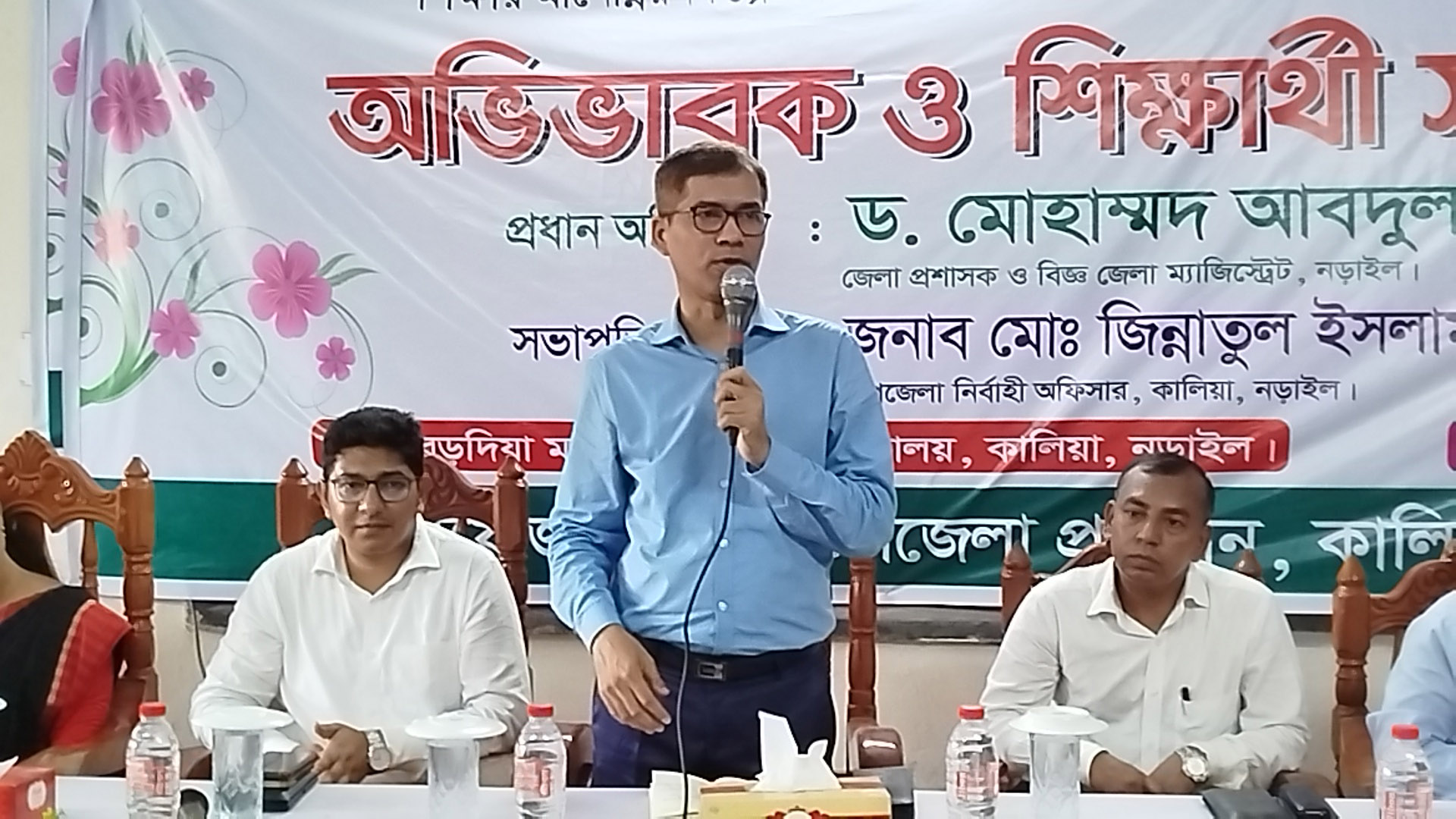
To support better education, the school auditorium hosted a gathering of parents and students, along with the distribution of study materials, footballs, adolescent-friendly health services and saplings. The events were held on Wednesday afternoon on the initiative of the Kalia upazila administration and the Bangladesh Rural Development Board (BRDB), with 250 girls from the school and their parents taking part.

Students and parents said they were delighted by the unusual program. The 250 girls received saplings of various species, took part in a discussion on preventing child marriage, used adolescent-friendly health services, and received savings checks along with study materials including notebooks, pens and English dictionaries.
Mehrin Chowdhury, a tenth-grade science student at the school, said the sapling felt like the finest gift in the world. The deputy commissioner and officials of the Bangladesh Rural Development Board (BRDB) had given them wonderful gifts, she said.
Afrin Rahman Mou, another tenth-grade student, said the deputy commissioner had spoken many valuable words. His remarks had stayed with her so deeply, she said, that there was no chance of taking a wrong path.
Sujan Kumar Chandra, the BRDB official for Kalia upazila, said the program was organized to encourage students to build a savings habit from their school years through a “savings service,” adolescent-friendly health care and awareness training. He said the response had been good.

Golam Rasul, BRDB deputy director in Narail, said that if a student saves 200 taka a month, or 2,400 taka a year, she receives a government incentive of 4,800 taka. As a result, a student receives 7,200 taka a year in savings and incentives combined, which helps cover education costs and provides financial support, he said. He said 1,200 poor but talented students at six secondary schools in Narail were benefiting from the project. However, if a student marries before the age of 18, she does not receive the government incentive and gets back only her own savings, he said. The project aims to prevent child marriage and give girls financial opportunities, he added.
Sarthaki Das said she was now studying at the higher secondary level and had received a check for 20,700 taka from the deputy commissioner and BRDB officials. She said she had saved 200 taka a month while studying at Bardia Secondary Girls’ School and was very happy to receive the sum.
Narail Deputy Commissioner Dr. Mohammad Abdul Salam, the chief guest, said parents endured great hardship to raise their children well and educate them. A father might toil in the sun and rain to earn money, and a mother might struggle in the household, yet both ensure their children’s education, he said. Children should therefore respect their parents, he said, and every student should become a “good person” by honoring family bonds and respecting teachers, which would make their lives meaningful and serve the country and people.
Kalia upazila nirbahi officer (UNO) Jinnatul Islam, who chaired the program, said one good thought gives rise to another, and that everyone, including students, should always think positively, focus on their studies and never tolerate wrongdoing. Each should strive to become a good citizen, he said.
Also present were Kalia assistant commissioner (land) Sraboni Biswas, Kalia upazila secondary education officer Anwar Hossain and the school’s head teacher Asma Chowdhury, among others.
বাংলায় মূল প্রতিবেদন পড়ুন · Read the original Bengali report