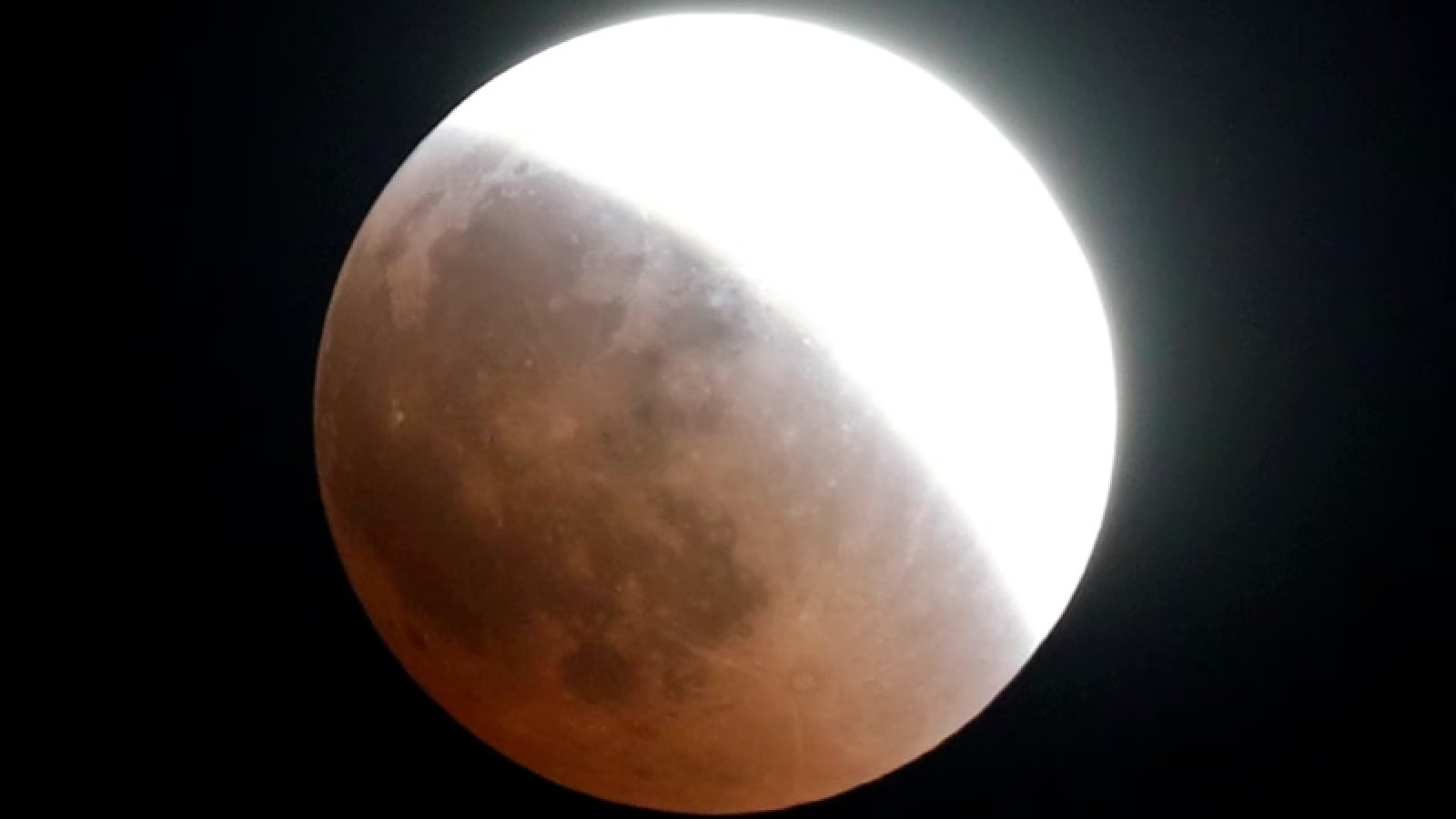
One of this year’s most striking celestial events is set to occur in the sky on August 28 — a deep partial lunar eclipse. The eclipse occurs when Earth moves between the sun and the moon, casting its shadow onto the moon’s surface. The report is from Anadolu.
Sky watchers across North and South America, Europe and various regions of Africa will witness this partial lunar eclipse. The eclipse will occur between the night of Thursday, August 27, and the early morning of Friday, August 28. During this time, roughly 96 percent of the moon’s surface will be covered by Earth’s shadow.
According to NASA, the eclipse is expected to reach its peak at 4:12 a.m. GMT (10:12 a.m. Bangladesh time) on August 28.
The event will be visible clearly from start to finish across most of the Americas. Meanwhile, observers in parts of Europe and Africa will only be able to see a partial view of the eclipse around sunset and sunrise.
Unlike a total lunar eclipse, the moon will not be completely covered this time — a small portion of the moon will remain outside Earth’s deepest shadow. However, as sunlight passes through Earth’s atmosphere, it scatters and refracts, which can give the eclipsed portion a reddish or coppery hue — known as a “blood moon.”
This lunar eclipse will last more than five hours, though the deep partial phase will be comparatively much shorter. According to NASA and astronomical sources, at its peak, roughly 93 percent of the moon’s diameter will lie within Earth’s main shadow.
This lunar eclipse comes a little over two weeks after a total solar eclipse visible across parts of Greenland, Iceland and Spain on August 12. Solar and lunar eclipses typically occur in pairs because of the alignment of the sun, Earth and moon along the same line.
Unlike a solar eclipse, viewing a lunar eclipse requires no special eye protection. Using ordinary binoculars or a telescope can allow for a closer, more detailed view of the event.
বাংলায় মূল প্রতিবেদন পড়ুন · Read the original Bengali report