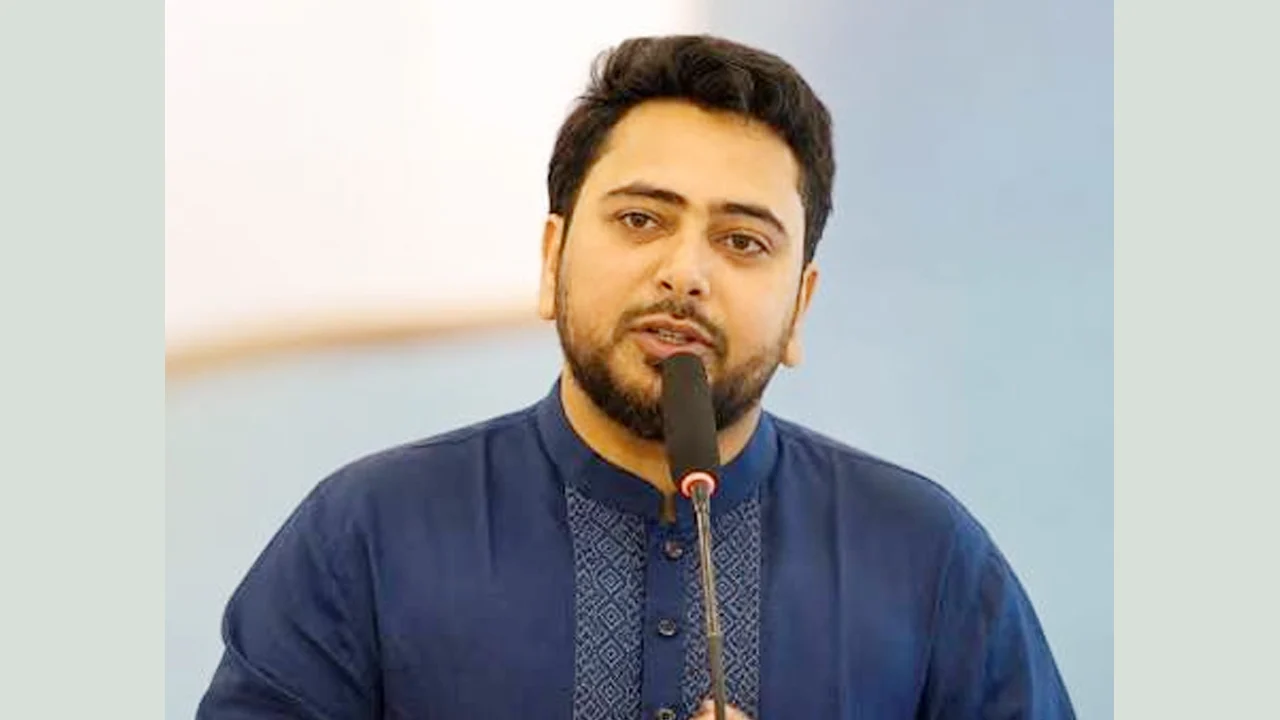
NCP convener Nahid Islam said the press conference held in Delhi by death-sentenced former prime minister Sheikh Hasina would not have been possible without the backing of the Indian government. He said India-Bangladesh relations should be reassessed and rebuilt on a new footing only once Bangladesh receives assurances on several fronts: that Awami League activities are not allowed to continue from Indian soil, that Sheikh Hasina is not given shelter there, that the Indian government respects Bangladesh’s judicial system and democracy, and that those responsible for killing Osman Hadi are handed over.
He made the remarks at an emergency press conference Monday afternoon at NCP’s temporary central office in Banglamotor, in the capital. The party’s sub-committee on policy and research organized the press conference to highlight what it described as the current government’s failures over its first 180 days.
Nahid Islam said the Ganges Water Treaty is set to expire this year, and that a new relationship with India can only be built on the basis of Bangladesh receiving a fair share of water, an end to pushback of people at the border, and a permanent halt to border killings.
He added: “Before any of these matters are resolved, what would it mean if Tareque Rahman were to travel to Delhi — the same city where Sheikh Hasina is currently based? How would the people of Bangladesh, or the world, view that? We believe this isn’t simply a matter concerning Tareque Rahman personally, but would be a humiliating episode for Bangladesh as a whole. It would send the message that Bangladesh cannot stand tall while maintaining an independent foreign policy and its own sovereignty.”
At the press conference, Nahid Islam read a written statement titled “The government’s 180 days: from a promise of change to a return to old politics, mismanagement, incompetence and lack of planning.” The statement laid out detailed assessments across several areas, including economic mismanagement, the energy crisis, rising commodity prices, production disruptions and job risks from the gas crisis, the power crisis and record load-shedding, harassment of farmers and the fertilizer shortage, economic misgovernance, bank takeovers and market syndicates, cost overruns and alleged plundering in mega projects, the scrapping of essential-medicine pricing policy, management failures during the measles outbreak, crackdowns on the opposition, interference with freedom of expression, harassment of and cases against journalists, disregard for the referendum verdict, politicization of state institutions, political nepotism, and RAB continuing to operate under a new guise, among other issues.
বাংলায় মূল প্রতিবেদন পড়ুন · Read the original Bengali report