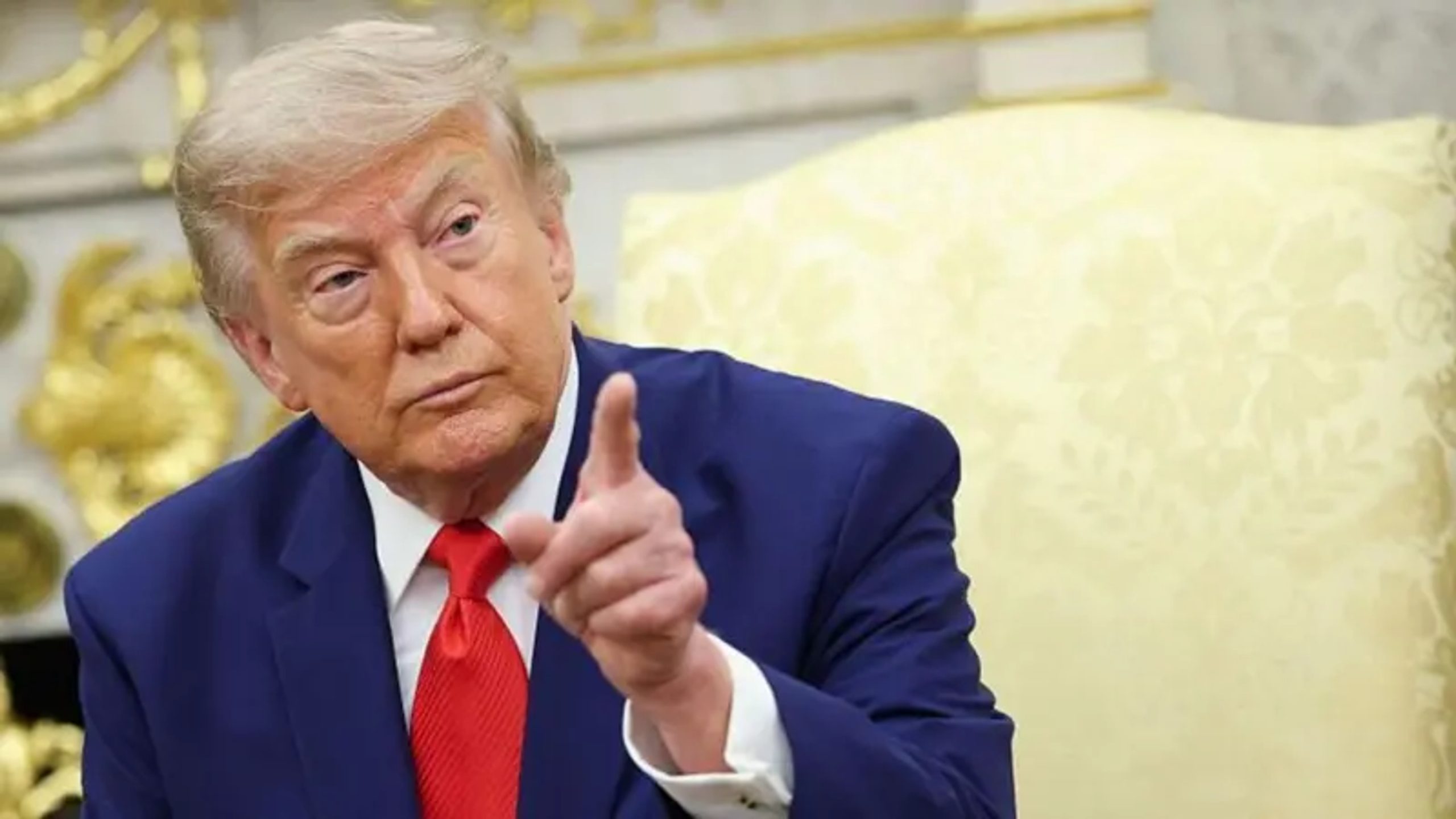
The United States is bringing into effect new tariffs on about 60 trade-partner countries, including Bangladesh. The step has been taken mainly on the charge of failure to curb forced labour.
The tariff has been imposed at 10 percent on some countries and up to 12.5 percent on the rest. Besides Bangladesh, countries such as the United Kingdom, China, the European Union, Canada, Japan, India and Pakistan are also on the list.
The tariffs take effect from Friday — the day the temporary 10 percent tax imposed at the start of this year expires. It is the latest addition to the new tensions created in world trade since US President Donald Trump came to power last year.
At the start of this year the US Supreme Court had ruled that the tariffs the Trump administration imposed on various countries worldwide under emergency powers had no legal validity.
Since then the US president has begun looking for other legal avenues to implement his main trade policy. Just last month the White House had put forward a series of proposals for tariffs of 10 to 12.5 percent on goods reaching US shores from about a dozen countries.
The reason given was that the countries were not taking adequate steps to tackle forced labour. On Thursday, US Trade Representative Jamieson Greer, following Trump’s instructions, said the tariffs would take effect from now on.
A statement of his said: “Today’s step will begin correcting matters such as human-rights violations and trade distortions, which will always help ensure the welfare of workers.”
Greer applied Section 301 of the Trade Act of 1974, which governs US trade administration against practices that obstruct or harm US trade.
Earlier this week the Trump administration had resorted to the Section 338 provision of the Tariff Act of 1930 to impose a 50 percent tariff on Canadian goods.
On Thursday the office of the US Trade Representative said the new tariffs were being imposed because trade partners had “failed to impose and effectively enforce bans on the import of goods produced through forced labour.”
It further said the new tariffs would apply to the United States’ top 60 trade partners, making up 99.4 percent of US imports.
The office said Trump had, in his second term, made a ban on importing goods made with forced labour a “key” part of reciprocal trade agreements with other countries.
A 10 percent tariff will apply to trade-partner countries that have “committed to and effectively implemented” banning the import of goods made with forced labour.
And those that have not done so will face the higher rate of 12.5 percent, the office of the US Trade Representative said.
The countries falling under the 10 percent tariff include Argentina, Bangladesh, Cambodia, Canada, Ecuador, El Salvador, Guatemala, Honduras, India, Indonesia, Jordan, Malaysia, Mexico, Pakistan, Sri Lanka, Trinidad and Tobago, and the United Kingdom.
At least 10 percent applies if they: (i) ban the import of goods produced with forced labour; (ii) commit through a reciprocal trade agreement to impose and enforce such a ban; or (iii) put in place a partial arrangement that has the effect of preventing the import of certain specified goods made with forced labour.
For goods not covered by any other exemption, the appropriate Section 301 tariff rate for certain goods from the European Union, Taiwan, Japan, Korea and Switzerland will be an additional 10 or 12.5 percent on top of the most-favoured-nation (MFN) rate, as explained in more detail in the Federal Register notice. Beyond this, a 12.5 percent tariff has been announced for all other investigated economies.
In his statement, Greer said he felt “encouraged” by the trade partners that had quickly decided to ban the import of goods made with forced labour, and was waiting to see them ensure effective implementation.
Trump’s signature policy
Trump has long argued that tariffs protect US workers, create more jobs in the manufacturing sector and boost the US economy.
After returning to the White House last year, Trump imposed tariffs of up to 50 percent on global trade partners. He said the measure had been taken to counter the unfair treatment the United States had suffered for decades at the hands of various countries around the world.
But last February the US Supreme Court struck down that decision, saying the president had exceeded the limits of his authority without taking approval from Congress. At that time, tens of thousands of crore of dollars that companies had paid in tariffs were also refunded.
Since then, however, the White House has begun examining alternative ways to impose import tariffs. One of these, as a temporary solution, includes this imposition of the 10 percent tariff.
Meanwhile, Washington has also imposed a range of various tariffs on countries such as Brazil and Canada. Alongside this, the United States and China too remain locked in a tit-for-tat tariff war, though it is currently suspended.
Economists have warned that because of the high tariffs, everyday items such as coffee and microwaves could become more expensive in the US market.
Since it is the importing companies that have to pay the tax, those businesses often pass the added cost on to buyers through higher prices.
President Trump has also used these tariffs to put pressure on other countries, such as Mexico, through non-trade matters such as labour rules.
In response, many trade-partner countries are already considering a possible legal battle or the imposition of counter-tariffs.
The US Trade Representative is currently conducting investigations into 16 countries — which cover the bulk of US imports — accused of excessively expanding production capacity, which could pave the way for additional tariffs later this year.
What other countries have said
Several countries, including Brazil, have reacted to the announcement.
Brazil’s government has called the US step “unfair” and “capricious.” A statement of theirs said Washington had chosen to use an extremely important matter concerning workers’ rights to support its own protectionist trade policy.
Brazil, which faces the new US 12.5 percent tariff, further said it would take measures in accordance with its laws and would also consider other markets for selling its goods.
Earlier this month the United States had separately imposed a 25 percent tariff on furniture, machinery, sugar and other goods imported from Brazil. But exemptions were kept in place for some goods, including beef and coffee.
Japan’s government said on Friday that it “expressed regret” over the imposition of the new US tariffs. Its position is that Japan’s trade is conducted in line with international rules.
Australia’s Trade Minister Don Farrell said the tariff was “completely unfair.” He also said he would keep up pressure on Washington to withdraw all tariffs imposed on his country’s goods.
China has said before that it opposes any kind of unilateral tariff imposition. The country has also denied allegations of using forced labour.
China’s foreign ministry spokesperson Mao Ning said: “There is no so-called forced labour in China, and we oppose the use of this matter as a pretext to exert influence for political purposes.” Several international human-rights organisations, however, say forced labour exists in China, particularly among the Muslim ethnic minorities of the Xinjiang region.
বাংলায় মূল প্রতিবেদন পড়ুন · Read the original Bengali report