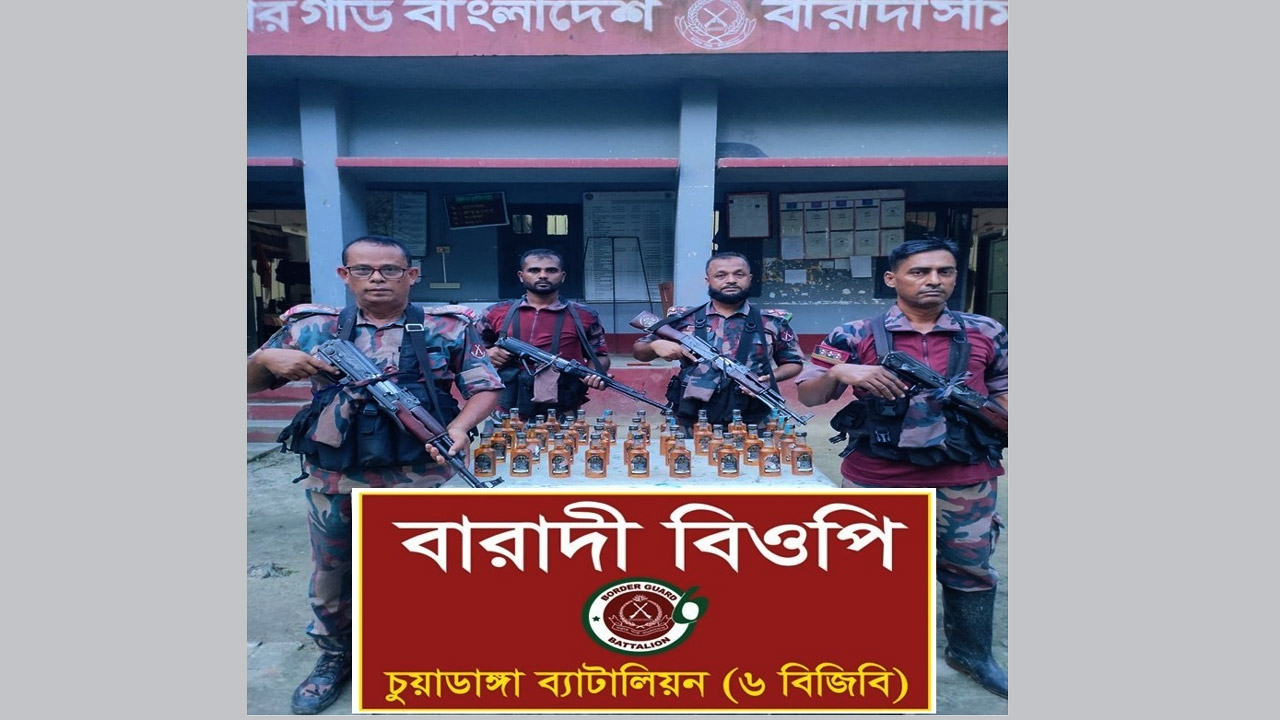
The border district of Chuadanga has long been dominated by conventional narcotics such as Phensedyl, marijuana and Yaba, but the type and pattern of drug use in the district has shifted alarmingly in recent times.
Alongside Phensedyl and marijuana, the district has seen a sharp rise in the spread of intoxicant tablets such as Tapentadol and Buprenorphine injections.
Seizure statistics from operations by the Chuadanga-6 Border Guard Bangladesh (BGB) battalion point clearly to this shift. From August 2023 to July 2024, more than 11,000 intoxicant tablets and Yaba pills were seized. In the following year, seizures of Tapentadol and other intoxicant tablets alone rose to 25,485. Over the same period, the BGB seized 10,617 bottles of Phensedyl and more than 238 kilograms of marijuana.
Law enforcement officials say the quantity of drugs seized depends partly on enforcement and surveillance strategies, but the large volume of Tapentadol and Buprenorphine injections seized underscores this new trend.
Tapentadol, used in medicine as a painkiller, began being used as a drug substitute, prompting the government to gazette it as a Class B narcotic under the law in 2020.
Buprenorphine injections, meanwhile, have been listed as a Class A banned narcotic since the start of the Narcotics Control Act of 1990. These pharmaceutical intoxicants now pose a new challenge for drug control.
Drugs including Phensedyl, marijuana, Yaba and Tapentadol are entering Chuadanga through the Damurhuda, Darshana and Jibannagar border areas. But their spread is no longer confined to border areas alone. The seizure of 5,700 pieces of Yaba from outside a courier service office in Chuadanga town last September shows that traffickers are using transport networks and modern communication to move drugs into the interior of the district, beyond the border.
Adolescents and young people are the biggest victims of this shift in drug patterns. At a recent awareness meeting in Jibannagar, Chuadanga Deputy Commissioner Lutfun Nahar expressed concern that students from grades five through 10 are being used to carry drugs across the border, while addiction is also spreading among higher-secondary and undergraduate students.
Referring to administrative and legal action against drug trafficking, Akubbar Ali, prosecutor at the Chuadanga Department of Narcotics Control, said regular cases, mobile courts and summary trials for quick disposal are being carried out against traffickers and users. “But this cannot be controlled alone; a coordinated social resistance is needed,” he said.
Chuadanga Superintendent of Police Mohammad Ruhul Kabir Khan said police are determined to make Chuadanga drug-free. He said swift convictions have created fear among offenders, while opportunities for surrender are also being offered. Chuadanga District Court Public Prosecutor Maruf Sarwar Babu said the ongoing use of summary trials, or speedy justice, is discouraging offenders.
Chuadanga-6 BGB Commanding Officer Lt Col Nazmul Hasan said, “BGB remains constantly vigilant on border security and preventing drug smuggling. Intelligence surveillance and special operations to curb illegal activity in border areas will be further strengthened going forward.”