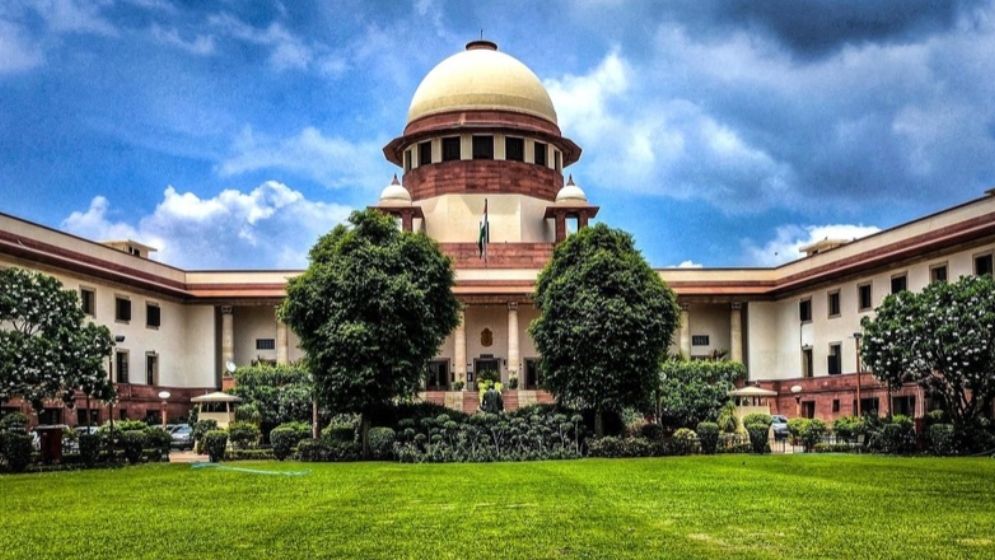
India’s Supreme Court has ruled in a landmark judgment that mere abuse, rude behaviour or any kind of harsh words, however objectionable or uncivil, will not be treated as “obscenity” under the Indian Penal Code (IPC). The top court made clear that merely uttering abuse or indecent language cannot by itself be considered an offence under Section 294 of the penal code.
A Supreme Court bench of Justice Sanjay Karol and Justice Vipul M Pancholi made the important observation while hearing an appeal filed by a man against a Madras High Court judgment that had upheld a lower court’s sentence. The court said a statement or utterance can be treated as “obscene” only when it is shown to have been excessively lascivious, arousing depraved and corrupt thoughts and bringing about moral degradation in society.
In its ruling on Friday, the bench made clear that, judged by this legal standard, even if all the complainant’s allegations were taken as entirely true, the accused’s words could in no way be called obscene. However abusive, unpleasant or uncivil such words might be, they do not meet the conditions of Section 294(b) of the IPC. Moreover, to prove an offence under that section there must be evidence that someone else was annoyed or disturbed in public because of the words — evidence absent in this case. The court therefore said the offence under Section 294(b) was not made out.
The case arose from a dispute over agricultural land in India’s Tamil Nadu state in August 2017. The appellant quarrelled with his brother-in-law over land, and two days later a fresh dispute arose over the same property with the complainant’s nephew. The prosecution alleged that when the complainant came to mediate, the appellant attacked him with various harsh words, abuse and caste-discriminatory slurs. On that basis the trial court had convicted the appellant of obscenity under Section 294(b), grievous hurt under Section 326 and criminal intimidation under Section 506(2), as well as under the Scheduled Castes and Scheduled Tribes (Prevention of Atrocities) Act. The Madras High Court later acquitted him of the SC/ST Act charge but upheld the sentences under the other IPC sections, which the country’s top court has now revised.
বাংলায় মূল প্রতিবেদন পড়ুন · Read the original Bengali report