As artificial intelligence, or AI, advances rapidly, it has become an essential part of daily life — from voice assistants on mobile phones to online shopping, social media, education, medicine, banking and the workplace. Now AI has moved beyond writing text, generating images or building software, and gone deeper into biology.
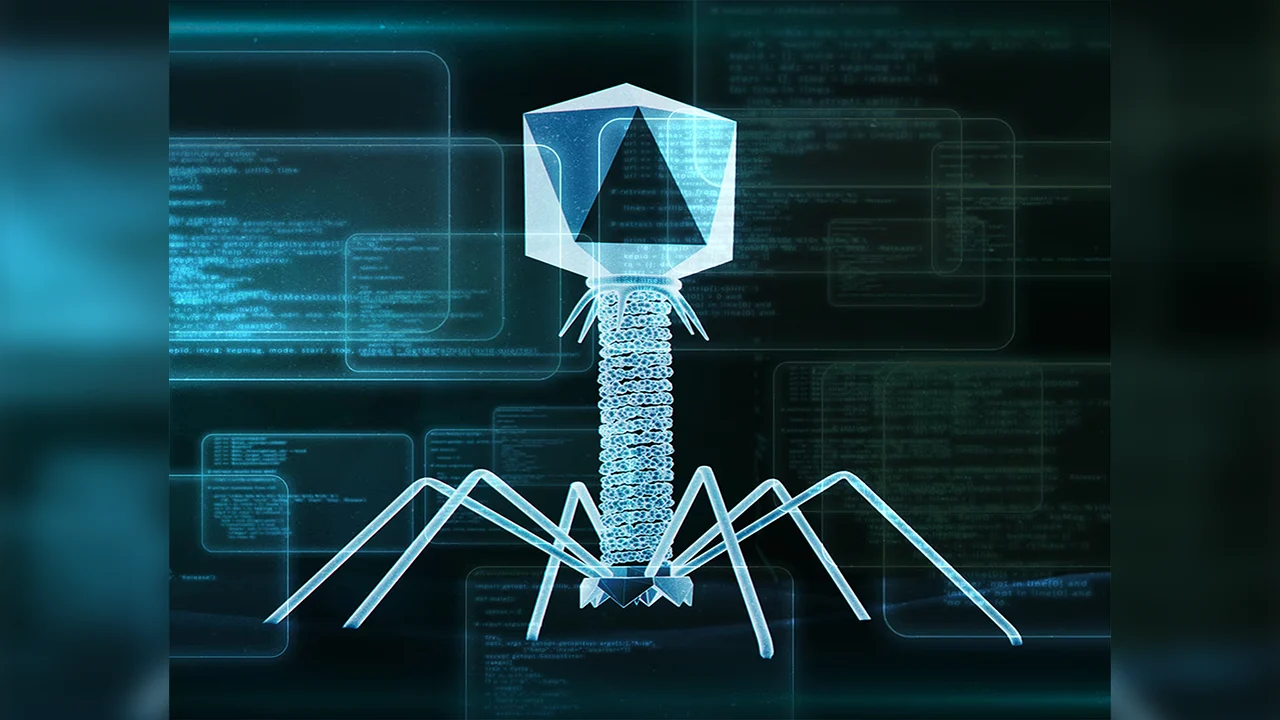
Researchers at Stanford University and the Arc Institute in the United States have used generative AI to design the genomes of new viruses, and shown in the laboratory that some of them function as effective bacteriophages — meaning AI-generated genetic designs have been used to create viruses capable of infecting and destroying bacteria.
At the center of the research is the Evo family of genome-language models. Its earlier version, Evo-1, and its more advanced successor, Evo-2, were built to analyze the structure and relationships within genetic information and generate new DNA sequences. According to Stanford, Evo’s initial training drew on millions of prokaryotic and phage genomes along with vast quantities of DNA sequence data. Genomes of viruses capable of infecting humans were deliberately excluded from the training data.
In the study, researchers used the bacteriophage ΦX174 as a biological reference and asked the AI to generate new genome designs capable of infecting the bacterium Escherichia coli, or E. coli. The goal was not to create an exact replica of any natural virus, but to generate new sequences that followed the functional structure of a genome. Of hundreds of designs generated, only 16 proved to work. After the AI produced a large number of possible genome designs, researchers selected a subset to synthesize and test in the lab. According to published reports, around 300 designs were taken forward for testing, of which 16 turned into functioning bacteriophages capable of infecting E. coli and reducing bacterial counts.
Not every AI-generated design worked — in fact, only a very small fraction of the large number of possible designs proved effective. As a result, the research is still considered largely a proof of concept rather than a fully realized application.
The viruses created in the study are bacteriophages — meaning viruses that infect bacteria — and were not designed to cause disease in humans. Researchers deliberately excluded genetic information related to viruses capable of infecting humans from the training data.
That does not mean the technology carries no risk, however. The research demonstrated that a computer-generated genome, created using generative AI, can be made to function in an actual biological system — and that is precisely where important questions about future biosafety and biosecurity arise.
One of the most promising applications of the research is phage therapy. Because bacteriophages can be designed to target and destroy specific bacteria, AI-driven genome design could open a new path toward developing more targeted, effective phages against antibiotic-resistant bacteria in the future.
Phage therapy should not yet be considered an established treatment alternative for all types of infection, however. Several challenges remain, including efficacy, safety, selecting the right phage for a specific patient, and regulatory approval. The ability to use AI to design functioning viral genomes could bring major changes to medicine and biotechnology in the future — but concerns remain about the risks the technology could pose if it fell into the wrong hands.
Biosafety experts say that as AI’s genome-design capabilities advance, safety measures, research oversight and regulatory systems need to keep pace. They say it is particularly important to have adequate verification and safety measures throughout the entire process of turning a computer-generated genetic design into an actual biological entity. According to the Stanford researchers, the work shows that generative models are not limited to analyzing existing genetic information — they can also propose designs for new genomes, some of which can demonstrate real biological function.
The research marks the first clear demonstration of how active a role AI could play in the design and testing of biology in the future. On one hand, it points to the potential for new weapons against antibiotic-resistant bacteria; on the other, it underscores the need to ensure the same technology is used safely. Researchers say that as AI-driven biology develops, responsible research, biosafety and biosecurity will become just as important as scientific innovation itself.
বাংলায় মূল প্রতিবেদন পড়ুন · Read the original Bengali report