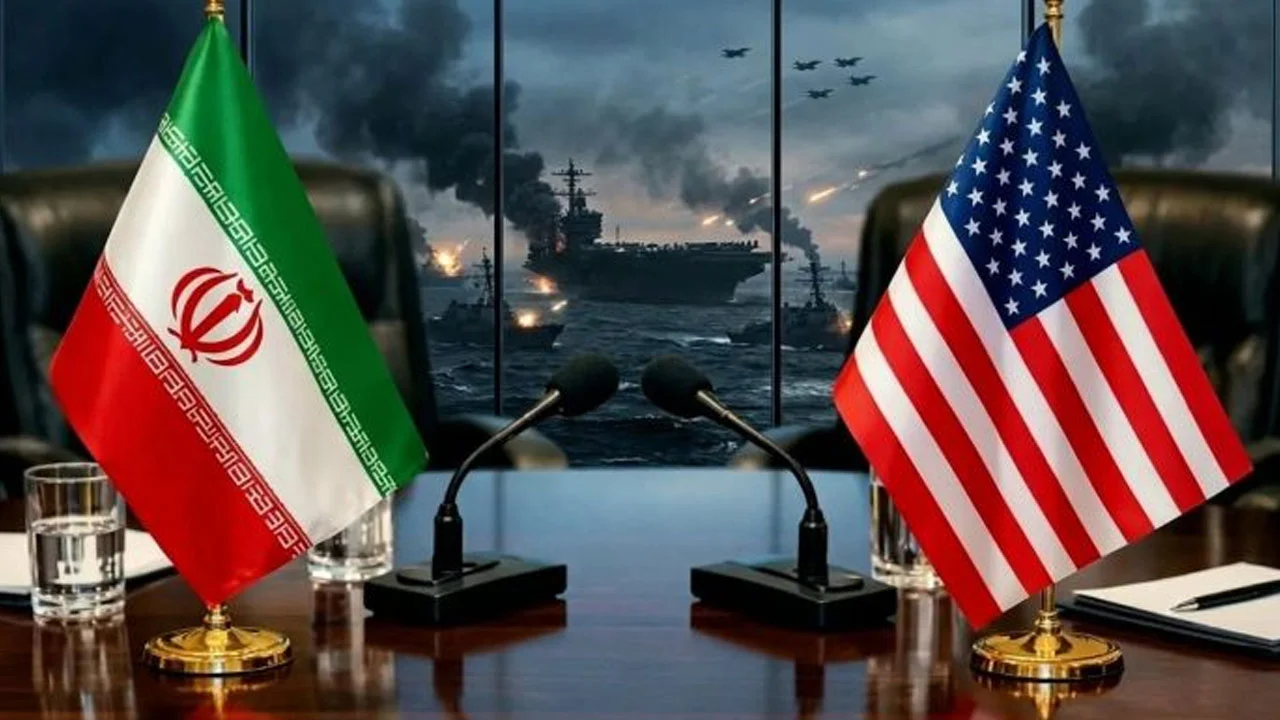
After military action and diplomatic efforts against Iran failed to yield the desired results, US President Donald Trump is returning to a strategy of applying tough economic pressure. Instead of launching fresh major military strikes on Iran, the Trump administration has chosen to tighten sanctions and keep the country’s economy under pressure through a naval blockade.
US officials said statistics and information on how deep the impact of existing sanctions on Iran’s economy had become had been presented to Trump. They believe pressure can be raised by imposing fresh sanctions and further tightening existing ones.
Unable to force Tehran into concessions on its nuclear programme and other issues, the United States had chosen the path of military strikes. But when that too failed to bring the expected political result, an attempt was made at an interim peace understanding through diplomatic talks, though differences between Iran and the United States have not been resolved.
Speaking to reporters on Monday, Trump said: “Iran’s economic condition is very weak. I am not interested in launching a fresh, large-scale military campaign right now.” Iran, for its part, has said its position cannot be changed by economic pressure alone. Iran’s foreign ministry spokesman, Esmail Baghaei, described the US strategy as a sign of failure.
The US-Iran dispute over control of the Strait of Hormuz and international shipping has grown more complex. A prolonged standoff over this key energy-transit route could have a major impact not just on the Middle East but on the global energy market.
In return for normalising commercial shipping through the strait, Iran has demanded war reparations from the United States, the withdrawal of US troops from the region and the lifting of the naval blockade. Trump has rejected these demands, again casting doubt on the prospects of a Washington-Tehran understanding. The effect is being felt in international markets too: amid the uncertainty over the Strait of Hormuz, energy-market anxiety has grown and oil prices have risen.
A prolonged conflict, meanwhile, also creates economic and political risks for the United States. The cost of military activity in the Middle East, energy prices and strain on US military hardware are together making the situation complex for Washington. Concern has also recently been voiced about a shortfall in the US arsenal. The Trump administration’s current economic-pressure strategy is being used mainly as an alternative to military conflict. But if sanctions and blockade fail to bring Iran to the table, analysts say, the question of military action could return to the fore for Washington.
বাংলায় মূল প্রতিবেদন পড়ুন · Read the original Bengali report