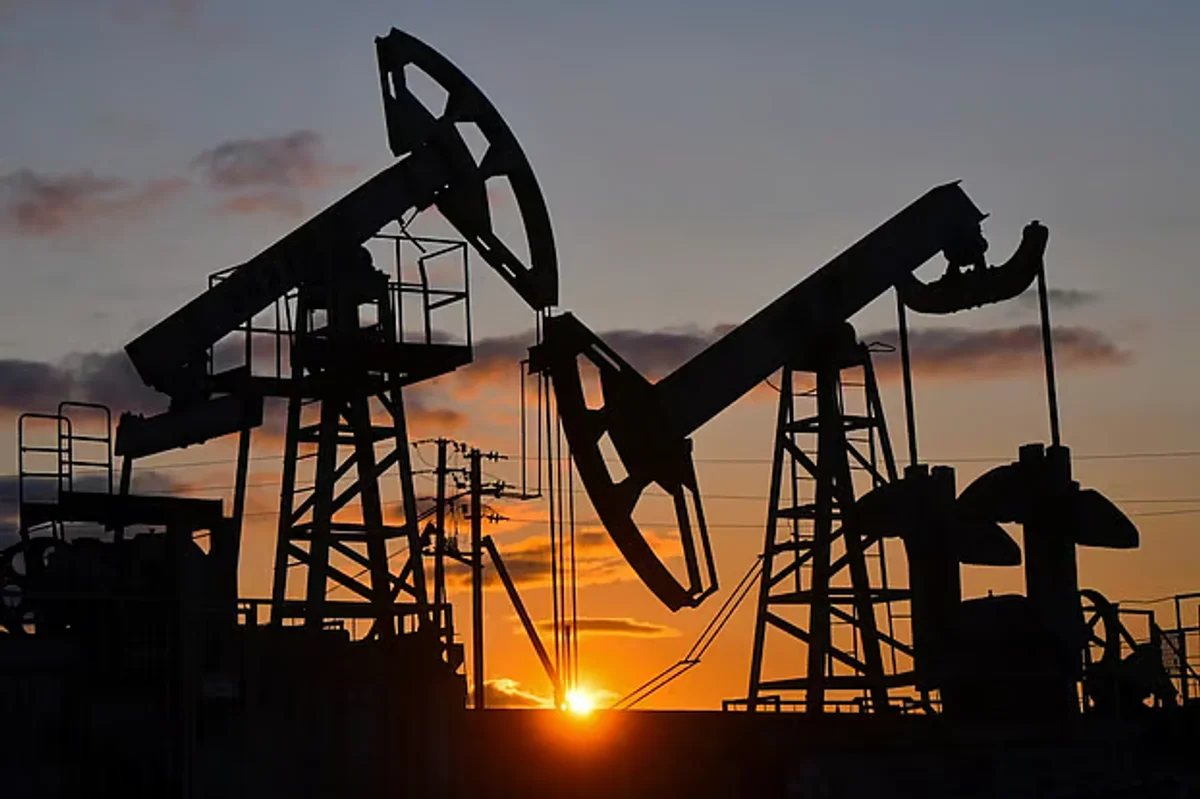
Oil companies’ profits have risen because of the Iran war. With fuel oil prices climbing on the world market, their profits have naturally increased — even as the price rises and supply disruptions have created various crises worldwide.
The Washington Post reported that in the second quarter of the year, the two largest US oil companies, ExxonMobil and Chevron, made a combined profit of $26.5 billion. But this record income has intensified political debate in the United States, because ordinary consumers are struggling to cope with the pressure of higher fuel prices.
In a financial report released last Friday, Chevron said its net profit in the April-June quarter was $12 billion — $9.6 billion more than in the same period a year earlier.
Over the same period, ExxonMobil’s profit was $14.5 billion, more than double the figure for the same period last year.
Chevron’s chief executive, Mike Wirth, said the profit was thanks to controlled investment, record US output and high refining capacity. ExxonMobil’s chief executive, Darren Woods, said the main reason for their success was being able to run operations smoothly even amid the conflict.
Earlier, last Thursday, the British energy company Shell released its second-quarter financial report, saying its profit had almost doubled from a year earlier.
Little appetite for new investment
An analysis by the research firm Wood Mackenzie found that despite the extra profits, the big oil companies are not keen to increase investment in new oil fields or drilling projects. They fear that if the Iran war ends, crude prices could fall quickly, making it hard to recover the cost of new investment.
By the firm’s calculation, if crude averages $90 a barrel this year, the global oil sector’s windfall profit could rise to $425 billion.
After the US and Israeli attacks on Iran, the closure of the Strait of Hormuz pushed oil at one point to $120 a barrel. It is now close to $90. About one-fifth of the world’s total oil and natural gas transport passes through the strait.
Consumer anger, political pressure
The average price of petrol in the United States is now more than $4 a gallon, fuelling growing consumer discontent. With midterm elections ahead, Democratic lawmakers have spoken out against the oil companies.
Democratic senators Elizabeth Warren and Sheldon Whitehouse have asked the oil companies how they profited from the war situation, and whether they lobbied the White House to influence decisions related to the war.
Brad Sherman, a Democratic congressman from California, has proposed a special tax on wartime windfall profits. In his view, consumers should either be given cheaper fuel or be repaid from the revenue raised by a windfall-profits tax.
The oil industry’s response
The oil industry has rejected the accusations. Dustin Meyer, a senior official at the American Petroleum Institute (API), the US oil and gas sector body, said the global oil market was highly competitive and transparent, leaving no room for price manipulation.
ExxonMobil has also said it plans to invest $71 billion over the next four years to increase production and refining capacity in the United States.
How effective is a windfall tax?
The history of taxing windfall profits in the United States is not very encouraging. Such a tax was imposed in 1980, but it did not bring in the expected revenue. Economists say it discouraged domestic production and made the tax system more complex.
According to some experts, imposing such a tax again could reduce oil companies’ investment, creating a risk of lower production and supply shortages in the long run. Others say there are other reasons behind falling production, such as the declining capacity of old oil fields and people’s growing shift towards renewable energy.
Analysts believe that if international oil prices stay high, the big oil companies will make hefty profits next quarter too. So the closer the elections get, the more political pressure on the oil companies could grow.
বাংলায় মূল প্রতিবেদন পড়ুন · Read the original Bengali report