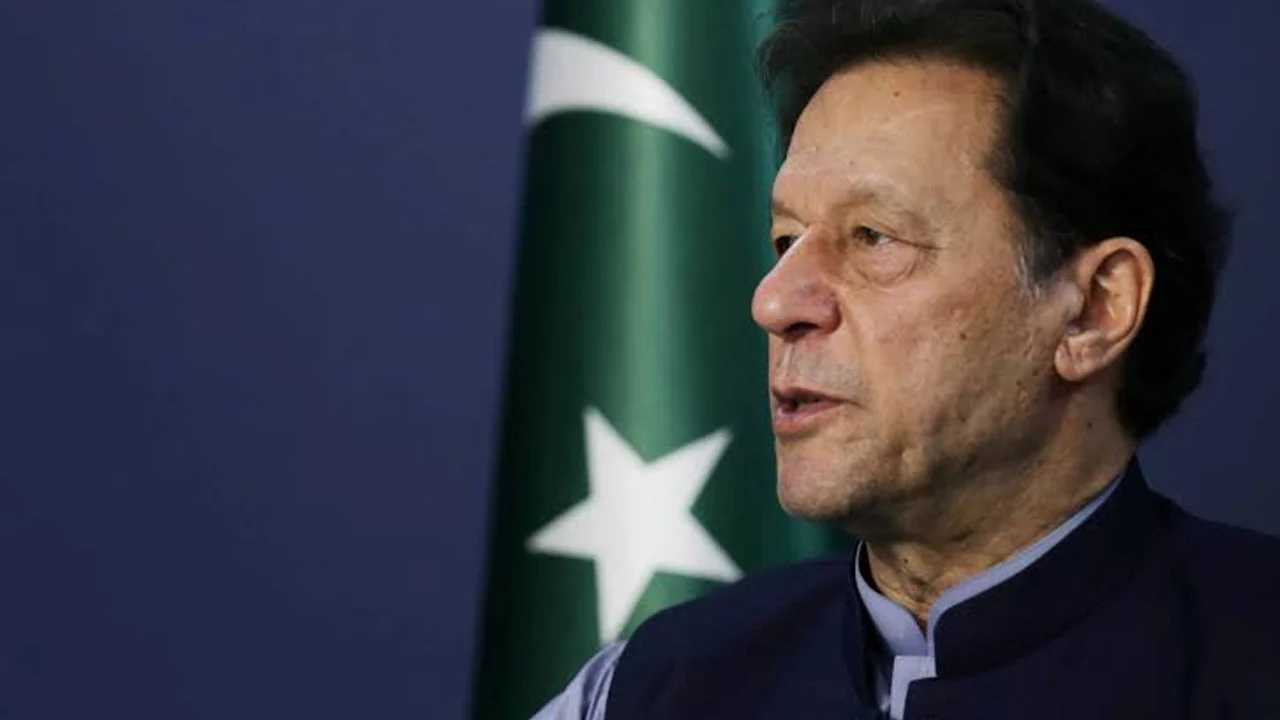
Some political prisoners are so dangerous merely by being alive that they terrify the rulers who hold them. And some martyrs are so dangerous in memory that the very fact of their death haunts the rulers who caused it. Pakistan’s former prime minister, Imran Khan, has created just such a complicated situation for the country’s power structure — one where his very existence now unsettles the country’s rulers, and where his death in prison could become an indictment of the entire system.
Pakistan’s army chief, Field Marshal Asim Munir, and the two political families operating under the military’s shadow — the Sharif family and the Bhutto-Zardari family — now appear to be caught in precisely that trap.
Pakistan’s Supreme Court has ordered that the 73-year-old former prime minister, Imran Khan, be transferred to Shifa International Hospital for treatment. The court has also said his personal physician should be included on the medical board, and that he be given the opportunity for regular contact with his family.
In a normal constitutional state, none of this would be considered any special “relief” or concession — these would simply be a prisoner’s ordinary rights. But Pakistan has reached a point where even the right to see a doctor is now being presented as constitutional progress.
The irony of the situation has become even sharper as the government has tried to challenge part of the ruling. Electoral engineering, political cases, sweeping crackdowns and the distortion of institutions all seem tolerable for the state; but treating a former prime minister at a private hospital apparently poses a grave threat to constitutional order.
Behind all this, however, lies something bigger than the absurdity of the situation itself: fear.
The purpose of sending Imran Khan to prison was to diminish him politically — to keep him away from public rallies, television and political activity, to keep him occupied with case after case, to weaken his party, and to achieve through isolation what could not be achieved in open political competition.
But the result has been the opposite. The state imprisoned a man, and that imprisonment turned the man into a symbol. That is Asim Munir’s biggest political nightmare.
A healthy prisoner can be controlled. But a visibly ailing prisoner becomes a charge against the state. And a political prisoner who dies in custody becomes part of history — and history is far less obedient than parliament.
Abroad, Asim Munir may be welcomed as an important diplomatic partner, photographed alongside heads of state, or viewed as the indispensable manager of a nuclear-armed Pakistan. But being forced to keep his chief political rival imprisoned year after year at home is not a display of confidence in strength — it is a display of fear.
The bigger the medal of power grows, the smaller political imagination seems to become.
If Imran Khan is released, he will not return as the same politician he was before going to prison. He may instead return older, physically weakened, and carrying even greater symbolic power. In his hands would be one of the most potent arguments in mass politics — that the country’s entire state and repressive apparatus was used to keep one man from reaching voters.
On the other hand, if Imran Khan were to die in prison, the matter would no longer remain confined to political management. It could take the shape of a political explosion. Death edits history mercilessly.
A living politician can be criticized, mocked, blamed for failures, or defeated at the ballot box. But memory often frees a dead political prisoner from such complications. Case files get lost, allegations blur, legal arguments fade from public memory.
What remains in the end is a single image: after years in state custody, amid demands for adequate treatment, the death of a former prime minister.
Protest banners cannot carry lengthy explanations from state institutions or legal footnotes. That is precisely why Imran Khan poses a challenge for Asim Munir while alive — and why his death could become an even bigger one.
A living Imran Khan is a popular political rival. A dead Imran Khan could become a permanent moral indictment — one far harder to control. In this, the Sharif and Bhutto-Zardari families cannot escape responsibility either.
They speak of democracy and constitutionalism on one hand, while on the other, benefiting from a political system whose stability depends on keeping their chief rival neutralized — this dual role cannot be sustained indefinitely.
They speak of civilian authority, but govern under the long shadow of Rawalpindi. They carry family political identity like an inherited estate, and then wonder why the public increasingly views electoral politics as a feudal theater.
The Sharifs want power but want to avoid the discomfort of acknowledging who actually guarantees that power. The Bhutto-Zardari family wants to claim a democratic legacy, but does not want to take genuine democratic risks.
As a result, both political families have become political partners in a system they sometimes criticize, even as they repeatedly secure their own position within it.
In this reality, the Supreme Court’s order is not merely a medical intervention. It exposes the grave poverty of a system in which even basic human rights now appear to be revolutionary demands — because the denial of rights has been normalized.
A confident state does not fear an eye specialist. A confident government does not go to court to block the right to see one’s family.
A confident military institution does not need prisons, court cases, information control and hereditary political allies to manage a 73-year-old political rival.
Asim Munir has the army. The Sharifs have the ministries. The Bhutto-Zardaris have their own share of state power. All of them have institutions, networks and state power in hand.
But Imran Khan possesses something that cannot be created through any notification, constitutional amendment, or appointment — political meaning and symbolic power.
Keeping him alive means that power will keep challenging them. Releasing him means that power could return to the streets.
And letting him die means that power may well outlive all of them, by a wide margin. This is not a picture of absolute authority. It is a kind of trap.
Rawalpindi’s power center has ended up with a prisoner who cannot be released with any comfort, cannot be safely broken, and cannot be made to disappear either.
And the political families standing beside them must understand the same hard truth —
When a state begins fearing both a man’s heartbeat and the stopping of that heartbeat, that prisoner is no longer the weakest person in the room.
বাংলায় মূল প্রতিবেদন পড়ুন · Read the original Bengali report