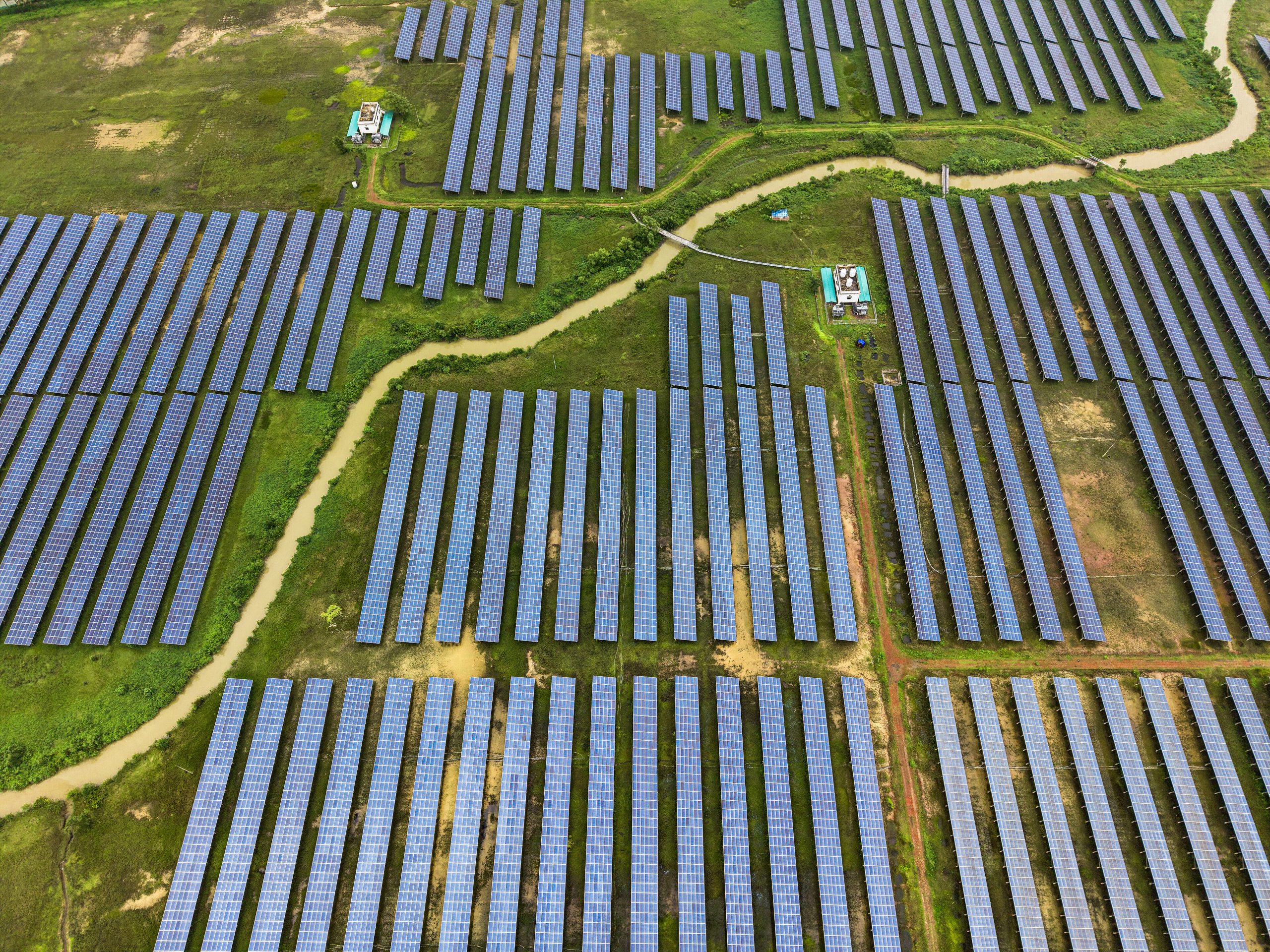
“We have a target of generating 5,000 megawatts of solar power this fiscal year,” the finance minister said. “At the same time, we’re also placing emphasis on nuclear and coal.”
The finance minister made the remarks at a seminar held Saturday at the DCCI office in the capital’s Motijheel. The event, titled “Fiscal Year 2026 Biannual Economic Outlook: Fiscal and Monetary Policy Perspectives and Private Sector Expectations,” was organized by the Dhaka Chamber of Commerce and Industry (DCCI).
In his remarks as chief guest at the seminar, Amir Khasru Mahmud Chowdhury said: “The government is considering extracting the country’s coal reserves. This needs to proceed through discussions with local residents, ensuring their interests are protected. That, too, could make it possible to generate 10,000 megawatts of solar power.”
Noting that foreign investment cannot be attracted without first expanding domestic investment, he said: “However deep the existing obstacles to trade and investment may run, the government is committed to resolving them.”
DCCI President Taskin Ahmed presented the seminar’s keynote paper. He said: “Trade barriers, the Middle East crisis, supply-chain disruptions, rising fuel prices and a doubling of freight costs are driving a downward trend in overall investment and trade. Sustained high inflation and declining private-sector credit flow are deeply concerning for the economy. In this context, industrial zones need uninterrupted access to all types of services to reduce export lead times.”
In his remarks as special guest, Dr. Hossain Zillur Rahman, executive chairman of the Power and Participation Research Centre, said: “We are at a turning point in the economy. If we fail to make the right decisions here, the overall economy will not see the momentum we want.”
ICC Bangladesh President Mahbubur Rahman told the event: “In this fiscal year’s macroeconomic picture, inflation has still not fallen to the expected level. Private-sector credit flow is also at its lowest point in a long time. Alongside stagnant investment, the industrial sector is also unable to operate at full capacity. At the same time, high interest rates, rising production and import costs, and uncertainty in energy supply have significantly increased the cost of doing business.”
Dr. Zaidi Sattar, chairman of the Policy Research Institute, said: “There’s a considerable gap between our policy and its implementation. As a result, we don’t get the desired benefit from any decision. We’re as liberal on diversifying export products and markets as we are strict on import policy. This keeps import tariffs high and drives up inflation and prices locally.”
Professor Dr. Mustafizur Rahman, distinguished fellow at CPD, said implementing the Annual Development Programme (ADP) requires a revolution in tax collection. “There are some good initiatives in the budget,” he said, “but they aren’t reflected in monetary policy. As a result, inflation is rising. Reforming monetary policy is urgent to address the situation.”
In the panel discussion, Dr. A K Enamul Haque, director general of the Bangladesh Institute of Development Studies, said: “Given global economic volatility, it’s quite difficult to expect stability in the domestic economy. So we need to focus on increasing bank liquidity. There’s also no alternative to ensuring a trade-friendly environment.”
Syed Mahbubur Rahman, managing director and CEO of Mutual Trust Bank, said: “Foreign investment won’t come unless domestic investment grows first. That requires maintaining policy continuity while also overcoming weaknesses in the logistics sector.”
Simeen Rahman, group CEO of Transcom Limited, said: “Although the budget contains business-friendly policies, the desired momentum hasn’t come to the private sector. High interest rates and inflation, a high rate of default loans, and heavy government borrowing from the financial sector are mainly to blame for this.”
Also speaking at the event were former DCCI presidents Hossain Khaled, Abul Kasem Khan, Benazir Ahmed and Rizwan Rahman, among others.
বাংলায় মূল প্রতিবেদন পড়ুন · Read the original Bengali report