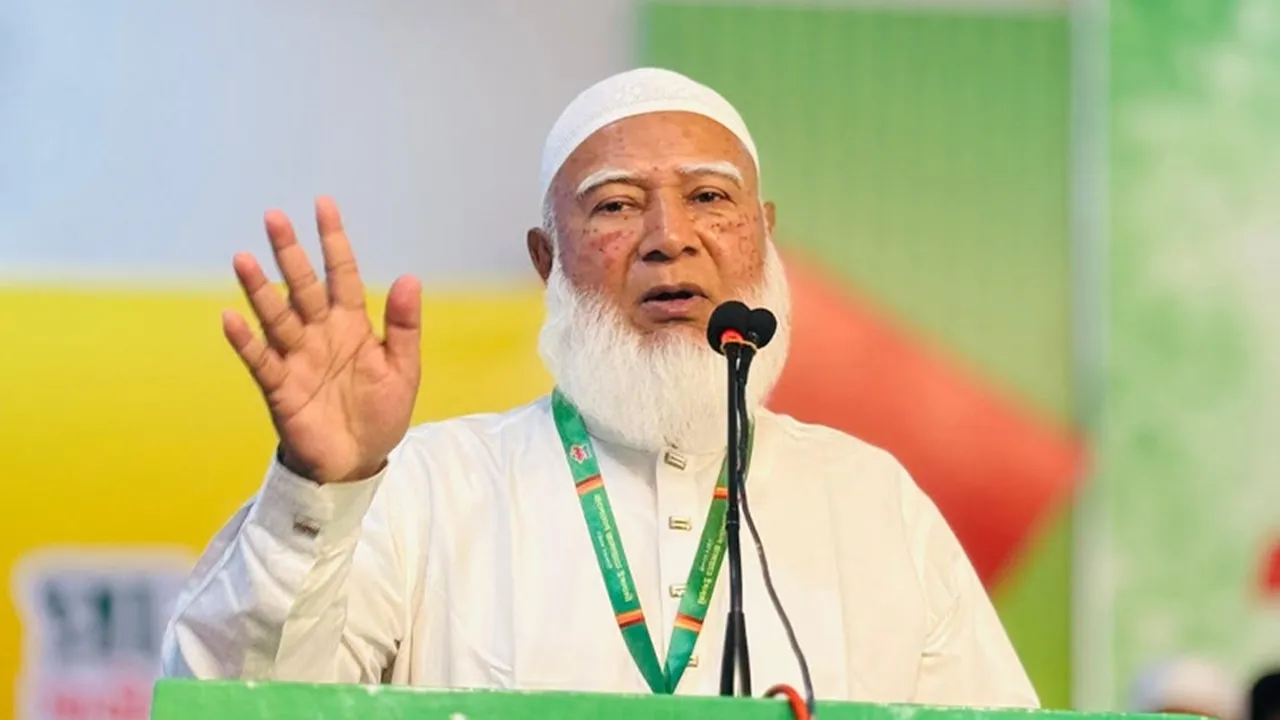
Dr Shafiqur Rahman, amir of Bangladesh Jamaat-e-Islami and leader of the opposition in parliament, has said madrasas face endless neglect, contempt and conspiracy. Government Alia madrasas have become ghostly deserts, he said, and the MPO-listed madrasas are in no better shape. Their syllabus has been cut, and now there is a cleverly framed move to turn madrasas into schools.
He said this on Monday at the Tanzimul Ummah Foundation’s 14th Hifzul Quran Award and Quran Festival 2026, held at the Bangladesh-China Friendship Conference Centre in the capital’s Sher-e-Bangla Nagar.
“Are the people conspiring against madrasas coming from the Amazon jungle? No, they are people of this country, its own sons,” Shafiqur Rahman said. “When they go to an event at a madrasa, they seem to be the finest believing Muslims. But when they set policy on madrasas, it is hard to find any match with that.”
“Those who neglect or scorn madrasas, or conspire against them, I am certain that the scales of the hereafter are in Allah’s hands. Even in this world Allah will not keep them in a place of honour,” the Jamaat amir said. They did not want society to be good, he said; they wanted education to produce a few looters who would plunder the country as they had, steal, extort, grab property, sell and mortgage the country to others and smuggle its money abroad. They would send their relatives and children abroad while claiming to stay here out of love for the country. In practice, he said, they saw the country as a farm for their own living and its people as their subjects.
To change this, he said, society needs both the rule of the Quran and the practice of the Quran, and the more Quranic learning is developed, the more society will benefit.
The opposition leader said there was nothing to fear from madrasa education. Madrasa students were now competing and doing well in the civil administration, the police, health care, diplomacy and other fields, he said. These talented students would also do well in general institutions, he said, and because madrasas teach morals and character, they grow up honest as well as able.
When merit and character are ignored, society becomes a jungle, he said, and Bangladesh is suffering from just such a crisis today. He called for plans to produce patriotic citizens by giving priority to moral and religious education in general education as well as in madrasas.
Amar Desh editor Mahmudur Rahman, Professor Kamal Uddin Abdullah Jafri, Jamaat assistant secretary general and Rangpur-Dinajpur regional director Maulana Abdul Halim, and member of parliament Md Salahuddin Ayubi were among the other speakers.
বাংলায় মূল প্রতিবেদন পড়ুন · Read the original Bengali report