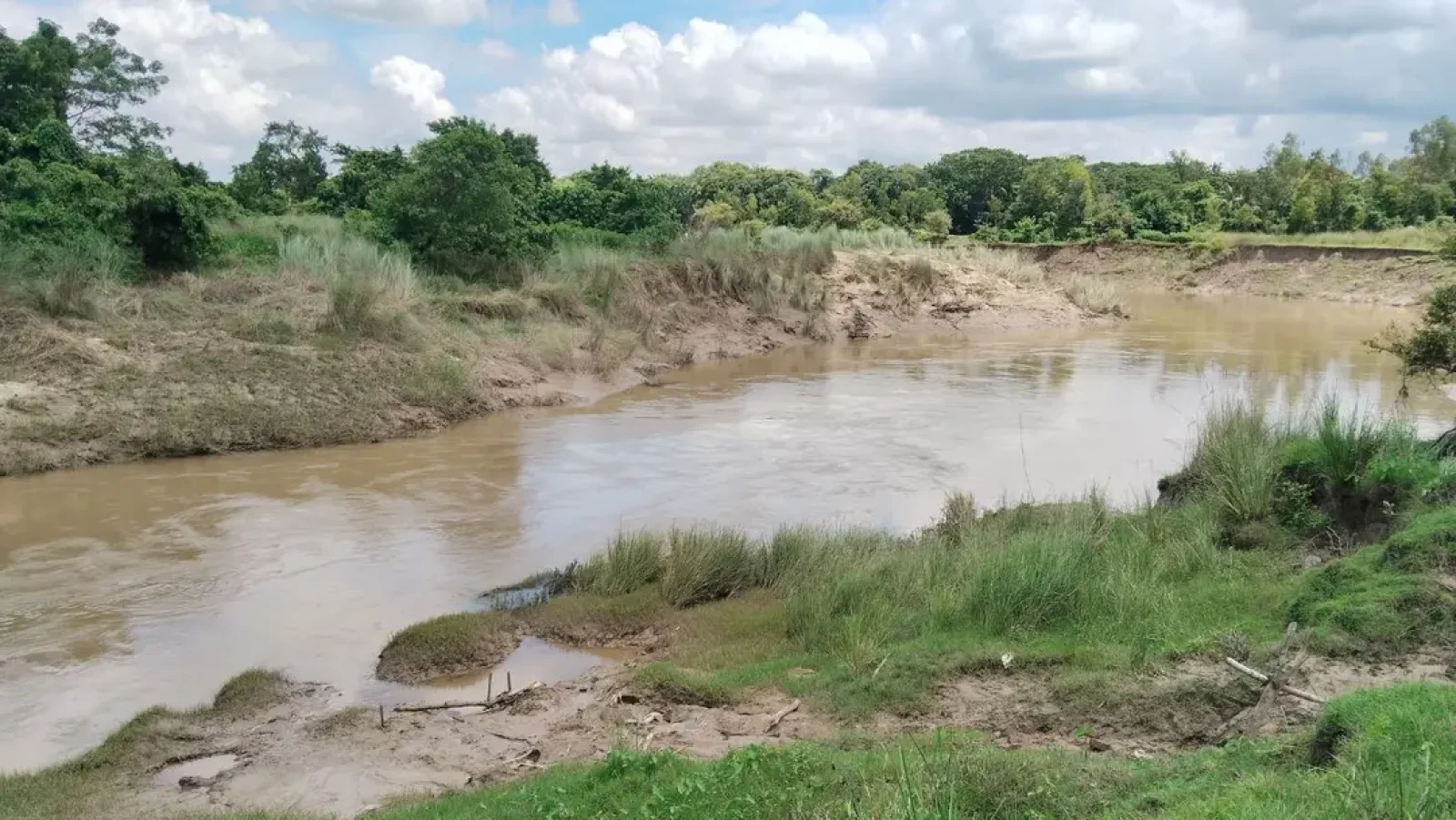
Industrial chemical effluents on one side and market and municipal waste on the other—compounded by illegal sand extraction, unplanned embankments and rising salinity upstream—are taking a severe toll on the environment of Chattogram’s Halda River. The mounting human and natural pressures have raised alarm over the survival and biodiversity of one of South Asia’s most important natural breeding grounds for major carp.
A study by the University of Chittagong (CU) has laid bare the troubling state of the river. Researchers identified 57 sources of pollution along the 81-kilometre stretch from the Halda’s source to its estuary, of which 29 directly pollute the river water and 13 were classified as highly hazardous.
Conducted under the supervision of former Botany Department chairman Prof Dr Sheikh Bokhtear Uddin and led by Prof Dr Mohammad Omar Faruk, the research examined plant diversity along the river and both its banks, sources of pollution and broader environmental shifts.
The study documented 1,029 plant species across the 81-kilometre river and riparian corridor, including 729 species officially recorded in the area for the first time. Of the identified flora, 765 are native and 244 are exotic. According to researchers, the unchecked spread of exotic plants is impeding the natural growth of native species and disrupting the ecological balance of the river basin.
Findings also show that 517 of the recorded species—51.2% of the total—possess medicinal properties. Conversely, 23 plant species were flagged as critically endangered, including batna, laisya garjan, chau tal, ishwar mul and pakha dhekia. Researchers warned that without urgent conservation measures, these native species could vanish from the Halda basin.
One of the most concerning findings is the presence of the coastal mangrove tree keora in the Halda’s upper reaches. Because the species typically thrives in saline environments, researchers view its spread as a possible indicator of growing salinity intrusion upstream.
Rising salinity could damage the spawning habitat of carp species such as rui, katla, mrigel and kalbaush, threatening conditions needed for brood fish to release eggs as well as the development of eggs and the natural growth of fry.
বাংলায় মূল প্রতিবেদন পড়ুন · Read the original Bengali report