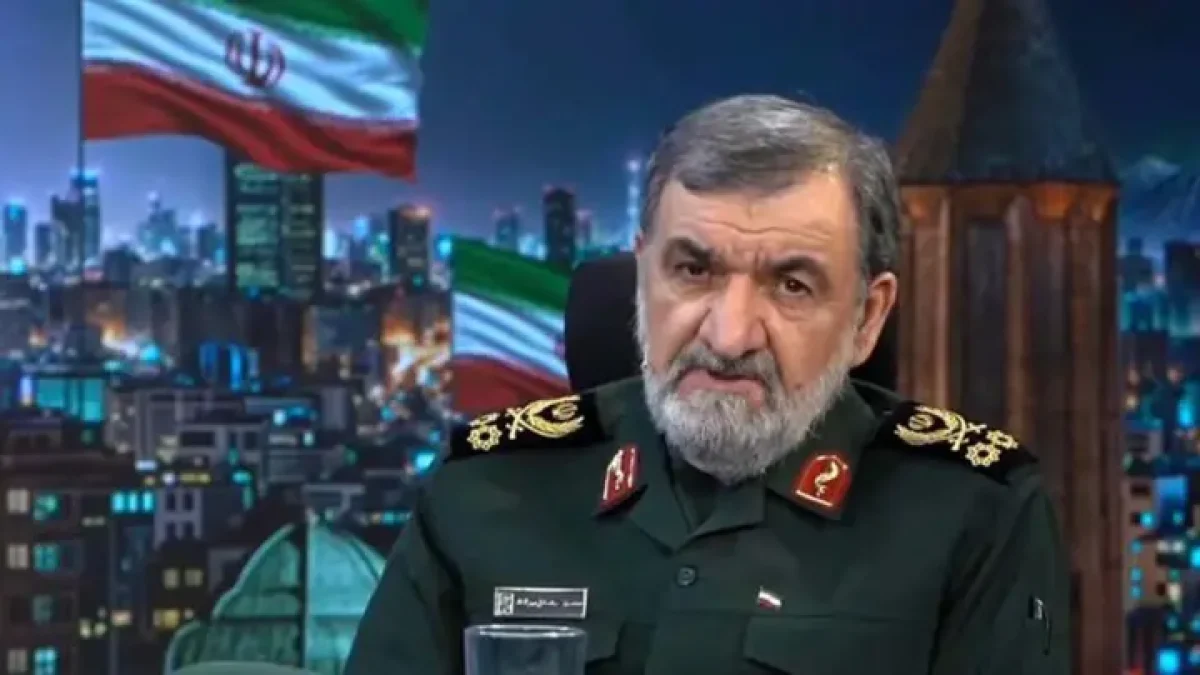
Iran will strike oil facilities, undersea communication cables, data centres and artificial intelligence facilities in seven Gulf countries if the United States and Israel launch new attacks, Mohsen Rezaei, secretary of Iran’s national security council, has warned.
Mehdi Mohammadi, an adviser to parliament speaker Mohammad Bagher Ghalibaf, the hard-line politician leading talks to end Iran’s conflict with the United States, said US President Donald Trump and Israeli Prime Minister Benjamin Netanyahu had agreed in principle on new strikes. But success in such an attack could not be guaranteed, he said.
“We see the next conflict as an existential threat,” he said. “A third war within two years would threaten our existence. Our strategy is to recognise no limits.”
“We will break the usual limits of conflict in both time and geography,” Mohammadi added. “The war will last longer than the enemy expects and will spread over a wider area.”
How capable Iran is of carrying out such operations in response to a possible US and Israeli attack, and whether it gets any informal help from China or Russia, will weigh heavily on Washington’s decision on whether to start a war.
“If war starts, communication cables, data centres and AI facilities could also be targets,” Rezaei said. “If the conflict resumes, we will have broader plans.”
“There can be no arrangement in which Iran’s economic lifelines are attacked while the economic infrastructure that helps carry out those attacks stays safe and off limits,” he added.
According to recent reports in US media, the country’s military advisers have drawn up a detailed list of targets for new joint strikes on Iran after the US midterm elections on 3 November.
Meanwhile, the foreign ministers of three European countries and representatives of Turkey, Saudi Arabia, Pakistan and Egypt are due to meet in Istanbul on Friday to coordinate policy on the crises in Iran, Yemen and Palestine. Fears are growing that both Tehran and Washington are preparing for a new war.
On Wednesday, the navy of Iran’s Islamic Revolutionary Guard Corps (IRGC) claimed it had simultaneously attacked four commercial ships trying to pass through the Strait of Hormuz. It claimed oil was being transferred from those ships to other vessels.
The IRGC also claimed that three more ships had been damaged by mine explosions in the strait. The number of ships attacked and the incidents could not be independently verified.
Fears of new joint US and Israeli strikes on Iran have pushed up oil prices on the international market. Brent crude reached $113.4 a barrel, one of its highest levels in recent times.
Trump has pulled back from decisions to launch new strikes on Iran seven times in the past four months. But with diplomatic talks at a standstill, US officials are discussing a possible new military operation that could target Iran’s missile sites, oil infrastructure and nuclear facilities.
Alongside the threats traded by the two sides, the United States and Israel are continuing joint military exercises, including practice for operations such as flights over Iraqi airspace. According to the news outlet Axios, dozens of Israeli fighter jets flew close to Iran’s border earlier this week.
A major fire also broke out at a large aluminium plant in the central Iranian city of Arak, raising fears of sabotage operations inside the country.
On Monday, Netanyahu met US Defence Secretary Pete Hegseth in Israel. They discussed the timing and aims of possible joint strikes, and reportedly also how such strikes could affect Netanyahu’s chances of re-election.
According to reports, Netanyahu wants Iran to strike first, and told Hegseth so at Monday’s meeting.
Under Trump’s plans, three aircraft carriers, several thousand Marines, fighter jets and special operations forces are to be deployed to the Middle East by November.
Reza Nasri, an international law expert close to Iran’s foreign ministry, warned that if a third phase of the war begins, it will not be confined to any one area.
“Power grids, desalination plants, oil refineries and ports across the region will burn,” he said. “Tens of millions of people will be left without water and electricity. Large numbers of refugees from Arab countries will head for Europe.”
“The Strait of Hormuz will be completely closed, oil prices will soar and the world economy will face recession,” Nasri added. “Israel’s economy, already strained by troop deployments and missile attacks, will not withstand a long war of attrition. And Trump will be stuck in a crisis that will consume the rest of his presidency and leave ruins for the next administration.”
The Fars news agency, which is close to the IRGC, reported that Iran has issued instructions to its military and operational units. They say that if a major new war breaks out, especially one involving the killing of Iranian officials and civilian deaths, Iran’s response will not be limited to military targets; political targets will also be in range.
Meanwhile, Iranian and Pakistani mediators held talks again this week to find a path to a ceasefire, and some earlier proposals are being reconsidered.
These include lifting the blockade in the Strait of Hormuz, allowing UN weapons inspectors to visit Iran’s bombed nuclear sites, and returning several billion dollars of Iran’s frozen assets in exchange for sending its stockpile of highly enriched uranium to a third country.
বাংলায় মূল প্রতিবেদন পড়ুন · Read the original Bengali report