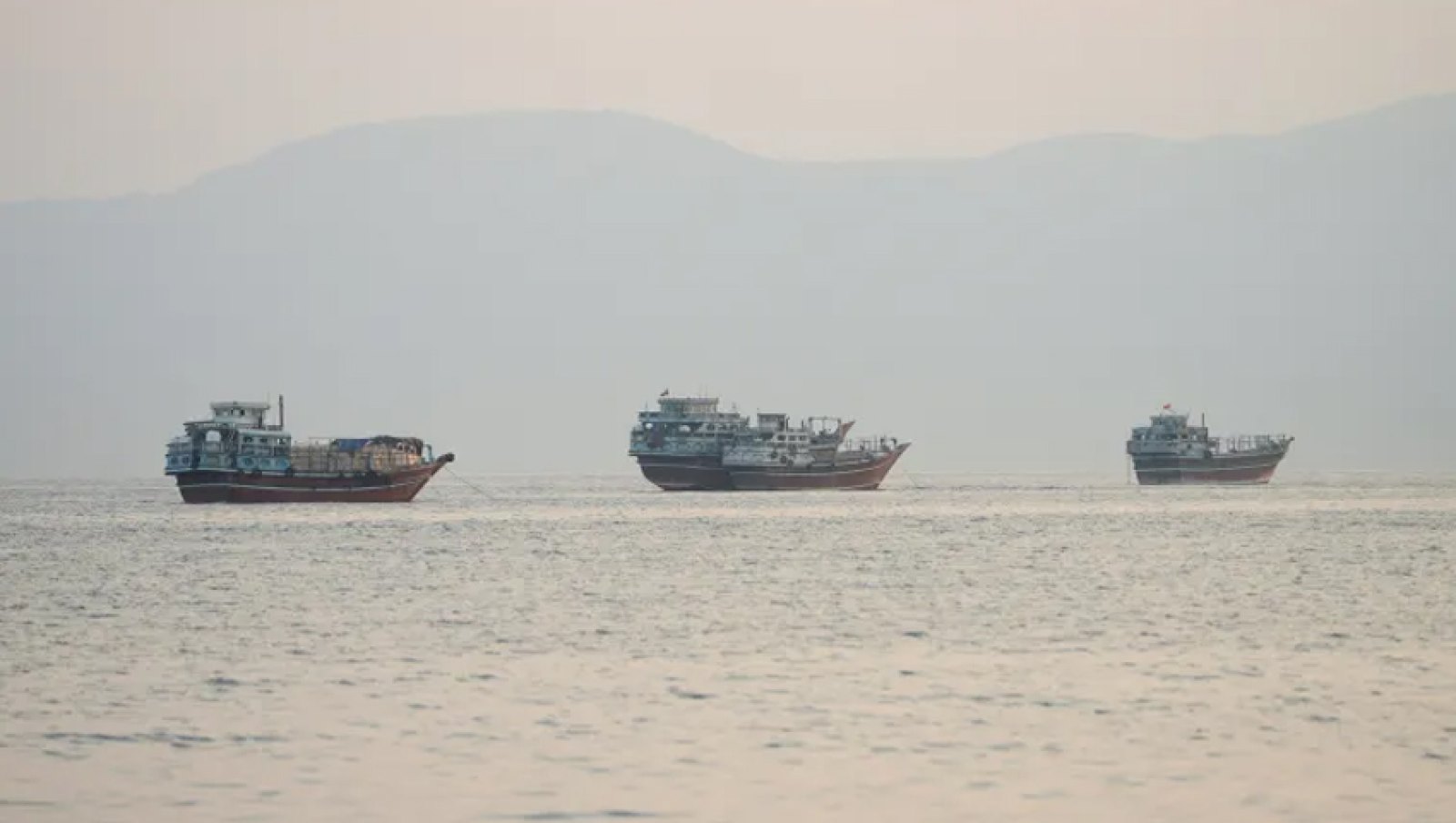
Amid its conflict with the United States and Israel, Iran has given ships from India, China, Qatar and Iraq a special exemption to pass through the Strait of Hormuz, a vital shipping lane. A senior Iranian lawmaker said vessels from the four countries may cross the strait free of the restrictions Iran has imposed.
Amir Hayat Moghaddam, deputy head of the Iranian parliament’s national security and foreign policy committee, told the Iranian news agency ISNA on Tuesday.
Analysts say the exemption is driven by economic and political interests, not friendship alone.
Why these four countries?
According to the Iranian lawmaker, Iran will get medicines from India, while Tehran hopes for political support from China. Qatar has already been trying to mediate between the United States and Iran.
Iran also plans to charge Indian and Chinese ships a transit fee for using the Strait of Hormuz. Qatari ships, however, are being allowed through free of charge. It has not been made clear whether Iraqi vessels will pay.
Analysts believe Iran wants to earn money through the arrangement while also trying to weaken the US blockade.
Why it matters to the four
The Strait of Hormuz is one of the world’s most important routes for moving energy. A large share of the oil and gas shipped from the Gulf to Asian countries passes through it.
According to figures for October, about 10,023,000 barrels of Gulf crude oil a day moved through the Strait of Hormuz. About 42 percent of it went to China and 13 percent to India.
Any disruption in the strait therefore puts Asia’s energy-dependent countries most at risk.
For India, keeping oil supplies from the Gulf flowing normally is vital. India’s capacity to manufacture medicines is also a major benefit for Iran.
Qatar, for its part, depends heavily on the route for its exports of liquefied natural gas (LNG). The strait is also very important for Iraq’s oil exports.
This is where the big question arises. The US military has said its naval blockade will remain in force on ships of every country sailing to or from Iran’s coastal areas and ports. Ships with no link to Iranian ports are not covered by the blockade.
Ships carrying urgent humanitarian goods such as food and medicine may also be allowed through after inspection.
Analysts say the situation could change significantly if Iran also exempts Indian and Chinese ships carrying goods to and from its own ports and the United States accepts it.
There are also questions about how a ship’s nationality will be decided. It is still not clear whether the flag, the ownership or the identity of the operating company will count.
Iran’s strategy in talks with the United States
Analysts believe Iran wants to use access to the Strait of Hormuz to put political and economic pressure on the United States.
Lifting the Hormuz blockade and removing sanctions are among Iran’s main demands in wider peace talks with the United States.
Talks between the two countries are under way with Qatari mediation. Reports say Iran has set seven conditions for reopening the strait.
How much will the oil market feel it?
Analysts say the decision is unlikely to cause a big change in the international oil market for now.
If the conflict flares again, there may be no room to treat ships differently by country.
Nor does a special exemption guarantee a ship’s safety. On 30 October the Qatari LNG carrier Al Maeda was hit by an unidentified object in the Gulf.
According to the International Maritime Organization and the UK Maritime Trade Operations, more than 120 commercial ships have been attacked in the region since the war began.
Overall, by granting India, China, Qatar and Iraq special passage through the Strait of Hormuz, Iran is trying to meet its own economic needs while countering the US blockade and diplomatic pressure. How well the exemption works will depend largely on how the United States responds.
বাংলায় মূল প্রতিবেদন পড়ুন · Read the original Bengali report