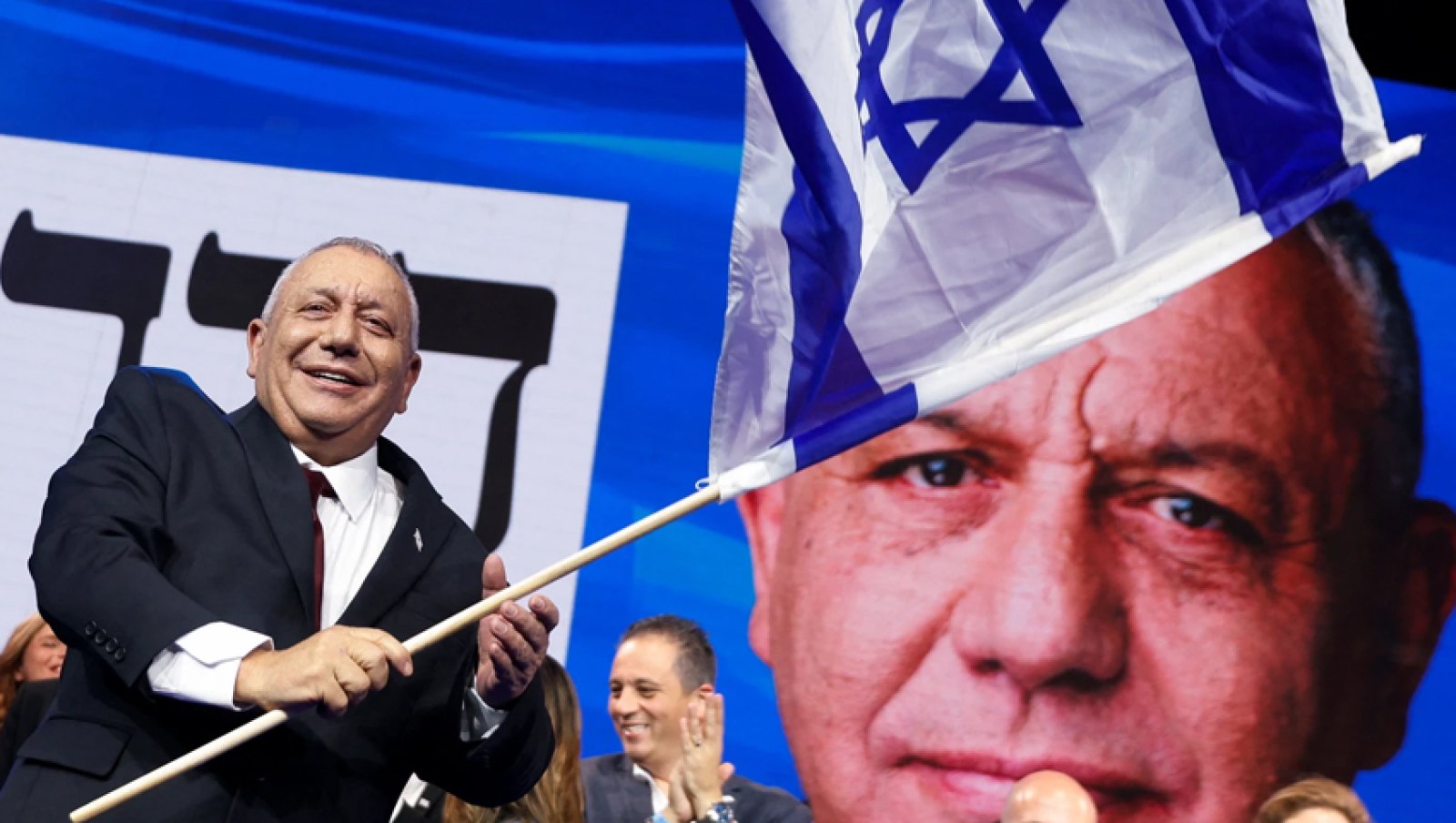
Two Arab-led political parties in Israel have backed opposition leader Gadi Eisenkot in the contest to form a new government. Their announcement on Thursday (5 November) puts Eisenkot in line for the support of 67 lawmakers in the 120-member parliament, further weakening Benjamin Netanyahu’s position as prime minister.
The Joint List, Israel’s largest Arab political alliance, said on Thursday that it would recommend Eisenkot to President Isaac Herzog to form a new government after last week’s election. Earlier in the day the United Arab List, Ra’am, which won eight seats, also declared its support for him.
Arab-majority alliances won a record 19 of parliament’s 120 seats in last week’s election, making their support important in forming a new government.
Eisenkot, a former military chief, leads the centrist Yashar party. With the Arab parties’ backing, he is now likely to have the support of political groups that together hold a majority of seats in parliament.
The alliance said it took the decision to keep Netanyahu’s government from returning to power and to strengthen the effort to remove him. There are also concerns, however, that the opposition parties have not taken a strong enough stand against policies that hurt the interests of Arab citizens.
Because no side won a majority in the 27 October election, President Herzog is holding talks with the parties to decide whom to task with forming a new government. He began the talks on Wednesday night. Herzog told party leaders that if they want to avoid a new election, they must bear in mind that not every promise and commitment can be kept.
Three political groups from Netanyahu’s religious-nationalist camp have recommended that he be given the chance to form a government. A fourth group, led by a former ally of Netanyahu, has backed Eisenkot.
The president was due to meet eight more parties on Thursday, including the two Arab-led parties. At the end of the talks he will sit with representatives of Eisenkot’s Yashar party and Netanyahu’s Likud.
Neither Netanyahu’s nor Eisenkot’s bloc secured a majority in parliament in last week’s election. Netanyahu’s right-wing Likud and its far-right and ultra-Orthodox Jewish allies won 53 seats. Eisenkot’s centrist Yashar party and the three other Jewish opposition parties in his bloc won 48 seats together.
Israel’s largest Arab-Israeli alliance on Wednesday alleged “political persecution” after a lawmaker was accused before the election of taking foreign money. Turnout among Arab voters in last week’s election was a record.
Netanyahu has also stepped up claims of foreign interference in the election. Standing in front of an Israeli flag in a video message, he said there were serious suspicions that foreign states had spent significant sums to influence the result of Israel’s election. A sign reading “Prime Minister’s Office” could be seen behind him in the video.
বাংলায় মূল প্রতিবেদন পড়ুন · Read the original Bengali report