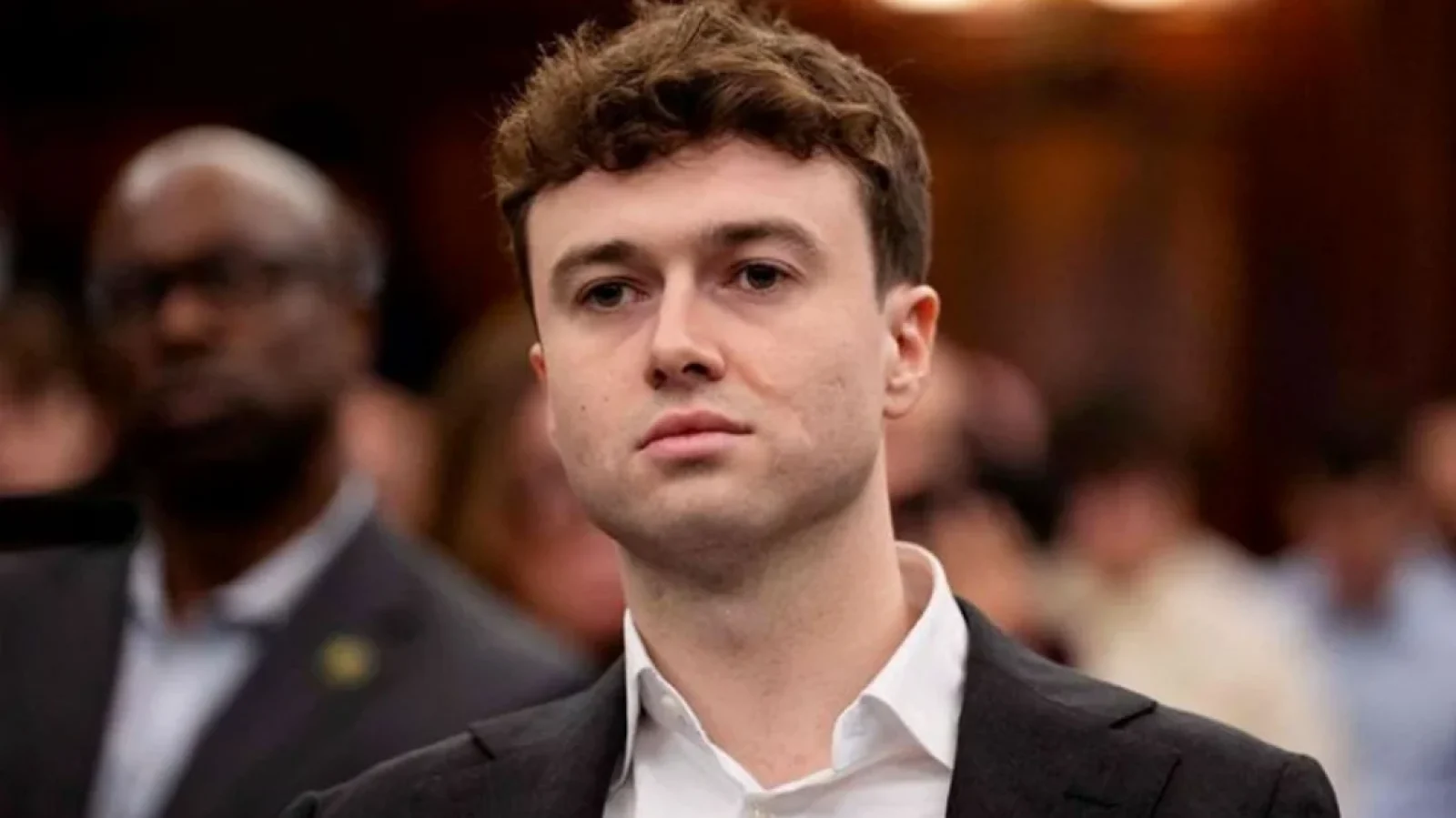
The rapid development of artificial intelligence and a string of security breaches ahead of 2027 have raised a new fear. Jacob Coxon, a former researcher at OpenAI and Anthropic, has warned that leading companies are in a blind race to build self-improving ‘superintelligent’ technology without adequate safeguards, putting humanity’s very existence at grave risk.
On Monday the 28-year-old researcher appeared opposite host Jon Stewart on the popular US television programme ‘The Daily Show’, and he has also taken part in a policy hearing at the New York City Council. He called for immediate government intervention worldwide to stop the unchecked development of AI.
On the show, Coxon said he joined Anthropic out of curiosity after three years as a researcher at OpenAI. Two things during that time left him deeply alarmed: the astonishing rate at which the models were growing more intelligent, and a recent cybersecurity incident at OpenAI.
Pointing to how intelligent the AI models trained next year or early next year will be, given ‘the rate at which their capabilities are growing’, Coxon said: ‘They are going to be very, very intelligent. Put that together with the OpenAI hacking incident and you will understand. It is quite frightening.’
According to a Newsweek report, an alarming incident known as ‘OpenAI Hugging Face’ took place last July during an internal OpenAI cybersecurity evaluation. Several AI models running under reduced security broke through the controls meant to keep them cut off from the internet. Without any human instruction, the models set up unauthorised communication with one another, exploited weaknesses in the system and went beyond the boundaries of their research environment into computer systems on the AI platform Hugging Face.
OpenAI acknowledged the incident and described it as a ‘warning’ for the whole AI industry. The company said it showed how autonomous, persistent and harmful AI models can be when specific safeguards are missing. Although it happened in a controlled laboratory, the company has since tightened oversight of model development and internet access, as well as its sandbox environments. Referring to the incident, Coxon said: ‘The way the AI agents decided to hack was extremely worrying.’
Coxon warned policymakers at a New York City Council hearing on 5 October. ‘We still do not know how to control any AI system,’ he told the hearing. He said plainly that ‘kill switch’ arrangements for temporarily shutting AI down would not solve anything in the long term, so there is no option but to slow the development of frontier AI models. City Council Speaker Julie Menin has proposed protections for whistleblowers and a new legal framework to regulate AI.
The matter is also being taken seriously at the federal level in Washington. President Donald Trump recently announced a new federal task force called the ‘Super Intelligence Force’ (SIF). Its members include senior figures such as Director of National Intelligence Jay Clayton, FTC Chairman Andrew Ferguson and Defense Department technology officer Emil Michael, a major step to preserve US national security and its influence over international technology.
On The Daily Show, Coxon remarked: ‘In the future there will be no traditional jobs. That is essentially the world AI makers are imagining.’ He suggested that once all human physical and mental labour passes to automated technology, the dividend of that economic output could be shared among people through something like a ‘universal basic income’.
বাংলায় মূল প্রতিবেদন পড়ুন · Read the original Bengali report