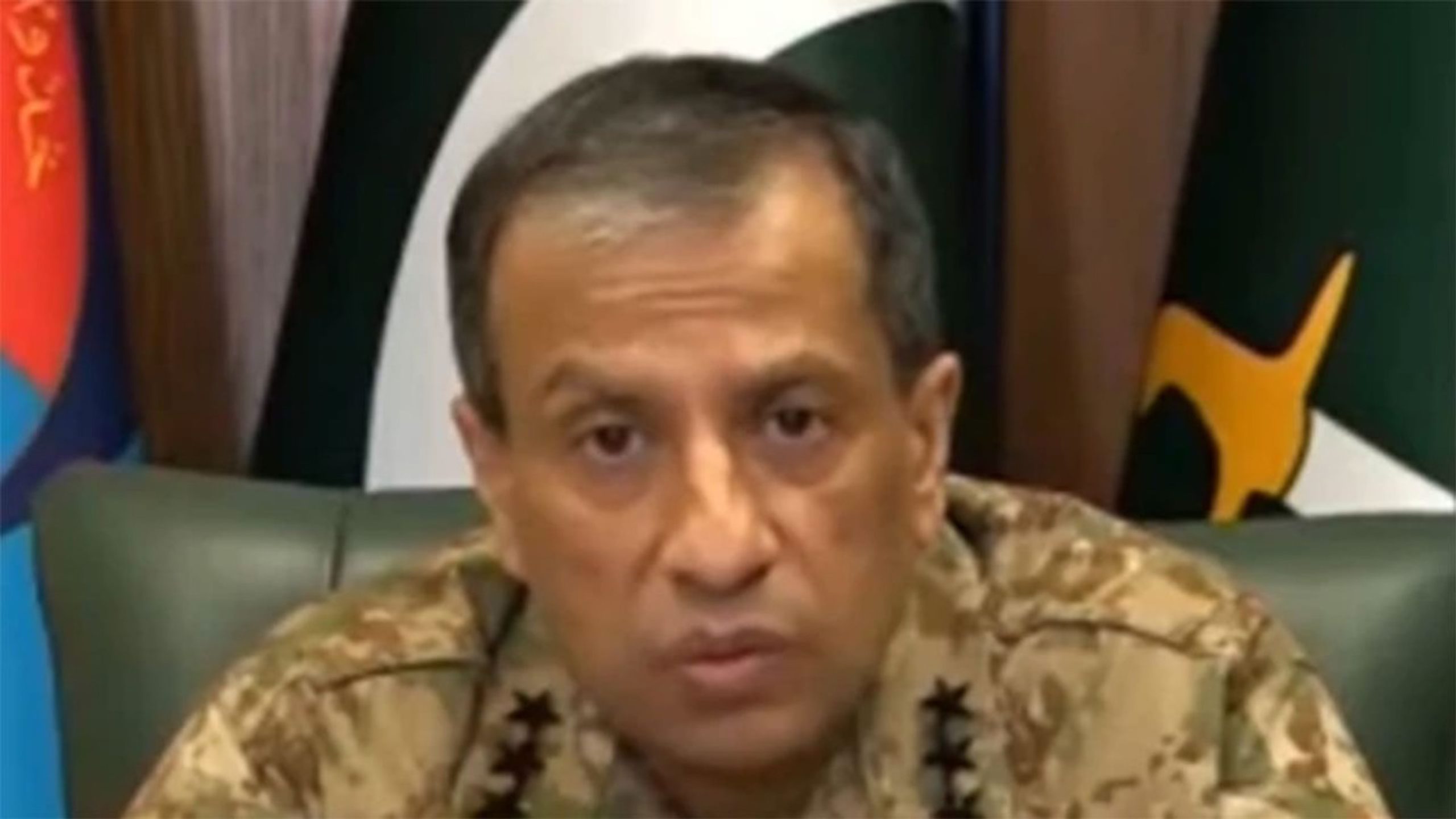
Pakistan will not hesitate to take any step necessary to defend Saudi Arabia if it comes under attack, the director general of Pakistan’s Inter-Services Public Relations (ISPR), Lieutenant General Ahmed Sharif Chaudhry, has said, reaffirming his country’s commitment to taking whatever steps are needed for Saudi Arabia’s security and the protection of the two holy mosques. He made the remarks in an interview with Arab News on Thursday. Pakistan’s English-language daily The Express Tribune reported on September 18 that Pakistan has declared an “unconditional” commitment to Saudi Arabia’s security.
Ahmed Sharif said Pakistan has expressed full solidarity with Saudi Arabia in every respect, from diplomatic support to standing directly by its side if required. “We are ready to take any step necessary for the security of the two holy mosques and the Kingdom of Saudi Arabia,” he said. “We will do as much as our Saudi brothers want and need.” Reaffirming Pakistan’s commitment, he said the Pakistani people stand shoulder to shoulder with their Saudi brothers and sisters, and that Pakistan will stand by Saudi Arabia to repel any aggression against it, adding there should be no doubt on that point. “In short, we are there, and we will remain there to repel any aggression against Saudi Arabia,” he said.
The ISPR chief also highlighted Pakistan’s diplomatic efforts, saying the country is working with other regional states and partners to find a peaceful, negotiated resolution to the complex situation, and that Pakistan’s political and military leadership remains in regular contact with Saudi leaders. Citing Pakistan’s commitments under the Mecca defence pact and the two countries’ mutual defence agreement, Ahmed Sharif Chaudhry said Islamabad is not merely committed but already present in the effort to protect the two holy mosques and Saudi Arabia. “We are there for their protection,” he said. “We are ready to take whatever further steps are needed, according to what Saudi leaders and the Saudi people require.”
Describing Pakistan’s commitment to Saudi security as “unconditional,” he said the peoples and the political and military leaderships of the two countries share a historic, deep and emotional bond that remains unbreakable, and from which Pakistan’s commitment to Saudi security flows. “There is nothing to stop us, no obstacle,” he said. “We have no hesitation in fulfilling our commitment. Whatever is needed, whatever is asked of us, we will not hesitate to take any step for it.” Asked whether Pakistan currently has a direct presence in Saudi Arabia, Ahmed Sharif Chaudhry said: “After saying ‘we are there,’ the words themselves make everything clear.”
Pakistan’s foreign office separately reaffirmed the country’s commitment to its strategic mutual defence pact with Saudi Arabia and the Mecca joint defence agreement. Asked whether any mechanism had been set for Pakistan’s response under the Mecca pact in the event of an attack on Saudi Arabia, foreign office spokesperson Sajjad Hyder Khan said Pakistan is committed “in purpose and spirit” to implementing both agreements, though he said decisions on the use of force are a military operational matter. At the weekly press briefing, the spokesperson said some latitude for decision-making needs to be retained at this stage, for reasons of military secrecy, over questions of when, how, where and with what force any strike would be carried out, against which target, and using what methods.
Sajjad Hyder Khan said the Mecca pact is defensive in nature, is not directed against any country, and does not create a new alliance. Its purpose, he said, is instead to strengthen existing cooperation in areas such as training, capacity building, defence technology and research, and to build collective resistance against activity that destabilises regional security.
Pakistan continues diplomatic efforts to prevent the Gulf crisis from spreading further. On Wednesday, Field Marshal Asim Munir spoke by phone with Iranian foreign minister Abbas Araghchi, urging Tehran to use its influence over the Houthis to halt attacks on Saudi Arabia’s energy and economic infrastructure. Islamabad has repeatedly called for restraint and diplomacy. On September 13, speaking with Saudi Crown Prince Mohammed bin Salman, Pakistan’s prime minister, Shehbaz Sharif, reaffirmed solidarity with Saudi Arabia and support for efforts to de-escalate the crisis.