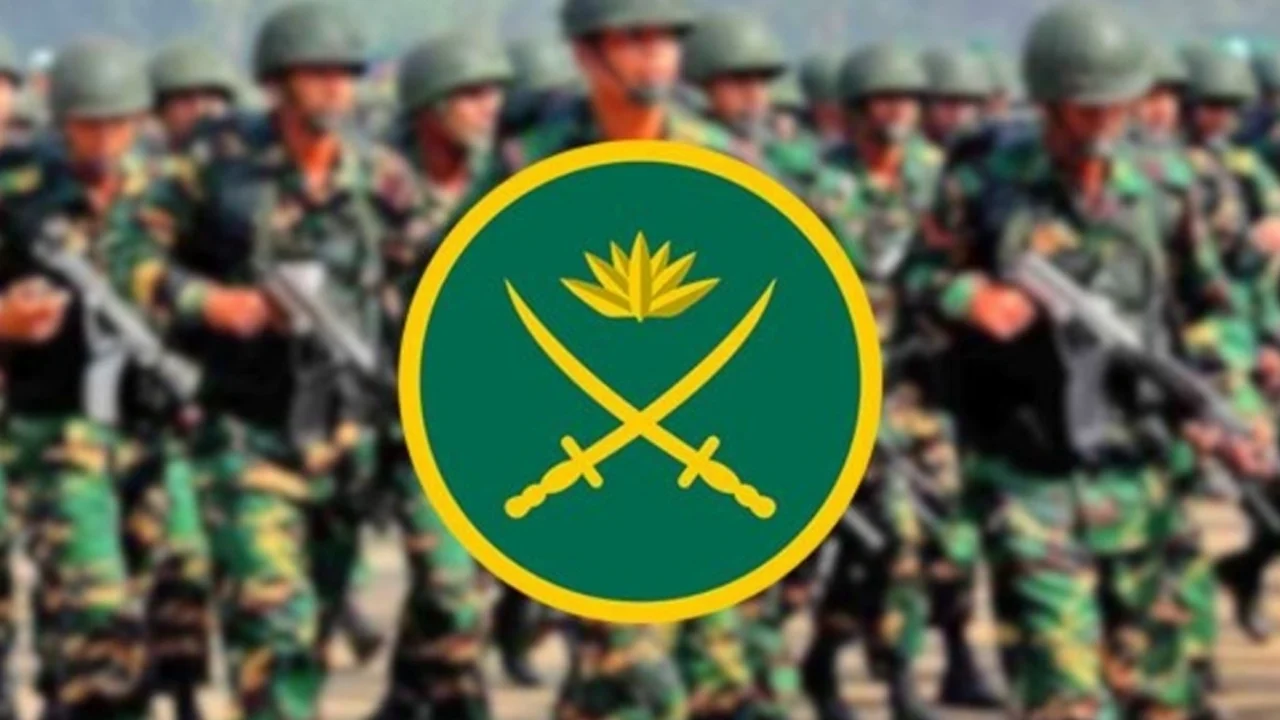
Critics often say the armed forces are drifting steadily into a religious orbit. Some try to detect a whiff of fundamentalism in it. In a Muslim-majority country, most soldiers come from Muslim families, and their ordinary religious practice is unremarkable. Even so, in an electronic age, quick access to any information is encouraging, and the exchange of knowledge has made the flow of information faster still. Over a long time in the army I have asked myself why soldiers are more interested in religious practice now than before.
A young person joining the armed forces enters first with the ideals of patriotism, discipline and service to the country. But when, after gruelling training, they stand before the national flag and take the oath with a hand on a holy book, their whole philosophy of life changes. They realise they have taken on the sacred duty of giving their life to protect the country’s independence and sovereignty. That realisation does not make a person arrogant; it makes them humble. And from humility is born reliance on the Creator.
A large part of my career was spent in the field, in remote areas and in operational environments. A soldier serving in the Chittagong Hill Tracts in particular lives every day with uncertainty. There is no guarantee of when, where or what situation they will face. I have seen many dear comrades killed, many permanently disabled, and countless families carrying the grief of losing someone they loved. In such a reality, it is entirely natural for a soldier to seek peace in remembrance of the Creator.
Many assume that religious practice among soldiers is the result of institutional pressure. Real experience is quite different. In a remote hill camp, opportunities for recreation after a day’s operations are very limited. Many then read religious texts, offer prayers or pray according to their own faith, entirely of their own accord. This is not because of any order; it is a personal means of finding peace of mind, self-control and spiritual strength.
The experience has been the same on United Nations peacekeeping missions. Strict discipline, a regulated life and an environment of responsibility make a soldier more self-controlled. The professionalism and discipline of Bangladeshi peacekeepers is admired internationally. Personal religious practice strengthens soldiers’ sense of discipline further.
One thing needs saying clearly. Bangladesh’s armed forces are not an institution of any one religion; they are a national institution loyal to the constitution. Members of different faiths work together here, train together and risk their lives together for the country. Each enjoys the right to practise their own religion and shows equal respect for a colleague’s religious beliefs. That mutual respect is one of the foundations of the force’s strength.
Recently, mockery of the army chief’s beard, or of the religious identity of individual soldiers, has appeared on social media. It is not appropriate to drag personal religious practice into political or malicious controversy. A soldier should be judged on honesty, professionalism, discipline, leadership and a sense of duty to the country, not on personal religious practice.
It is my belief that people who stand facing the risk of death understand the true value of life most deeply. When a soldier serves at the border, in the hills or on a peacekeeping mission with the country’s flag on their chest, patriotism, discipline, morality and belief in the Creator are not in conflict; they complement one another.
That is why religious practice among soldiers is no surprise to me. It is a natural expression of their professional reality, their spiritual strength, their moral awareness and their sense of duty.
The writer is a freedom fighter and a former infantry officer.
বাংলায় মূল প্রতিবেদন পড়ুন · Read the original Bengali report