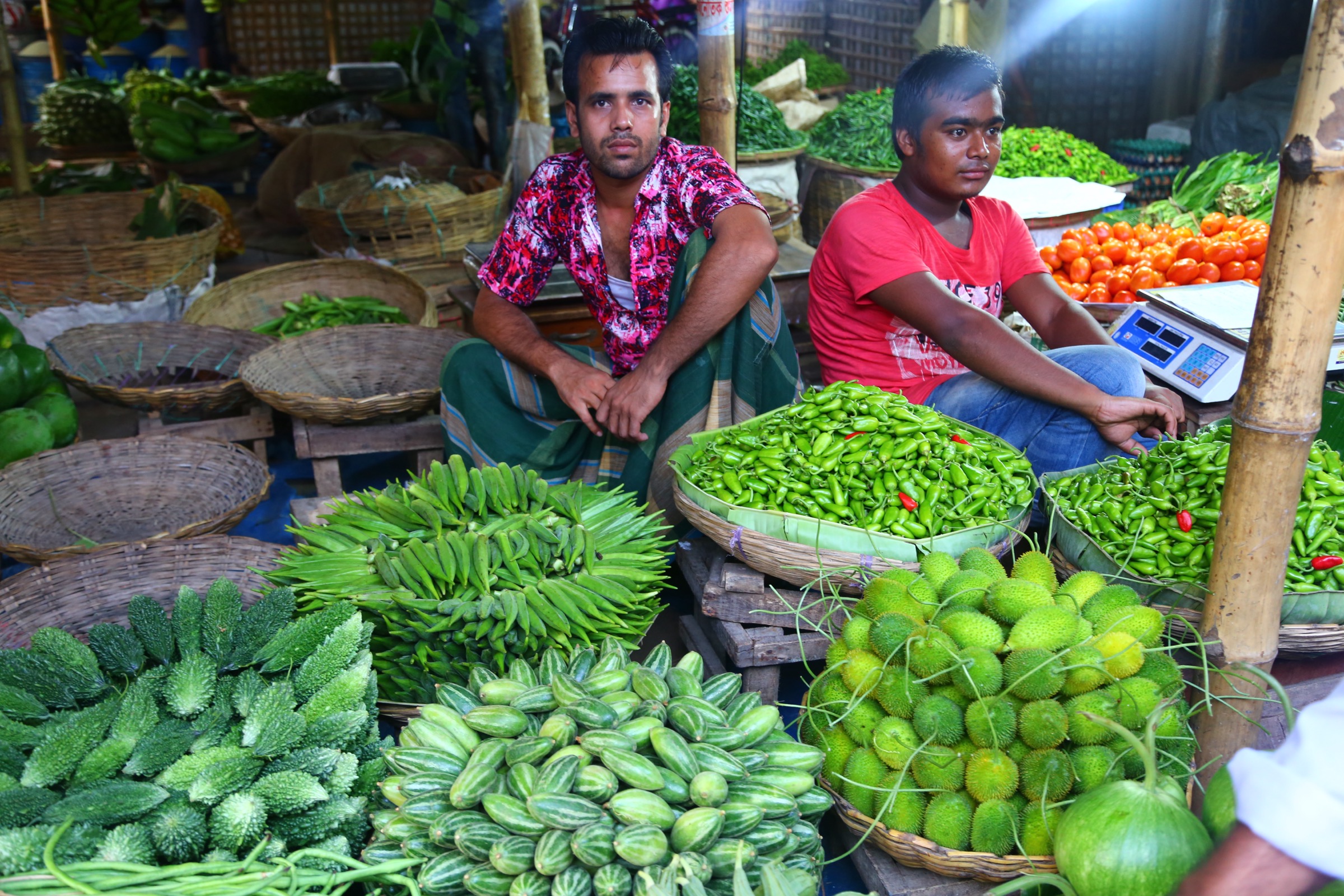
Dominance by intermediaries in the country’s farm-produce supply chain is creating large gaps between producer and consumer prices. A survey by the research organisation Centre for Policy Dialogue (CPD) found that, moving from the farm or production level to the retail market, the price of green chilli rose 116 percent. For onion the rise was 87 percent. Lentil prices rose 78 percent and eggplant 72 percent. The figures were presented at a press conference held on Thursday at CPD’s office in Dhanmondi in the capital.
The report, titled “Bangladesh Economy in FY2025-26: Multidimensional Challenges in a Transitional Period,” set out the picture of the country’s commodity market. It was presented by CPD Executive Director Dr Fahmida Khatun. She said the country’s commodity market remains heavily dependent on city-centric wholesalers and intermediaries. As a result, market concentration in the supply chain is rising and competition is falling.
The analysis is based on CPD’s 2025 market survey, which drew on data from about 1,000 participants, including stakeholders at various levels from farmers to retailers. It covered 10 products: rice, lentils, onion, potato, green chilli, eggplant, eggs, beef, fish and broiler chicken. The survey found the largest producer-to-retail price rise was for green chilli, at 116 percent, followed by onion at 87 percent, lentils at 78 percent and eggplant at 72 percent. CPD attributes the increases mainly to long supply chains and the presence of multiple intermediaries between producer and consumer.
Fahmida Khatun said: “The more intermediaries there are in the supply chain, the more the consumer has to pay. In the market’s current structure, some stakeholders are able to exert abnormal influence over procurement and retail pricing.”
The report said urban wholesale agents (aratdars) play an important role in marketing onion, potato, vegetables, eggs and fish, and that retailers depend heavily on them to source goods. This reduces competition and increases the agents’ influence. According to CPD, such dependence creates structural weakness in the market and adds to inflationary pressure. As excess market power is concentrated in the hands of a few intermediaries, competition falls and scope for anti-competitive behaviour opens up. As a result, they retain a large share of the profit, which ultimately raises inflationary pressure at the consumer level. By contrast, for products with relatively short supply chains — such as eggs, broiler chicken, beef and fish — the gap between producer and retail prices was comparatively smaller.
The report also said the prices of several essentials have risen steadily in recent years. As of 14 May 2026, beef reached 790 taka per kilogram, the highest since 2019. Rui fish sold at 365 taka per kilogram and broiler chicken at 190 taka per kilogram. Over the same period the price of lentils nearly doubled — from 63 taka per kilogram in 2019 to 118 taka per kilogram in May 2026. The rice market, however, was relatively stable, with medium-grade Paijam rice selling at about 60 taka per kilogram. Eggs remain a relatively affordable source of protein, with four eggs costing 37 taka.
To address this market situation, CPD recommended stronger regulatory oversight, measures to curb market-controlling behaviour by a few firms, greater transparency in commodity markets, and stronger direct links between producers and retailers. Reducing the influence of unnecessary intermediaries, the organisation said, would lower prices at the consumer level, secure fair prices for farmers and improve overall market efficiency.
বাংলায় মূল প্রতিবেদন পড়ুন · Read the original Bengali report