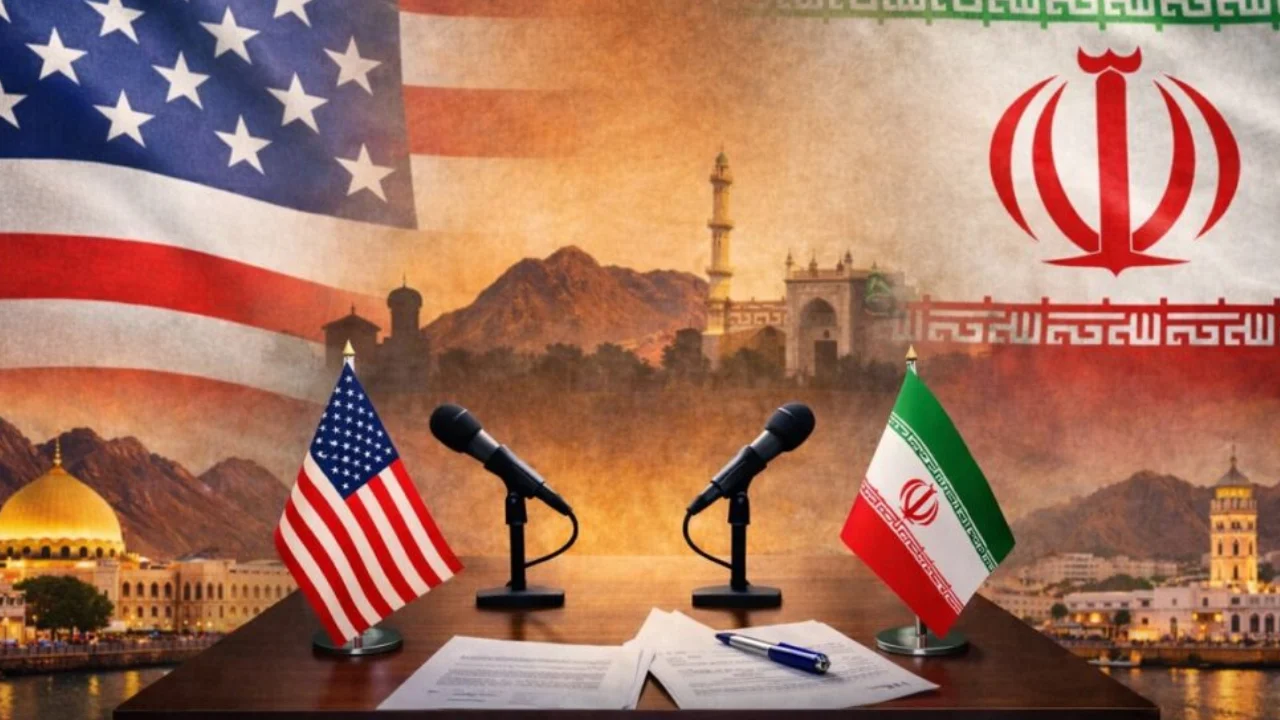
No sound of explosions or air strikes has been heard in Iran’s skies for several days since the recent conflict with the United States. Iranian officials have said, however, that there has been no formal ceasefire and that they are in no hurry to return to direct talks with the United States.
Iran contends that it is currently in a strategically strong position. The country’s military leaders are pointing to successes on the battlefield, and its diplomats are rejecting the United States’ claim that Iran is desperate to return to talks.
According to analysts, Iran believes the present uncertain situation — neither full peace nor full-scale war — suits it. The country’s main aim is to win recognition of its control over the strategic Strait of Hormuz, which the United States is still unwilling to accept.
The position carries risks for Iran too. Conflict could resume at any time. There is also a danger that the country’s economy will be further weakened by the war, economic instability and the US naval blockade.
A former spokesman for Iran’s armed forces, Ramazan Sharif, claimed the United States had “faced strategic defeat at every stage.” The country’s foreign ministry said the present situation cannot be called a ceasefire.
The US president, Donald Trump, has claimed that Iran asked for a pause in order to talk and that the two countries are in negotiations. Iran has denied it.
Analysts say Iran believes time is on its side. It considers that it has a greater capacity than the United States to withstand long-term pressure, and that Washington will in the end be forced to accept its terms.
Experts warn, however, that Iran is also taking a major risk. If full-scale war with the United States and Israel breaks out again, the situation could move beyond control. Although there is scope for an understanding between the two sides, the disagreement over control of the Strait of Hormuz remains the biggest obstacle.
বাংলায় মূল প্রতিবেদন পড়ুন · Read the original Bengali report