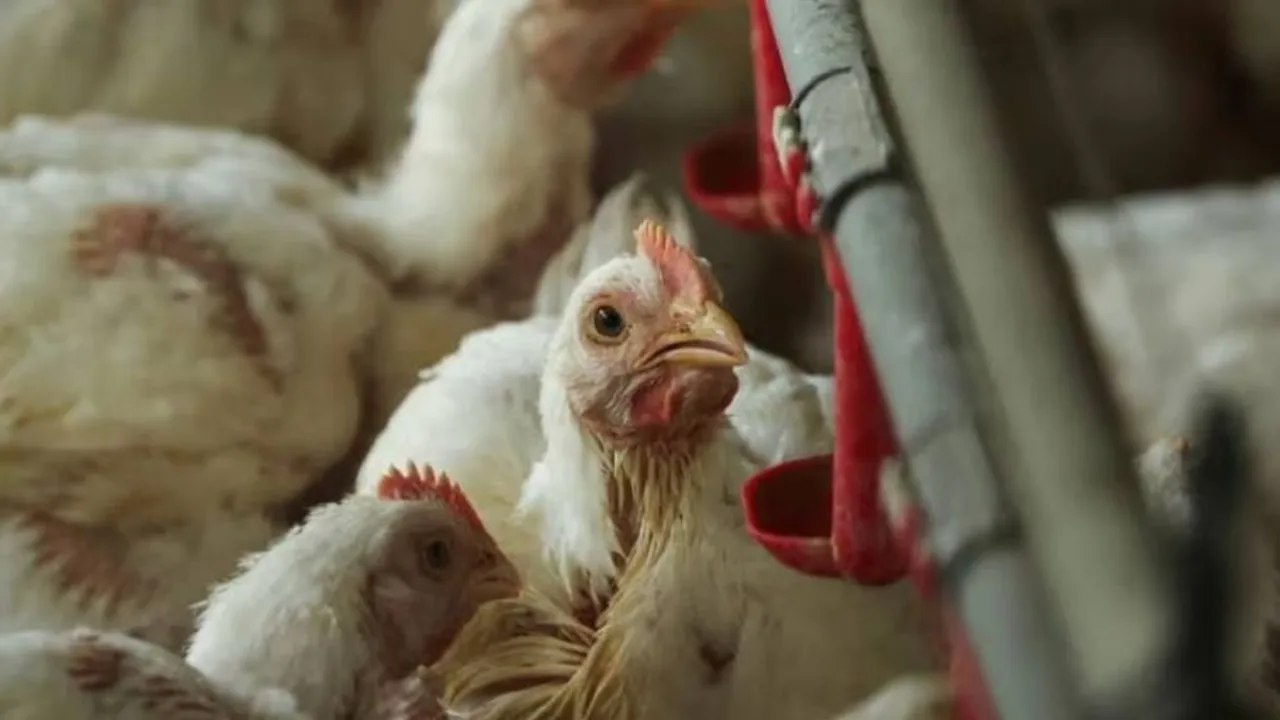
Modern commercial poultry farms can accelerate the spread of a dangerous bacterium called Campylobacter, an Oxford University study has found. The bacterium is linked to food poisoning, blood infection and, in some cases, an increased risk of bowel cancer.
The study found that the presence of Campylobacter in commercially farmed chickens has risen about 100-fold over the past 35 years.
According to the researchers, the bacterium is usually found in undercooked or contaminated chicken meat. It is also the biggest cause of bacterial food poisoning in the United Kingdom, where about 70,000 people were infected last year.
Experts say most patients recover within a week, but that in severe cases the infection can be fatal. Some studies have also found a link between the infection and an increased risk of bowel cancer.
According to the Food Hygiene Certificate body, about 100 people die each year in the UK from Campylobacter infection. Official figures show that the number of reported patients with this infection — involving diarrhoea, vomiting and severe stomach pain — has risen by about a third compared with 2016.
The findings were published in the scientific journal Proceedings of the National Academy of Sciences (PNAS). It said the environment of large, industrial-style poultry farms created favourable conditions for the bacterium to spread rapidly among chickens, so large numbers of birds could be infected even before reaching the market.
According to the researchers, human-made environmental changes, including intensive farm management, can play an important role in the emergence and spread of infectious diseases.
They say that to reduce this risk, food safety must be ensured, poultry-farm management improved and more care taken to store chicken meat properly and cook it well.
বাংলায় মূল প্রতিবেদন পড়ুন · Read the original Bengali report