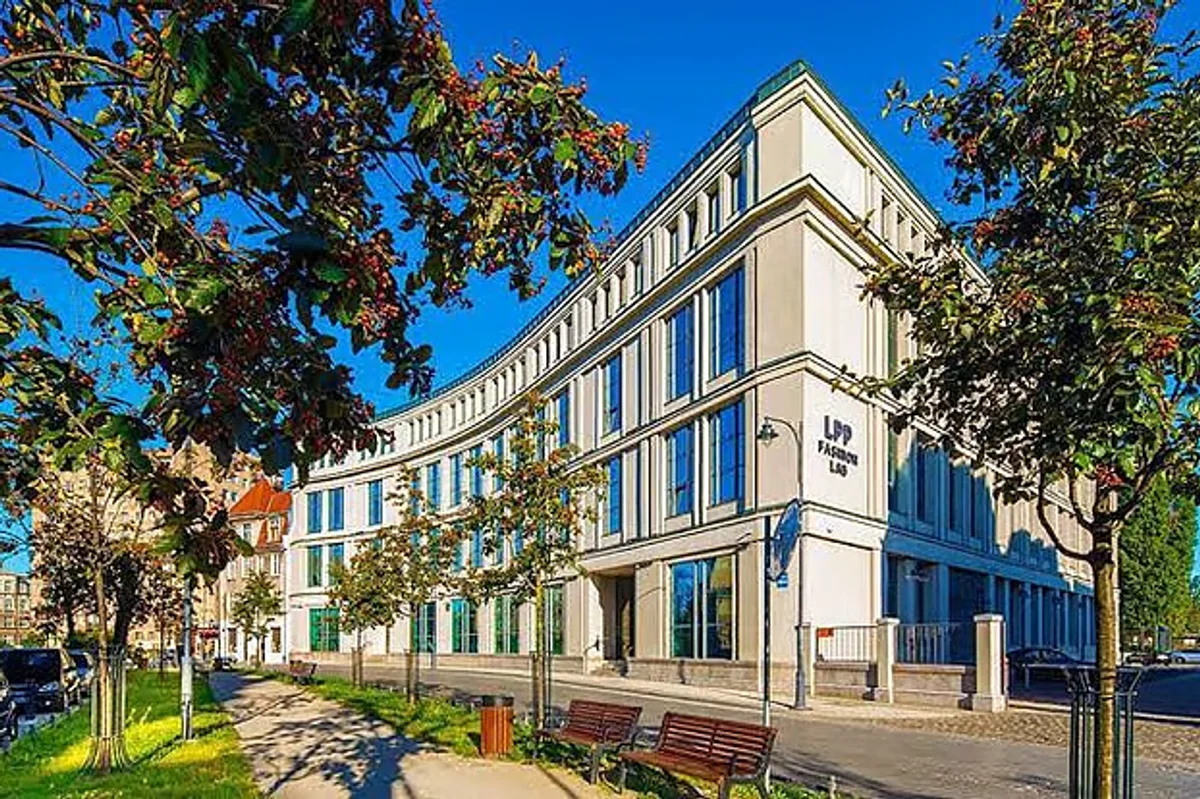
Poland’s clothing brand LPP has suspended new orders in Bangladesh. The company has also decided to halt new product-development work for now. The Polish brand took the decision amid a dispute over dues owed by Russian buyer FES Retail to Bangladeshi garment factories and buying houses, it has been learned.
According to the exporters concerned, several Bangladeshi garment factories and buying houses are owed about $40 million (4 crore) by the Russian buyer FES Retail. They had supplied goods to the Russian firm under sales contracts backed by a guarantee from the Polish brand LPP.
After the Russia-Ukraine war began, LPP ran into difficulties operating its own retail outlets in Russia, it is understood. Its Dhaka office then began placing orders with Bangladeshi factories through the Russian firm FES Retail, with LPP guaranteeing payment. There were no payment problems at first, but since last year Bangladeshi factories and buying houses have not been paid even after supplying goods to FES Retail. LPP has declined to take any responsibility for this.
After trying in various ways without recovering their dues, several garment-factory and buying-house owners went to court. Last month, LPP officials held an online meeting with the knitwear manufacturers’ association BKMEA and the garment buying-house owners’ association BGBA. But when LPP set the withdrawal of the court cases as a condition for any settlement, BKMEA and BGBA leaders refused, and the meeting produced no solution.
Then, in a 21 July letter to the BGMEA, BKMEA and BGBA, LPP said a dispute had been running for several months over payments owed by some Bangladeshi factories. It said it was not the contractually liable party for these payments, though it had taken part in various discussions and shown interest in mediation. In these circumstances, it would gradually reduce its orders in Bangladesh — while hinting that it could reconsider if the situation improved in future.
In a 30 July letter to Bangladeshi suppliers, LPP said new orders and new product-development work would remain suspended until it completed a review of its future sourcing strategy in Bangladesh. During this time it would also assess sourcing opportunities and production capacity in other countries.
BGBA president Abdul Hamid said nine firms in his association were owed $4.5 million (45 lakh), and that the total dues came to about $40 million. He said that after the Russia-Ukraine war, LPP, facing problems doing business in Russia, appointed FES Retail as a partner, and that LPP officials had introduced the firm to Bangladeshi suppliers. Orders were placed in FES Retail’s name from LPP’s office, and payment was guaranteed, he said — but LPP now claimed it had no relationship with FES Retail.
Abdul Hamid also said LPP buys about $800 million (80 crore) worth of garments from Bangladesh a year. Suppliers wanted it to keep doing business, he said, but the company had resorted to a kind of cunning to avoid paying various factories’ and buying houses’ dues.
The BGBA president also said LPP had offered, through FES Retail, to clear the dues at a 50 percent discount. A discount of 10 to 15 percent might have allowed talks, he said, since 75 percent of the money was owed to banks.
A buying house called Ensa Clothing exported $52,000 worth of trousers against a FES Retail order in April last year. The goods reached a Russian port two months later. But because FES Retail did not pay and release them, they are still lying at the port. After failing to recover the dues despite negotiating with LPP, the firm filed a case in Bangladesh’s High Court last month.
Ensa Clothing managing director (MD) Enamul Kabir said LPP claimed it had had no relationship with FES Retail since April last year — yet LPP had paid for garments exported for FES Retail in April and May of last year. He said the factory that had supplied the garments for Ensa Clothing was now in trouble and could shut down if it was not paid quickly.
The matter was also discussed at BKMEA’s board meeting last Saturday, which decided that if LPP did not clear the Bangladeshi garment factories’ and buying houses’ dues, the brand would be blacklisted.
Confirming this, BKMEA president Mohammad Hatem said LPP had issued a kind of threat by talking of winding up its business. If it did not pay the dues, complaints about its unethical practice would be lodged at the European Union (EU) and all other forums, he said. There were also allegations that not just FES Retail but LPP itself was taking goods directly without paying, he added.
বাংলায় মূল প্রতিবেদন পড়ুন · Read the original Bengali report