Ten years had passed since their marriage. No child had come to Lesley and John Brown. There was no shortage of anxiety over it. Then a word from doctors brought their world down. Lesley, they were told, would never be able to become a mother naturally. After that came the running from doctor to doctor, all the efforts and appeals. But the light of dawn seemed not to break through the darkness of the night.
The couple’s home was in the English city of Bristol. Their story is from almost 50 years ago. In the end Lesley did become a mother, and a bright baby girl came to light up the house — named Louise Brown. How was Louise born? That is an astonishing story. The credit for it belongs entirely to science. There was no shortage of controversy over it either. Some even called Louise “Frankenstein’s baby.”
The method by which Louise was born was then completely unknown to people. The method is “in vitro fertilisation,” or IVF. In it a human embryo is created outside the mother’s womb. The embryo is then transferred into the womb, where it matures and the child is born normally. A child born by this method is also called a “test-tube baby.”
The world’s first test-tube baby, Louise Brown, was born exactly 48 years ago today, on 25 July 1978. How was the impossible achieved at that time, who was involved in that difficult work, how much is IVF helping childless couples today, and how is Louise now at 48 — let us take these one by one.
The start of a change
Scientists had long been trying to fertilise an egg and sperm outside the human body. But very few people believed an embryo could be created this way. Two of them were the British physiologist Robert Edwards and the gynaecologist Patrick Steptoe. They had been working on IVF since the 1960s. But success eluded them.
Edwards succeeded alone in fertilising an egg outside a woman’s body for the first time in 1969. But the matter went no further. Later, together with Steptoe, he attempted embryo transfer in 282 women over a decade. Alongside them was the world’s first embryologist, Jean Purdy. Five of those 282 became pregnant, but none was able to give birth to a live child.
The three had to conduct much of this research in secret. Obstruction came from various religious groups. Many called it “interference with the Creator.” Many ordinary people even compared IVF with the novel “Brave New World,” published in 1932, in which normal human reproduction ends and people are made in laboratories.
In the early days Edwards and Steptoe carried out their research and experiments mainly in a laboratory at the University of Cambridge. In the end, however, they lost the chance to do research there. They found a place in a small laboratory at Oldham General Hospital. As the hospital was some way from the main city, it was possible to escape the eyes of critics. It was here that Louise Brown’s embryo was created.
Louise in the world
It was a Bristol doctor who told Lesley and John Brown about Edwards and Steptoe. The couple then went to Oldham and met the two. There Lesley’s egg and John Brown’s sperm were fertilised in a dish. The vessel was not a test tube but a Petri dish, the kind used in laboratories. That dish is still kept at the Science Museum in London.
When the embryo formed in the Petri dish, it was placed in Lesley’s womb. Then came the anxiety over whether Edwards and Steptoe’s effort would succeed at all. In the end, before Christmas 1977, Lesley received a letter from Edwards. He wrote: “The results of your blood and urine tests indicate that you are probably in the early stages of pregnancy.” Lesley kept that letter until her death.
When news of Lesley’s pregnancy spread in the media, the researchers grew anxious about the safety of the unborn child. Steptoe then took Lesley away in his own car and kept her hidden. Louise Brown was born by caesarean section at Oldham General Hospital at exactly 11.47pm on 25 July 1978. Journalists had not learned of Lesley’s whereabouts until then.
The doctors filmed the whole of the caesarean operation. They wanted to prove that Edwards and Steptoe’s claims about IVF were not false. Louise’s birth caused such a sensation that day that journalists pitched tents in front of the hospital. On the night of Louise’s birth Steptoe named her “Joy.”
A hard journey
Just as it took Edwards and Steptoe a long time to succeed with IVF, so a woman had to suffer no less at that time to bear a child by this method. Vivienne Collins described this to the British newspaper the Guardian. After Louise’s birth Edwards and Steptoe opened a clinic in the Bourn area near Cambridge, where Collins worked.
In Collins’s account, women who wanted IVF had to stay in a cabin at the clinic for two or three weeks. Throughout that time they had to save their own urine. Clinic staff came to collect it every three or four hours, because urine testing was then the only way of monitoring hormone levels in the body. These hormones showed whether a woman had ovulated.
Lucy Daniel Ruby had eight treatments with Edwards and Steptoe in the 1980s and gave birth to a child by IVF. In her account they stayed six to a cabin. They were woken even in the middle of the night for the collection of urine. But staying together for a long time built up warm relationships among everyone in the cabin, which eased the strain a good deal.
When hormone testing signalled that a woman had ovulated, a new journey began. The egg had to be collected exactly 26 hours later. So the surgery to collect eggs sometimes had to be done in the middle of the night. After the embryo was transferred into the womb, women also had to sit bent forward, face down, for an hour or two so that the embryo did not become stuck in the uterus.
Today IVF is a fairly simple process. Women no longer have to stay in hospital for two or three weeks. They can take the treatment and return home the same day. Nor do they have to sit bent forward for hours after the embryo transfer. And where IVF once carried a risk of twin births, that risk too has fallen considerably.
How far has IVF come?
Forty-eight years have passed since Louise’s birth by IVF. How far have people accepted IVF after all these years? A study was published in July last year in a journal called Fertility and Sterility. According to that study, the number of children born through IVF from Louise’s birth year of 1978 to 2018 is an estimated 10 million to 13 million.
The lead author of that paper was Professor Georgina Chambers of the University of New South Wales in Australia. By her calculation, another 3 million to 4 million children have been born by IVF from 2018 to 2024. So on that rate the total number of children born by IVF could stand at 13 million to 17 million by 2024.
Now let us look at the picture in the United Kingdom, where Louise was born. According to that country’s government, about 20,700 children were born there by IVF in 2023. That is more than 3 percent of all the children born in the country that year. In 2000 the number of children born by IVF in the United Kingdom was 8,700.
In Bangladesh the first child was born by IVF at a private hospital in 2001. The first IVF birth at Dhaka Medical College was in 2023. There are no statistics, however, on how many children have been born by IVF in Bangladesh so far.
Where everyone is today
None of the three at whose hands IVF succeeded is alive today. Jean Purdy died in 1985, a few years after Louise Brown’s birth in 1978. Patrick Steptoe died three years later, in 1988. Robert Edwards lived until 2013. He received recognition for the work in 2010, when he was awarded the Nobel Prize in medicine.
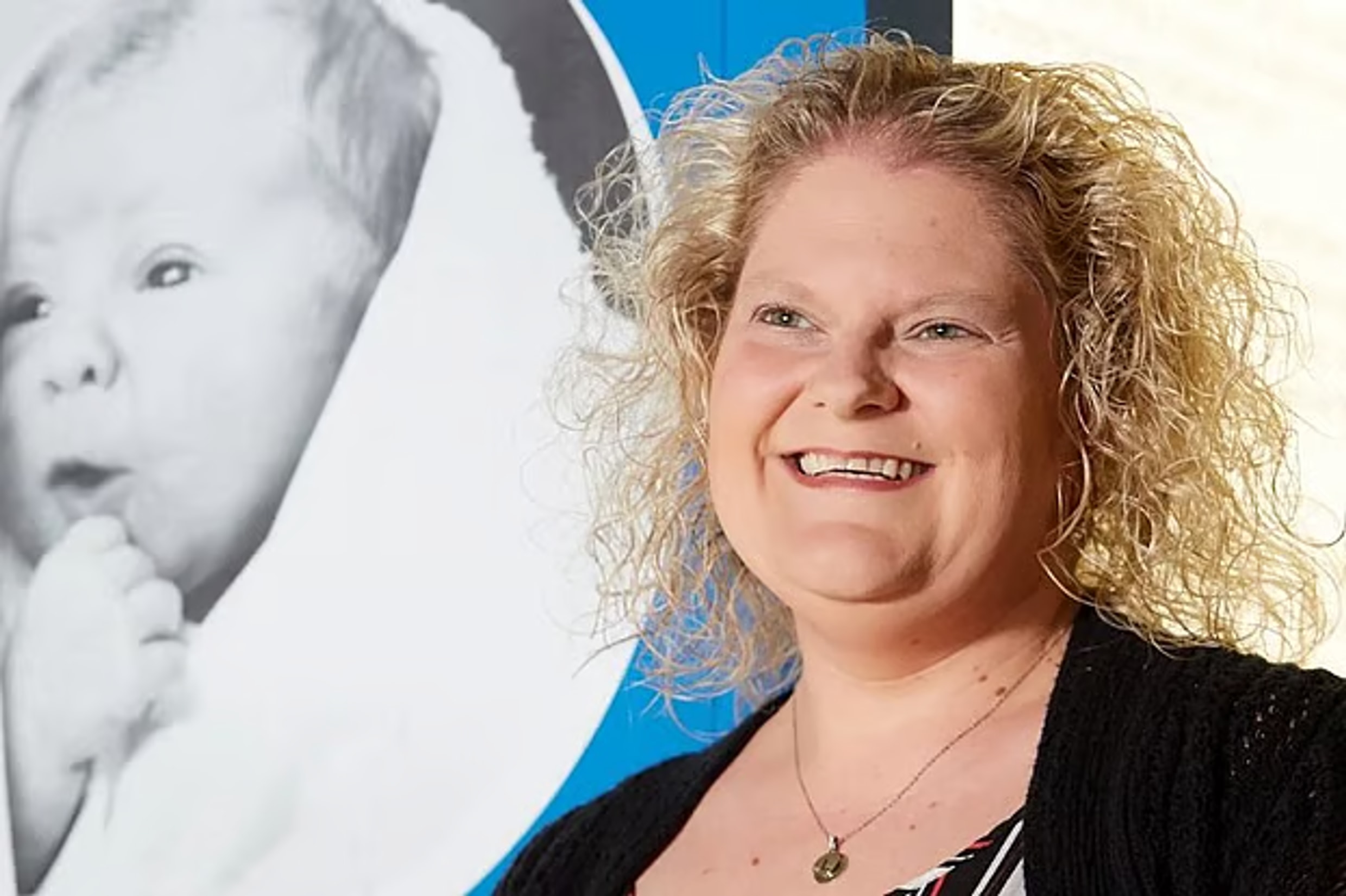
Louise now lives an ordinary life with her husband and two sons. She is an ambassador for the Bourn Hall IVF clinic, which Steptoe, Edwards and Jean Purdy founded after Louise’s birth. Louise also works for the International Federation of Fertility Societies, which works to ensure reproductive health care for everyone in the world.
Louise has an autobiography, titled “Louise Brown: My Life as the World’s First Test-Tube Baby.” A film based on it, “Joy,” was released on Netflix in 2024, with James Norton playing Edwards. He has a well-known line in the film: “I am a scientist. I fail every day in the hope of succeeding at least once in 20 years.”
That line teaches people to dream. Louise has also given a message of hope to couples who want to turn to IVF. In a conversation with the outlet Mundo América this year she said: “Go forward with courage. More than 15 million people have seen the light of the world through IVF. So do not lose hope. Keep faith in your doctor. The path that one day brought me into my parents’ arms may bring the message of new life into the lives of countless more families.”
বাংলায় মূল প্রতিবেদন পড়ুন · Read the original Bengali report