Cooperation between Bangladesh and China is not aimed at any “third party,” and the relationship should remain free of any third-party influence, Beijing has said.
The remarks were made at the Chinese foreign ministry’s regular briefing on Friday (26 June), soon after the announcement of China’s support for the Teesta River Comprehensive Management and Restoration Project — one of South Asia’s largest river-based development projects — and a swift feasibility study.
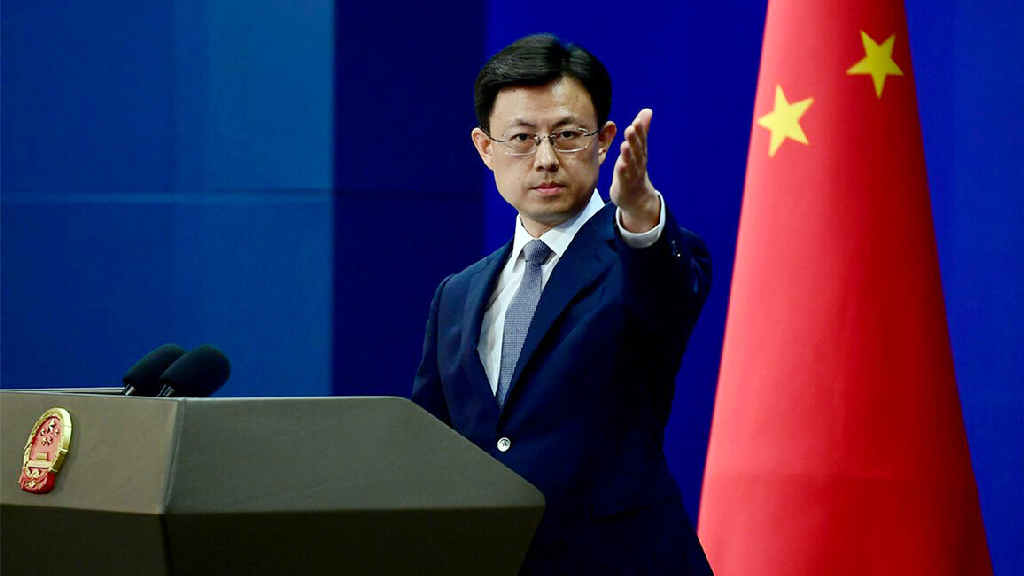
Chinese foreign ministry spokesman Guo Jiakun told reporters in Beijing: “The comprehensive management and restoration of the Teesta River is a public-welfare project that Bangladesh is considering with great importance. China is ready to provide as much help as it can to this project.”
Guo added: “Teesta is an important project in our bilateral cooperation. I want to stress that China-Bangladesh cooperation is not aimed at any third party and must remain free of the influence of any third party.”
According to political analysts, China’s open support for the Teesta project and its remark about a “third party” are a diplomatic message aimed at India, given Delhi’s long-standing sensitivity over the Teesta’s water-sharing and basin management.
The Teesta project was discussed in final terms during Prime Minister Tarique Rahman’s first official visit to China. On the 25-26 June Beijing visit, Chinese Premier Li Qiang welcomed Prime Minister Tarique Rahman, who held a bilateral meeting with Chinese President Xi Jinping.
A joint declaration at the end of the visit said China would, within its capacity, “provide support and assistance to the Teesta project.” Experts from the two countries would swiftly complete the project’s feasibility study, and relations would be further strengthened in maritime and marine cooperation.
Beyond the Teesta project, Bangladesh and China have agreed to work together on integrated water-resource management, water-resource planning, climate and flood forecasting, flood prevention and disaster mitigation, and river dredging. This river-based cooperation is expected to help manage Bangladesh’s second-largest river, the Meghna (also known as the Brahmaputra or Yarlung Tsangpo), and to control the floods that occur in Bangladesh each year.
In his meeting with Prime Minister Tarique Rahman, President Xi Jinping pledged that China would remain a “trusted friend” of Bangladesh and would extend all-out cooperation in implementing the BNP government’s development plans. Recalling Tarique Rahman’s late father, President Ziaur Rahman, and his mother, former Prime Minister Khaleda Zia, the Chinese president said: “They were both very good friends of China.”
In return, Prime Minister Tarique Rahman reaffirmed Bangladesh’s steadfast support for the “one China policy.” The joint declaration said: “There is only one China in the world, Taiwan is an inalienable part of the territory of the People’s Republic of China, and the government of the People’s Republic of China is the sole legitimate government representing all of China.” Bangladesh also reiterated its opposition to any form of Taiwanese independence.
As part of health-sector cooperation, China announced it would increase the movement of medical tourists from Bangladesh to Yunnan province. Amid recent complications and delays over Indian visas, efforts are being made to develop China’s Yunnan province as a reliable alternative for Bangladeshi patients.
The two countries also agreed to work on high-quality cooperation and joint modernisation under the Belt and Road Initiative (BRI). Beijing expressed support for Bangladesh’s larger role in various multilateral bodies including the United Nations, and welcomed Bangladesh’s interest in joining BRICS and the Shanghai Cooperation Organisation (SCO).
On trade, Prime Minister Tarique Rahman praised the duty-free access for 100 percent of goods from Bangladesh and pledged all kinds of support to increase Chinese investment in Bangladesh. The two countries agreed to speed up the modernisation of Mongla port and the establishment of a “Chinese economic and industrial zone” (CEIZ) in Chattogram.
China praised Bangladesh for sheltering refugees from Rakhine State who took refuge in Bangladesh after the Myanmar army’s crackdown in August-September 2017, and said it supported a bilateral repatriation process through “friendly discussions” between Myanmar and Bangladesh to resolve the crisis. As a matter of diplomatic caution, however, the joint statement did not use the word “Rohingya” directly, instead referring to them as “people forcibly displaced from Myanmar’s Rakhine State.”
বাংলায় মূল প্রতিবেদন পড়ুন · Read the original Bengali report