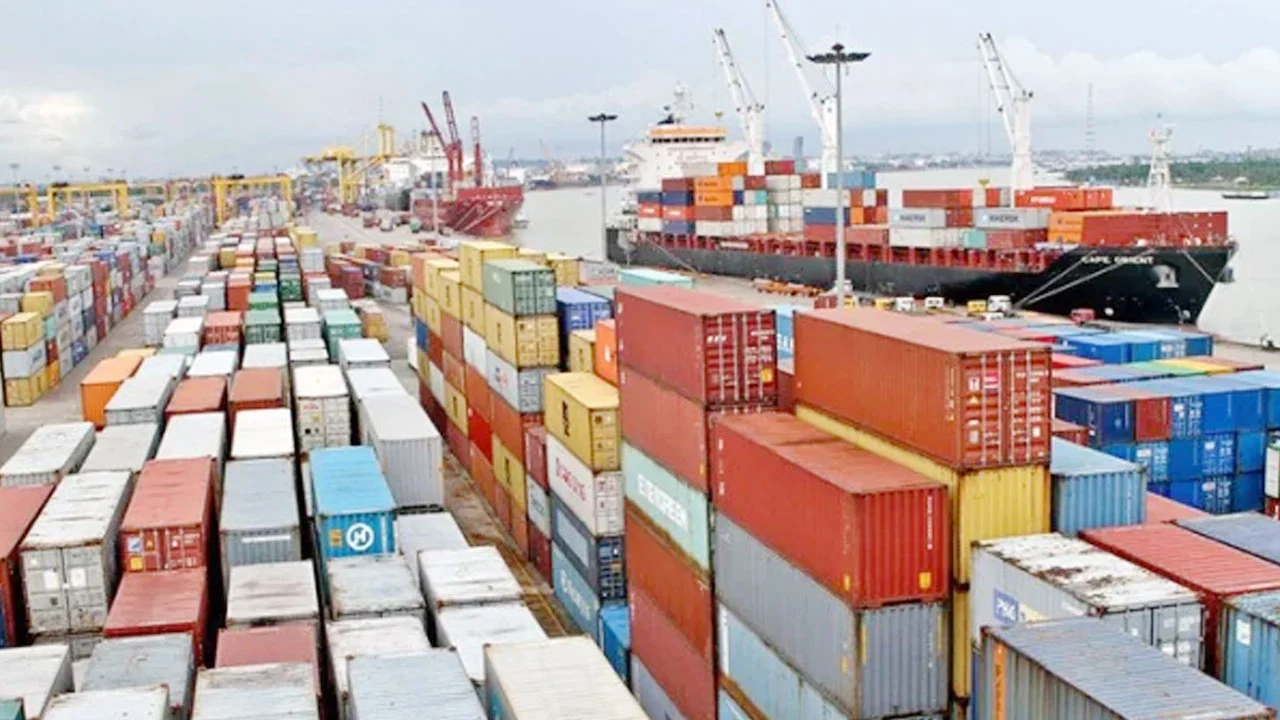
Bangladesh’s trade deficit has risen to its highest level in three years. In FY2025-26, import costs rose significantly while export earnings fell, widening the trade deficit by 34% in a year. According to the latest Bangladesh Bank data, the trade deficit in the just-ended fiscal year stood at $27.28 billion, against $20.39 billion in the previous year, FY2024-25.
Central bank data show goods exports of $43.85 billion in FY2025-26, down 1% from the previous year, while import costs rose to $71.14 billion — up 10.5% in a year, the highest annual rise in imports since FY2021-22. Those in the sector say the sharp widening of the trade deficit points to weakness in the country’s external sector, but that global conditions, rather than domestic factors, are more to blame — particularly higher fuel-oil prices, tariffs imposed by the Trump administration in the US, high inflation in Western countries, and the disruption to global supply chains caused by war. These factors, they say, reduced buyers’ demand and new orders in international markets, so export earnings did not grow, while rising fuel and other import costs widened the deficit further.
Despite the widening trade deficit, no major crisis has arisen in the country’s balance of payments, largely thanks to strong remittance inflows. A record $35.58 billion in expatriate earnings came into the country in FY2025-26, helping keep the current account deficit to about $1.6 billion. The financial account, meanwhile, posted a surplus of $7.89 billion last fiscal year, against $3.59 billion the year before — a surplus built mainly on foreign direct investment (FDI), foreign grants and foreign loans. The overall balance of payments recorded a surplus of $6.6 billion for the whole of FY2025-26. Economists say the current account is the most important balance-of-payments indicator, and a surplus there is a key sign of a strong external position; but despite record remittance growth, Bangladesh’s current account remains in deficit because of the large trade gap. Relying on remittances alone, without raising export earnings, to hold the external balance is not sustainable in the long run, they say, stressing export diversification, greater production capacity and improving the competitiveness of the country’s goods in global markets to cut the trade deficit.
বাংলায় মূল প্রতিবেদন পড়ুন · Read the original Bengali report