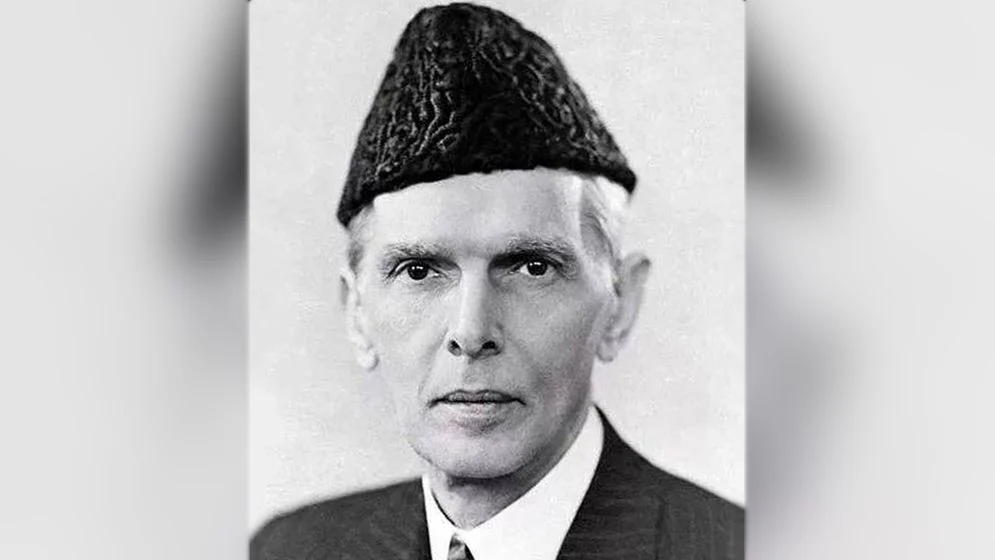
British rule had ended and India had been partitioned just seven months earlier when, on March 19, 1948, Pakistan’s then governor-general, Muhammad Ali Jinnah, set foot in Dhaka. It was his first, and only, visit to East Pakistan. Jinnah was suffering from tuberculosis and various other health complications at the time; he died within six months of the trip. During the ten-day visit, the founder of Pakistan attended a series of events in Dhaka and Chittagong and delivered several addresses. Among these, his speeches at Dhaka’s then Racecourse Ground and at Dhaka University’s convocation ceremony drew particular attention. At both events, when he declared that Urdu would be Pakistan’s state language, Jinnah faced fierce protest from students. Below is an English rendering of Jinnah’s convocation address.
“Ladies and gentlemen. When your vice-chancellor came and asked me to deliver a convocation address, I told him plainly that, given my many engagements, it might not be possible for me to prepare a formal address befitting this university’s great subjects — art, history, philosophy, science, law and the like. However, I had promised that on the occasion of convocation I would say a few words to the students, and what I am about to say may be taken as the fulfilment of that promise.
“First, let me thank the vice-chancellor for the many generous words he has used to describe me. Mr Vice-Chancellor, whatever I am doing now, or whatever I have managed to do, has essentially been the discharge of my duty. As a Muslim, it falls to me as a duty to serve the people of this country with honesty and selflessness. When I speak to you now, I do so not as head of state, but as a friend who holds you always in affection.
“Many of you have earned your diplomas and degrees today. I congratulate you. You have won your laurels by proving yourselves worthy at this university, and I wish you every success as you now enter the wider world. Many of you stand at the end of your student life and at a peak in your own. You are fortunate to be leaving the university of your own independent, sovereign country — something your forebears could not do.
“It is vital that you, and the students who follow you, understand the epoch-making changes that have come with the birth of the state of Pakistan. We have broken the chains of subjugation; we are now a free people. Our country is our own. Our government is our own. We are working, answerable to the people, for the people and for the progress of the state.
“However, freedom does not mean license. It does not mean you may do whatever you please, behaving as you see fit without regard for what anyone else in the state may think. A great deal of responsibility rests upon you — more, one might say, than at any other time. We must act as a united and disciplined nation. More than the military strength needed to win our freedom, what is needed now is the strength to build and develop. Building a nation is harder than the exertion of military force to win independence. Going to prison, or fighting for freedom, is easier than running a government.
“Rather, let me say a few words about the dangers we have overcome, and the few troubles now emerging before us. Frustrated at their failure to prevent Pakistan’s birth, our enemies are now looking for ways to weaken and destroy us. This is exactly why, almost as soon as the government came to power, the massacres in Punjab and Delhi took place. Thousands of men, women and children were slaughtered, and millions of people were driven from their homes. In the space of a single week alone, as many as five million people arrived in Punjab. The problems that arose in caring for and rehabilitating these unfortunate migrants, broken in body and mind, could have brought even a great state to its knees. But those who sought to kill Pakistan in its cradle have been disappointed. Pakistan did not merely survive that catastrophe — it emerged stronger, more refined and better equipped than ever before.
“Tied to this, several further problems have arisen, such as India’s vindictive conduct over our surplus and our military equipment, and, most recently, the imposition of a complete economic blockade on this province of yours. I have no doubt that thoughtful people in the Indian provinces do not support these actions, and that those responsible will eventually have a change of heart. Even so, it is essential that you be aware of these matters. There is pressure for close watch to be kept over our side of the border. In particular, the recent attacks on your province have taken on a mysterious character.
“It is with great sorrow that I must say some of our enemies are themselves Muslims — people vigorously campaigning for provincialism, so that Pakistan is weakened and once again brought under Indian domination, as before. Those who think this way are living in a fool’s paradise, though that does not stop them from trying. Every day, a pile of false, fabricated issues is manufactured to suggest there is no harmony among Muslims, and to incite them toward unlawful activity. Take the recent language controversy as an example — I am deeply sorry to say that many of you have fallen into the trap laid by provincialism. Does it never occur to you that, to the newspapers of a province for which Pakistan is nothing but a curse, it is they who are now coming to teach you your rights over language? Does it not strike you that someone who betrayed Muslims in the past, or fought against Pakistan, is suddenly appearing as your benefactor on the question of language, teaching you to stand against the government in the name of your rights? Beware of these fifth columnists.
“Let me once again explain my view on Pakistan’s state language. The people of this province may prefer whichever language they wish for their own official use — there is no disagreement on that point. In due course, the people of this country will, through their elected representatives, choose the language of their own preference. However, the lingua franca — that is, the language used for communication between the different provinces — must be Urdu, and nothing else. So the state language shall be Urdu, and Urdu alone: a language that has grown up nurtured by millions of Muslims across the subcontinent, in every corner of Pakistan, and one that people understand better than any other provincial language. It is consistent with Muslim culture and civilisation, and is fairly close to the languages of other Islamic states. Urdu’s expulsion from the Indian Union, even from official use there, did not happen without reason. Those now trying to create controversy over language, seeking to muddy the waters, are well aware of this. There is no way around acknowledging this trouble, though they will not admit it, because doing so would not suit their designs. The sole purpose of their language controversy is to create division among Muslims and to incite hatred toward non-Bengali Muslims.
“Of course, in this language debate, your prime minister, on returning from Karachi, gave a clear statement that Bengalis may, if they wish, make Bengali their official language. On hearing this, they changed their plan of action. Now they want to make Bengali the state language of the whole of Pakistan, dismissing Urdu’s claim to be the state language of another Muslim state. They are saying both Bengali and Urdu should be made state languages. You must not be mistaken on this point. In the interest of the state’s unity, there can be only one state language, and in my view, that is Urdu. I have spoken at length about our enemies, and about certain opportunist politicians, on this matter, and so I caution you. Those of you setting out on life’s long road should keep yourselves away from such people. Those who will continue their studies a while longer should not let themselves become the sacrificial pawns of self-serving politicians. As I said the other day, for your own sake, for your parents’ sake and for the sake of the state, apply yourselves fully to your studies. Only this way can you equip yourselves for life’s struggles ahead. Only this way can you build yourselves into an asset, a strength and a source of pride for the country. Only this way will you be able to help build the country into a developed and powerful nation in the world, by solving the many problems that lie ahead.
“Young friends, for this reason I will draw your attention to a few matters you must remain ever watchful of. First, we must beware of the fifth columnists in our midst. Second, we must maintain the utmost vigilance against all self-serving individuals and root them out, because they will try to use you for their own ends. Third, we must recognise and support those genuinely honest and public-spirited government servants who wish to give their all in the service of the people. Fourth, the Muslim League must be built up more firmly still, because it is the Muslim League that will truly build a great Pakistan. Fifth, it was the Muslim League that founded Pakistan, and it is the Muslim League’s duty now to stand guard over the sacred task of building it. Sixth, there are many who gave us not the slightest help during our struggle, who in fact worked against us, and who openly obstructed our great struggle — and the number of such collaborators with the enemy is by no means small. They may now come before us bearing their flashy slogans, their pretended sacrifices, their ideals and their programmes. But they must prove their loyalty, or that a genuine change has taken place in their underlying thinking. And the proof of that will be found at this dangerous juncture, in whether — rather than forming their own mushroom parties — they join the Muslim League bearing our views and beliefs, and support this party.
“At a time when we face manifold dangers, from without and within, and the fate of seventy million people hangs in the balance, what is needed is complete solidarity, unity and discipline. Let me assure you of one thing: in unity lies our rise, in division our fall. There is one more matter I wish to draw your attention to.
“Young friends, until now you have followed a well-worn convention. When you emerge from university, degree in hand, by the thousand, you have only one thought and ambition in mind, and that is a government job. Your vice-chancellor put it well: to this day, the old, established purpose of education has been to produce well-trained, well-turned-out clerks. True, some among them rose to high positions, but the whole system existed to produce skilled clerks. The civil service was, at first, staffed mainly by the British; Indians later began to join it, and this trend only grew. Its overall aim was to create a mentality whereby an ordinary person, on passing a BA or MA, would go looking for a government job, and if he got one, would think he had reached the very summit. We all know what the real result of that was. In my own experience, I have seen an MA graduate earn less than a taxi driver, and most so-called well-off government employees live in worse conditions than those employed within that same circle. Now I want you to break free of that old convention and that old mentality, because we are now the citizens of a free Pakistan. The government cannot give jobs to thousands upon thousands — that is simply impossible. Yet in this competition for government jobs, most of you will end up without one. The government can employ only a limited number, and those left over cannot settle to anything. And these disappointed people easily fall prey to self-serving demagogues.
“I want you to direct your minds, your goals and your purpose down paths that are open to you now, and that will open further in future. There is no shame in manual labour. There is also great scope in technical education, because we badly need people skilled in technical knowledge. You can learn about finance and banking, commerce, law and the like, all of which are creating boundless opportunities today. You already know that new factories, banks, insurance companies and commercial firms are being established, and that these are growing by the day — these are the paths open to you. Think about these, and direct your attention toward them. Believe me, this way you will gain far more than through a government job. You will be far happier, because through far greater opportunity, you will be able to progress far further, if you join commercial enterprises and factories. And in this way, you will be able to help not only yourself but the state as well.
“Let me give you an example. I know a young man who was in government service. Four years ago, he joined a banking corporation on 200 rupees. He had studied banking, which is why he did so. Today he is the manager of a firm within that corporation, and in just four years he is now earning 1,500 rupees a month. These opportunities must be put to honest use, and I would truly be pleased with you if you gave these matters some thought.
“Finally, let me thank the chancellor. And I especially thank the vice-chancellor for the warm welcome extended to me, and for those generous words of praise. It is not merely hope but a deep conviction of mine that the youth of East Bengal will not disappoint me.”