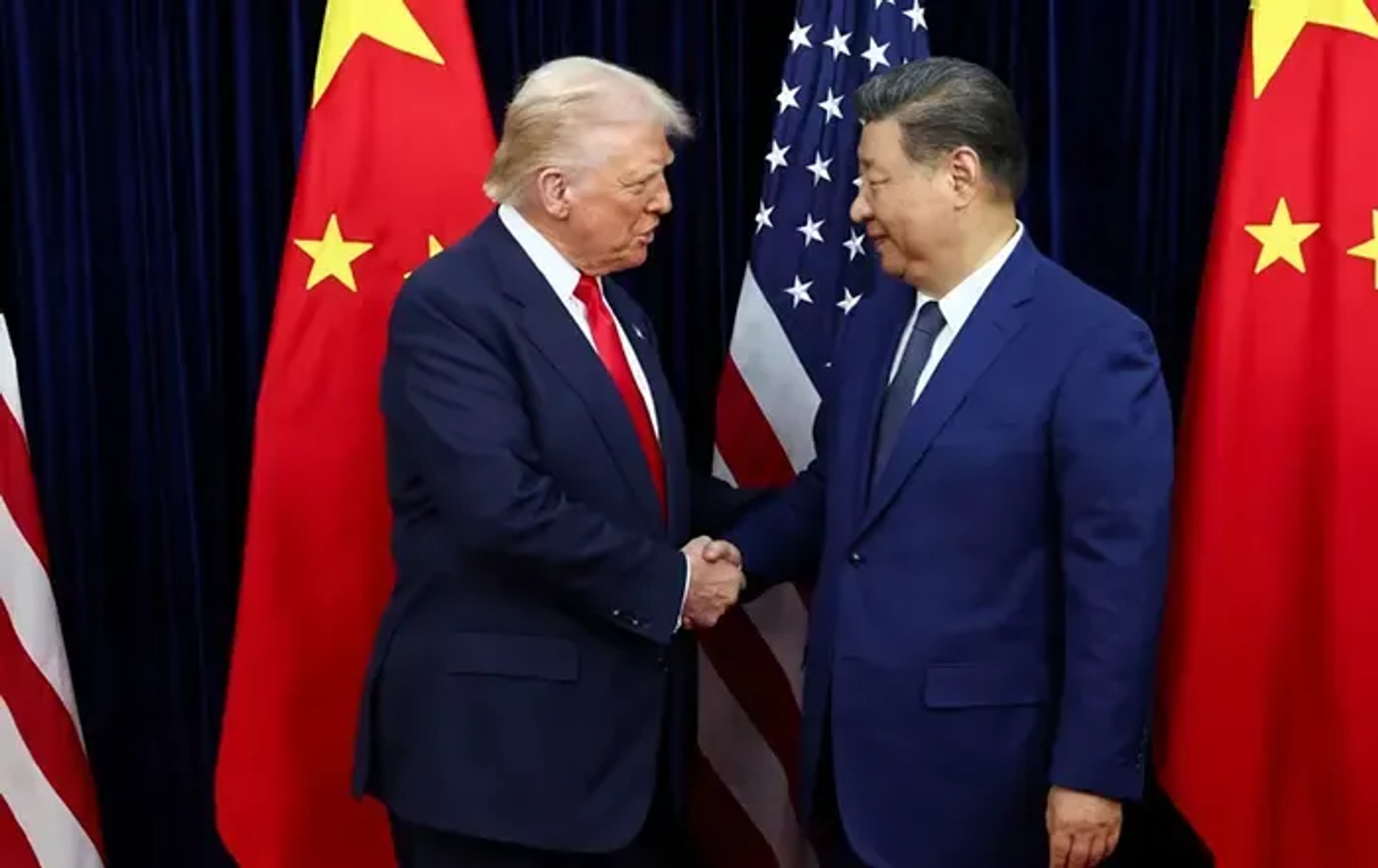
BEIJING — U.S. President Donald Trump’s visit to China is approaching, delayed by the war drawing in Israel, the United States and Iran. The visit is now scheduled for May 14-15. Analysts said China holds the upper hand. Beijing sees the rare face-to-face meeting as a chance to put bilateral relations on a more durable footing. Chinese President Xi Jinping is treating the meeting as a top priority.
Analysts said the ongoing instability in the Middle East, especially the prolonged U.S. conflict over Iran, has created a diplomatic opening for China. Washington’s bargaining position has weakened as a result, they said. The United States had sought to reduce China’s influence. After lifting Venezuelan President Nicolas Maduro from power, Washington attacked Iran to shrink Beijing’s sphere, analysts said.
But the Iran war has become a thorn in the U.S. side. The conflict did not end as quickly as Trump expected. With Iran maintaining a tight blockade in the Strait of Hormuz, U.S. global standing is being eroded. Washington is losing the confidence of allies. As a result, many countries view China as a safer and more durable alternative. Beijing has kept a cautious posture, however. Despite close ties with Iran, improving relations with the United States is equally important to China.
Although the two countries are each other’s biggest commercial and military rivals, their economic ties run deep. Analysts said the situation created by the Iran war has complicated the meeting’s main goals. If Trump strikes Iran again after the China visit, it could send the wrong signal to China’s allies. A closure of the Strait of Hormuz could severely disrupt China’s energy supplies, a major concern for Beijing. About one-third of China’s oil and gas imports pass through the route.
Trump also views the trip as politically important. Ahead of U.S. midterm elections, he is eager to show voters major economic wins. Deals such as agricultural and aircraft sales to China could send a positive message to voters, which is important for the Republican Party.
China could use the moment to press its own interests. Beijing could push for shifts in the U.S. position on Taiwan, easing of restrictions on high-tech exports and the lifting of sanctions on Chinese companies, analysts said. Joerg Wuttke, a former president of the European Union Chamber of Commerce in China and a partner at DGA-Albright Stonebridge Group, said in reference to the Iran war: “The United States is fighting without winning, China is winning without fighting.” He added that the Chinese were certainly being hurt by energy prices. But at the same time, China was also gaining a lot from the situation, he said.
Citing China’s renewable energy policy, Wuttke said China was the most prepared of any country for this kind of situation. Politically, China was also the only mature actor in the negotiating room, he said. Some analysts said the Iran war has kept the United States strategically occupied, while China has been able to present itself as a stable power.
China’s global image has grown stronger as a result. But William Kelvin, a former U.S. diplomat who helped organize Trump’s 2017 visit to China, said the conflict had not significantly shifted the balance of power between the two countries. Each side’s core positions on trade and investment remained unchanged, he said. CNN reported on the issue. Overall, observers said the upcoming Xi-Trump meeting could play a key role not only in bilateral relations but also in shaping the future balance of global power.
বাংলায় মূল প্রতিবেদন পড়ুন · Read the original Bengali report