Demand among ordinary buyers for used, or second-hand, phones is steadily rising. This new buying trend in Japan’s smartphone market has come clearly to the fore after price rises for tech giant Apple’s popular iPhone, The Japan Times reported.
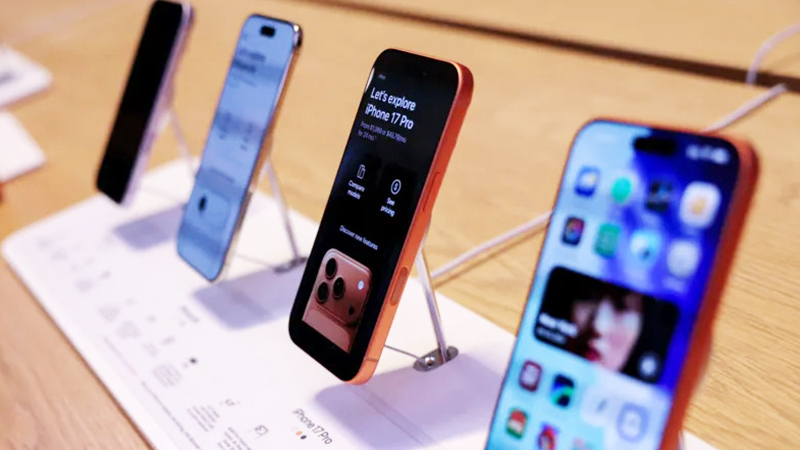
On 18 July, Apple announced simultaneous price rises for all iPhone models in the Japanese market. Within hours, orders surged abnormally on Nicosuma, the country’s popular online platform for used smartphones. According to the platform’s data, by noon the day after the announcement, its used-phone sales had more than doubled compared with the previous day and the same time the previous week.
Market analysts see such a sudden surge in buying driven by a single specific product as quite rare in Japan’s retail market. Yu Tomita, chief marketing officer of Belong, a Tokyo-based Itochu Corporation subsidiary, said: “It is very unusual for demand for used phones to rise like this in such a short time in the Japanese market. Such a picture was seen only when Apple first sharply raised iPhone prices four years ago.”
Those involved believe this intense online buying wave is not merely temporary. The sky-high prices of new-technology devices are pushing ordinary people towards used or refurbished phones as a relatively affordable alternative. Apple raised iPhone prices by ¥8,000 to ¥25,000 depending on the model, so even its most affordable version, the iPhone 17e, has now crossed ¥100,000.
Even after the initial shock of the price-rise news eased, the pace of used-phone sales on online platforms remains quite high. According to market experts, those who had long been in two minds about buying a new or used phone are, on the price-rise news, quickly deciding to buy used. Many are also buying used phones out of fear that if new-phone prices rise, second-hand prices may rise too.
According to economists and tech analysts, the record fall in the Japanese yen is the main reason for the price rise. For much of last month the yen’s exchange rate crossed 162 to the dollar — the lowest since 1986. This is the first time since July 2022 that Apple has officially raised phone prices in the Japanese market; then the exchange rate was between 135 and 139 yen to the dollar.
According to the Tokyo-based research firm MM Research Institute, after the iPhone 17 series was unveiled last September, prices were raised only in Japan and Turkey worldwide. The firm’s chief researcher Kensuke Hara said that over a year the Japanese yen and the Turkish lira had fallen more than 10 percent against the dollar, and this big currency fall forced the company to raise prices in these countries.
The iPhone’s grip on Japan’s smartphone market is firm. For 15 straight years the US brand has topped the country’s list of best-selling phones. In the 2025 fiscal year, Apple’s total phone shipments in Japan rose 4.9 percent from the previous year to 16.15 million units, giving it 51.6 percent of the country’s total smartphone market.
The concern is that, against rising production costs of memory chips and processors internationally, prices were raised on the basis of the exchange rate alone. So if chip prices do not fall in the coming days, iPhone prices could rise again, market analysts have hinted — and if that happens, ordinary buyers will lean even more towards budget-friendly second-hand phones.
According to statistics, Japan’s used-phone market has been growing for seven straight years. In the 2025 fiscal year, about 3.61 million used phones were sold in the country, about 10 percent of the total smartphone market. According to MM Research Institute’s projection, by the 2029 fiscal year used-phone sales will exceed 5 million units and take more than 15 percent of the total phone market.
Not only inflation but also policy changes in the country’s telecom sector have helped raise demand for used phones. Earlier, Japanese buyers had to buy phones with a mandatory new network connection from telecom operators on two-year contracts. But since 2020, as part of a government drive to boost telecom competition and cut internet costs, the practice of “locking” phones to a specific network was banned. Customers thus gained full freedom to use phones and SIM cards of their choice, and chose second-hand phones as an affordable route.
Japan’s major telecom operators now sell certified or quality-assured used phones on their own e-commerce platforms. But to sustain the used-phone market, it is essential to ensure not only the phone’s external condition but also that its internal components are sound, Belong’s Yu Tomita believes. To boost customer confidence, Nicosuma is also selling Pixel phones whose quality is assured through Google-authorised repair.
With multiple uses in the second-hand market, its scope is growing by the day. As flagship phones are very expensive, many look for good-quality previous-generation phones on a small budget; others use cheaper smartphones as a second device for gaming or office work. Large numbers of affordable used phones are also bought for digital-ordering work at food-serving restaurants. Above all, a kind of social acceptance of reusing old goods has now formed in Japanese society, giving the market for used technology products a sustainable base.
বাংলায় মূল প্রতিবেদন পড়ুন · Read the original Bengali report