After US President Donald Trump conducted a military operation in Venezuela — capturing that country’s president, Nicolás Maduro, and his wife, bringing them to the United States and jailing them — the US took control of Venezuela’s oil sector. Since then, the Trump administration has raised more than $13 billion by selling the country’s oil in the first six months of this year, according to a report by the British outlet Financial Express. But the administration has disclosed no information about where or on what the huge sum was spent. Having established control over Venezuela’s oil, Trump now has his eye on Libya’s oil.
Through his envoy and in-law — the father-in-law of his daughter Tiffany — Trump has taken steps to establish US business control over Libya’s oil resources by brokering an understanding among the leaders of three political sides, including the two governments ruling eastern and western Libya. Behind Trump’s renewed interest in Libya lies the country’s oil.
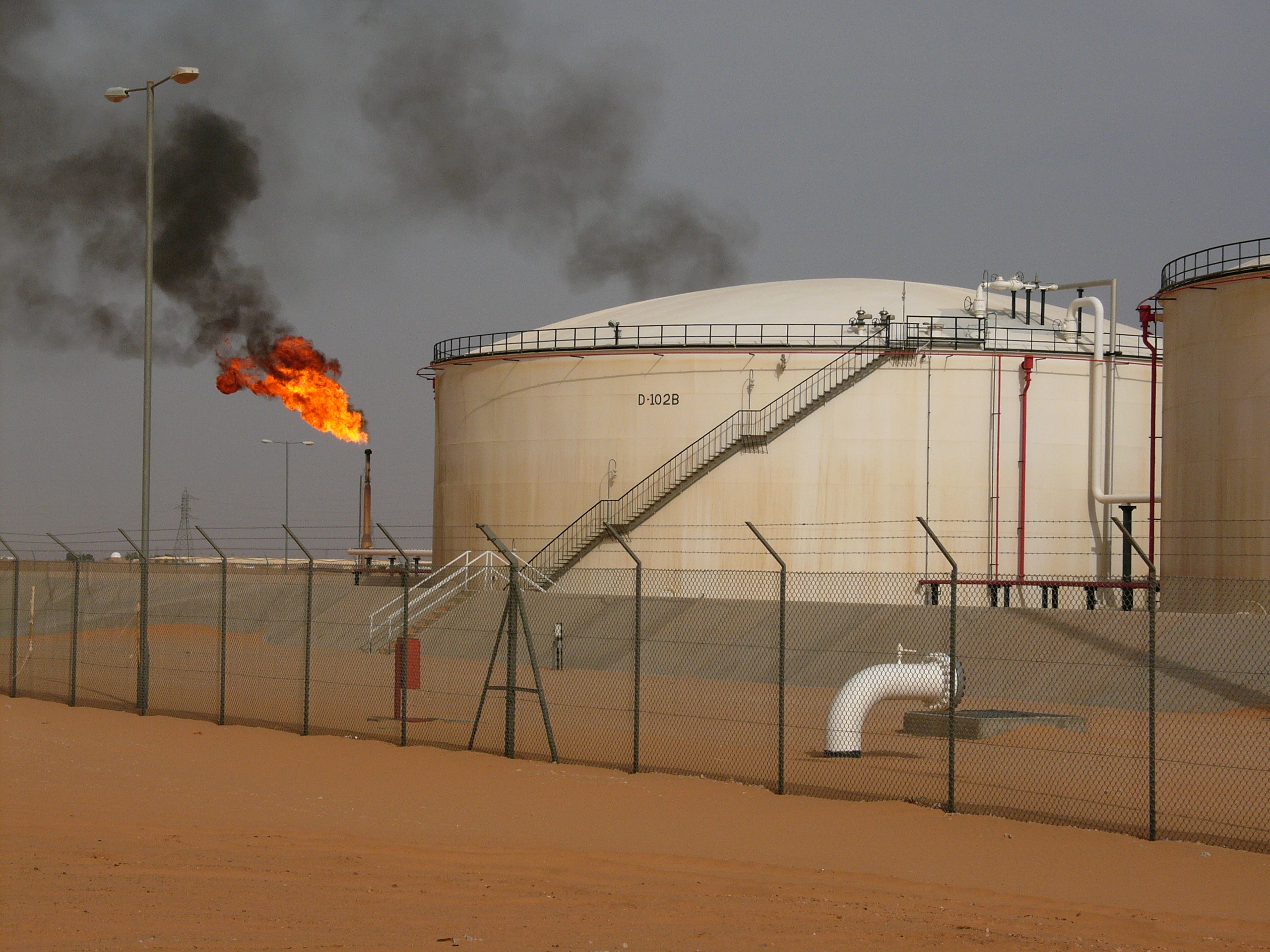
Until now Trump’s direct involvement in Libyan affairs was very limited. The main reason for suddenly pushing the process forward is a calculation: doubling Libya’s daily oil output to 3 million barrels by 2030 would be profitable for US energy companies including ConocoPhillips and Chevron, which have already signed deals over Libyan oil.
In line with Trump’s plan, Libya’s three main political groups signed a power-sharing agreement on 18 June, setting out a roadmap for presidential and parliamentary elections before 17 February 2027. It is the first such agreement in conflict-hit Libya in 18 years. Its framework is based on a $30 billion “unified state budget” adopted last April — the first unified budget drawn up in Libya with US assistance in more than a decade.
Massad Boulos, Trump’s senior adviser on Arab and African affairs and Tiffany’s father-in-law, played the lead role behind the agreement. Before it was signed, a secret meeting was held in Rome in September 2025, and Boulos has been the key figure in the process since. Ordinary Libyans are already sceptical about the deal’s success, because no representatives of civil society, tribal groups, various militias, women or young people were included in the Rome meeting.
Boulos is not a professional diplomat; he is a Lebanese-American businessman. As Libyans put it, his main qualification is that he is Tiffany Trump’s father-in-law. Trump’s interest in Libya is mainly about its oil. His calculation recalls Trump’s old remarks during NATO’s intervention in Libya, when he argued that in exchange for removing Gaddafi, the United States should get half the revenue from Libya’s oil sales.
Libya holds Africa’s largest proven oil reserves. But because of the ongoing conflict and division, this resource cannot be used in a unified way in the national interest. If the national oil company, the National Oil Corporation, could be unified and protected from party or factional interference, daily output could exceed 1.5 million barrels, and state revenue could rise by 20 to 30 percent.
But with a government backed by the warlord General Haftar ruling the east and the Tripoli-based, UN-backed Government of National Unity (GNU) in the west, the oil resource is being shared out and plundered. GNU political analyst Abdullah Izzedine told The New Arab that if the two governments merged, costs would halve and the economy would recover. Analyst Mohammed al-Fitori said: “Libya has become a place where every city has become a separate state.” In his view, a unified constitutional framework is the only path to a national election that would form a legitimate, lasting authority.
The rival eastern and western governments had also agreed to compromise in the national interest to draw up a unified budget. In a military exercise called “Flintlock 2026”, held jointly with US Africa Command in the Libyan city of Sirte, forces of both sides took part under a single command for the first time. But the core problem lies within the framework of the new agreement itself.
At the secret meeting in Rome in September 2025, brokered by Boulos, Khalifa Haftar’s deputy commander and son Saddam Haftar and Ibrahim Dbeibah — nephew and adviser to GNU Prime Minister Abdul Hamid Dbeibah — sat down for face-to-face talks for the first time. The meeting’s proposals called for a new “presidential council” with executive powers led by Saddam Haftar, a unified government led by Dbeibah, and a division of military command between the two families along geographical lines.
The initiative essentially amounts to a power-sharing arrangement among the parties already in strong positions. So even if the deal is implemented, it will not solve Libya’s core problems. Libyan analyst Abdulsalam al-Razhi said the deal is not based on any institutional framework but is instead built around specific individuals.
Hanin Bushushe, a member of a UN-backed “structured dialogue” process on reconciliation and human rights, said any move to unify executive power should not be judged only by the political understanding among powerful groups, but by its impact on ordinary Libyans. “Unification can only be meaningful when it is part of a comprehensive process built on legitimacy, transparency and accountability,” Bushushe told The New Arab. “If it is limited to changing names or redistributing posts without addressing the root causes of the crisis, the problem will remain.”
According to critics, any political settlement made outside the UN-established process would weaken the legitimacy of the UN-led process. The new deal prioritises bargaining among powerful groups over broader national consensus. Russia views the deal with suspicion, seeing the “Boulos initiative” as an attempt to bypass the Berlin process, while Algeria and Tunisia have repeatedly said any solution in Libya must be Libyan-owned and Libyan-led.
The 18 June agreement is the most concrete step towards Libyan unity in recent years: an integrated budget has taken shape, a joint military exercise has been held and an election roadmap exists on paper. But whether these steps last will depend on whether the deal remains merely an understanding between the Haftar and Dbeibah families or whether ordinary Libyans beyond the two families feel it is their own. Since Gaddafi’s ouster and death with direct Western help in 2011, Libya’s history suggests the answer is not easy. Prioritising US oil interests over Libya’s core institutional weaknesses mirrors US conduct in Gaza, Lebanon and Iran, where initial deals collapsed soon after Washington declared success. The same may happen in Libya — and various quarters in the country are already saying loudly that a deal among a few families is no deal for the Libyan people.
বাংলায় মূল প্রতিবেদন পড়ুন · Read the original Bengali report