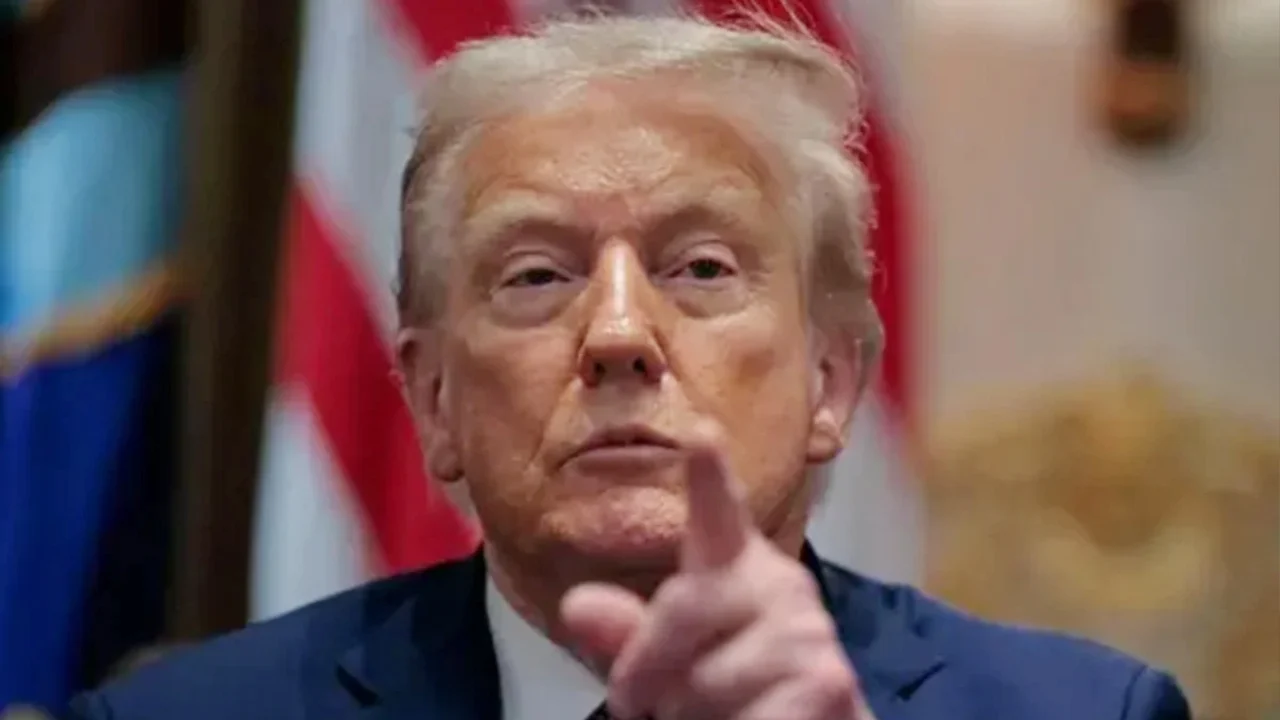
Just as US Vice-President JD Vance was discussing a permanent ceasefire with Tehran, President Donald Trump again made an unwarranted comment, threatening to bomb Iran.
Trump told a Fox News journalist that if the Iranians closed the Strait of Hormuz, the negotiators who had come to talk with Vance would never be able to return to their own country — indeed, that they would have no country left to return to.
Trump’s repeated creation of such obstacles is the latest example of how complex a situation Vance faces as the lead figure in the US-Iran talks.
On Monday, Vance said the first round of talks had created a ‘successful foundation’ for peace. But Vance now has to find a way to end a war he himself initially opposed, while also managing his boss’s caprice and an adversary not at all frightened by Trump’s threats.
At a press conference on Monday, Vance said: ‘Yesterday (Sunday) we told the Iranians that when you say things that the young people of our generation think of as “nonsense,” you cannot expect that the US president will not respond and present the truth. So when they say something false, the president will certainly respond.’
Both sides have signed a memorandum of understanding to end hostilities and are now trying to reach a lasting nuclear agreement within 60 days. But for Vance, the frontrunner for the 2028 Republican nomination, the situation remains politically quite risky.
Last week, Trump said of the peace deal: ‘If it succeeds, I will take the credit. And if it fails, I will blame JD.’ Vance said the president had said it as a joke, but Trump never hesitates to shift blame onto others — and how Vance handles these future talks will determine both the Republicans’ results in the midterm elections and his own future as Trump’s successor.
A senior fellow at the Carnegie Endowment for International Peace, Karim Sadjadpour, said Vance was in a risky position. If he could end an unpopular war, he might earn praise; but it was also possible that he would end up being seen as ‘the chief architect of a humiliating situation for Americans and of a deal handing hundreds of billions of dollars to a sworn enemy of the United States.’
Another factor has made the situation harder still: the US vice-president has had to rely on the cooperation of the commanders of Iran’s Revolutionary Guard (IRGC). ‘For any US politician, especially one who dreams of becoming president, this is not a favourable situation,’ Sadjadpour said.
US citizens are pressing the Trump administration to end the war and reduce energy costs, but Sadjadpour argued that Americans were in fact watching more closely how the war ended. After the withdrawal of US troops from Afghanistan, President Joe Biden’s popularity fell sharply, he noted, because 13 US service members were killed at that time. ‘Americans do not like war. But they dislike defeat even more,’ the researcher said.
Almost as soon as Vance left Switzerland, the outline he had given of a possible long-term deal began to show cracks. The vice-president had said Iran had agreed to invite UN nuclear inspectors into the country, but the Iranians said they had made ‘no new commitment.’
Vance had also spoken about possible financing arrangements for Iran, saying Qatar would release Iran’s frozen funds and that Iran would use the money to buy soybeans, corn and wheat from the United States. A few hours later, Trump repeated this in the Oval Office, saying food for the Iranian people would be bought ‘exclusively through the United States, from our farmers.’ Iranian officials, however, rejected the proposal, having said in the past that the money would be used to rebuild their infrastructure.
বাংলায় মূল প্রতিবেদন পড়ুন · Read the original Bengali report