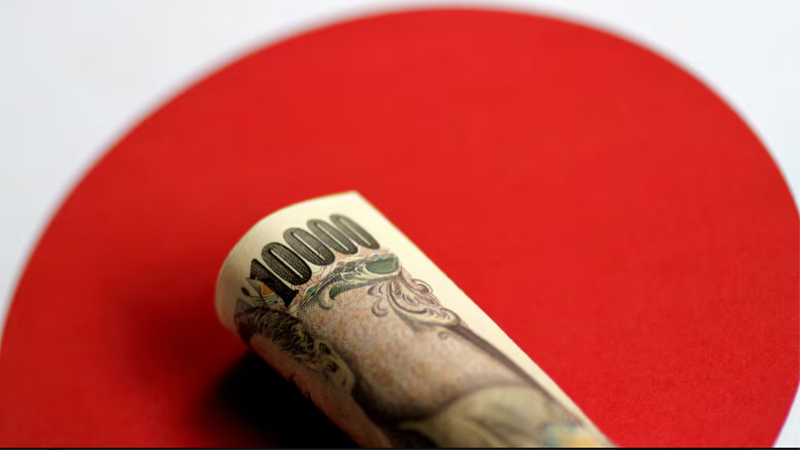
The yen’s exchange rate against the dollar recently fell to its lowest level in 40 years. To pull it back, Japan and the United States jointly intervened in the market to buy yen, and they will not hesitate to take such coordinated steps again if needed, Japan’s finance ministry confirmed, according to Reuters.
Analysts said heavy selling of the yen and Japanese government bonds (JGBs) could have hit global financial markets, particularly risking a further rise in US Treasury yields. The two countries acted together to avoid that, they said.
The two countries had jointly intervened to weaken the yen after the devastating 2011 earthquake in eastern Japan. This was the first time since then that Japan and the United States had intervened together in the foreign-exchange market.
US President Donald Trump said on Sunday that, as a gesture of friendship and to support the global economy, the United States was helping Japan hold up the yen’s value.
Analysts said the United States also had an interest in helping its strategic Asian ally Japan, because excessive weakness in the yen largely offset the impact of Trump’s tariffs.
In a statement, Japan’s finance ministry said the yen had shown excessive volatility and disorderly swings in recent months, and that this had been addressed by buying yen jointly with the US Treasury Department last Friday.
Japanese Finance Minister Satsuki Katayama told reporters: “If necessary, we will again intervene in the market in a coordinated way.”
After the announcement, the exchange rate rose more than 1 percent to 155.20 yen per dollar. That was the yen’s strongest level since early May and a sharp turnaround from the roughly 164 yen — a 40-year low — touched last month.
Katayama declined to say whether the authorities had also intervened on Monday.
Japan’s top currency diplomat, Atsushi Mimura, said: “This joint intervention is an important example of the Japan-US alliance.”
He said the government would maintain close coordination with the Bank of Japan (BOJ) on monetary policy so that the yen’s decline could be kept in check.
US Treasury Secretary Scott Bessent also confirmed Friday’s joint intervention, saying the United States was ready to take part in such joint action again in future if needed.
Those comments have now turned attention to the BOJ. Last week the central bank held interest rates steady but signalled a hike at its September meeting.
Naomi Muguruma, chief bond strategist at Mitsubishi UFJ Morgan Stanley Securities, said the remarks by Mimura and Bessent were a positive signal for supporters of tighter BOJ policy, and that a September rate rise was now much more likely.
On that expectation, the two-year JGB yield rose to 1.545 percent, its highest since 1995.
Japan has long struggled to halt the yen’s slide. A weak yen raises import costs and inflation, adding to pressure on household living costs and on Prime Minister Sanae Takaichi’s popularity.
Although Japan intervened on its own from late April into early May, the effect was short-lived. And though the BOJ set its highest interest rate in 31 years — 1 percent — in June, the yen did not return to lasting strength.
Ahead of Friday’s joint intervention, Japan may have sold about $58.97 billion in the New York market to buy yen, based on Bank of Japan data.
In another sign of Japan-US coordination, Bessent said that in the coming months the United States would, if needed, consider expanding the Federal Reserve’s repo facility, allowing Japan to temporarily obtain dollar liquidity.
That facility, introduced during the Covid-19 pandemic in 2020, lets Japan raise dollar liquidity without selling US Treasury bonds, which can ease funding pressure during market interventions.
Still, many analysts say that although the joint intervention has had an effect, the main reasons for the yen’s weakness remain — including high energy prices due to the Middle East conflict and the large interest-rate gap between the United States and Japan.
Tsuyoshi Ueno, senior economist at NLI Research Institute, said the announcement of a joint intervention had far more impact than a Japan-only move, but that the fundamental reasons for the yen’s weakness had not changed. It would therefore be wrong to expect the yen to keep rising in one direction on the strength of this intervention alone, he said.
বাংলায় মূল প্রতিবেদন পড়ুন · Read the original Bengali report