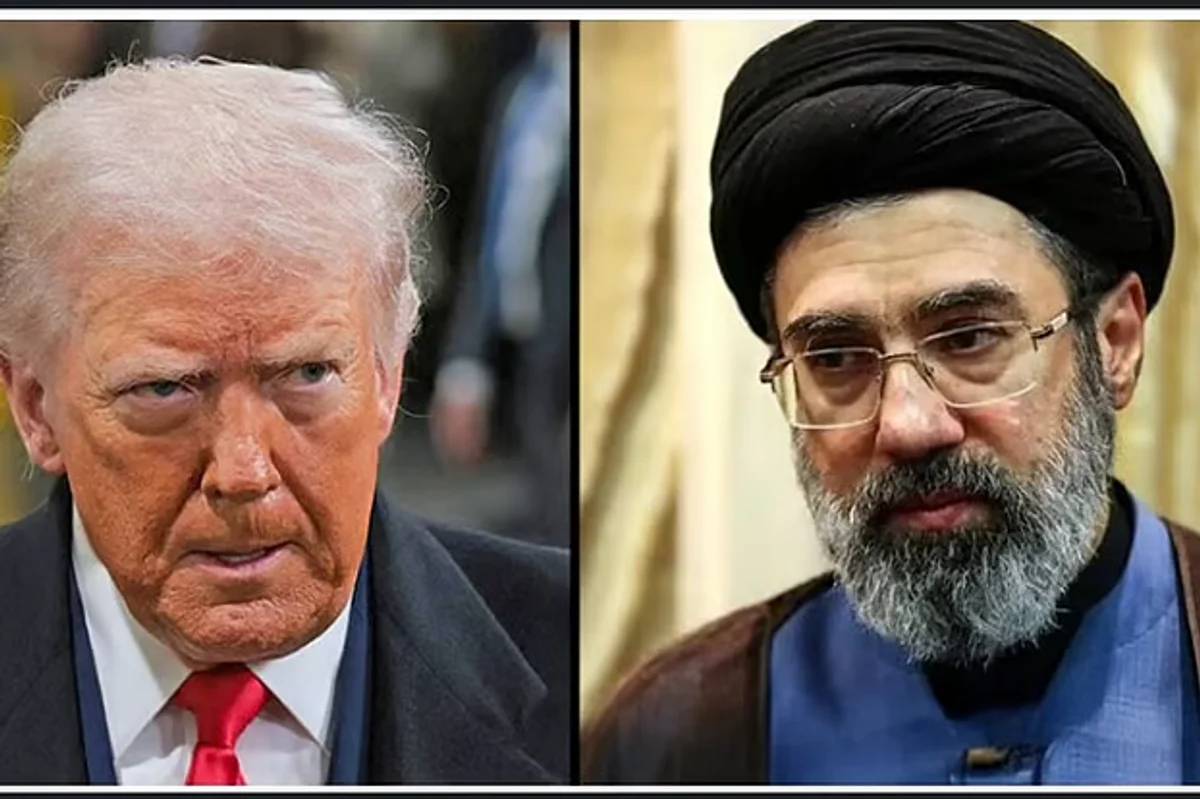
The United States and Iran have signed an agreement extending their ceasefire, and it has taken effect, a White House official said.
President Donald Trump signed the deal during the G7 summit in Evian-les-Bains, France. The agreement is expected to reopen the strategically important Strait of Hormuz.
The 14-point deal is being described primarily as a memorandum of understanding, or MoU. It states that Iran will never acquire nuclear weapons.
It also includes a pledge to set up a $300 billion fund for the country’s “reconstruction and economic development,” although US financing is not mandatory under the terms.
The deal comes four months after the conflict between the United States, Iran and Israel began. The Trump administration has described it as “performance-based” — meaning Iran can enjoy the deal’s benefits only if it carries out its own commitments.
While the agreement leaves many questions unanswered and several important issues unresolved, its main provisions have come to light and are set out below.
Point one: end to fighting on ‘all fronts’
The deal’s first clause says the United States, Iran and their allies, including Lebanon, will declare an immediate and permanent halt to military operations on “all fronts.”
From Washington’s perspective, President Donald Trump had grown increasingly concerned that an Israeli military operation against Lebanon’s Hezbollah could derail the deal struck with Iran.
Tehran, meanwhile, has repeatedly expressed hope that Lebanon would also be covered by the ceasefire.
A spokesman for Iran’s foreign ministry said Wednesday that any continued Israeli military operation in Lebanon would amount to “a violation of this understanding,” and that “necessary measures will be taken” in response.
The deal also states that “from now on” neither side will launch or threaten military operations against the other, and that it will guarantee Lebanon’s “territorial integrity and sovereignty.”
According to the document, the final deal would bring a permanent “end” to the conflict. How Israel will respond to this clause, however, remains unclear.
Point two: mutual respect on ‘internal affairs’
In the deal, read out verbatim to reporters during a telephone briefing with US officials, the United States and Iran say they will “show respect for each other’s sovereignty and territorial integrity” and refrain from interfering in each other’s internal affairs.
This clause could be received negatively by Iran’s dissident groups. Earlier this year, as anti-government protests spread across Iranian cities, President Trump told demonstrators that “help is coming.”
Point three: 60-day deadline
Under the deal’s third clause, the United States and Iran have committed to negotiating and reaching agreement on a final deal within a maximum of 60 days. The deadline can be extended by mutual consent.
The 60-day count began as soon as the two countries’ leaders formally signed the memorandum of understanding.
The White House said President Donald Trump signed the Iran document at a dinner following the G7 summit at the Palace of Versailles in France on Wednesday night.
According to the White House, Iranian President Masoud Pezeshkian also signed it.
Earlier, Trump and Iranian officials had signaled that a formal signing ceremony could take place in Geneva later this week. Whether that will now happen is unclear.
Point four: US to lift blockade
The fourth clause says that after the memorandum is signed, the United States will begin removing the naval blockade imposed on Iran’s ports and “any obstacle or impediment.”
According to the deal and Iran’s foreign ministry, the blockade will be fully lifted within 30 days. During that period, the volume of shipping the United States allows through Iran’s ports will be consistent with Iran’s rate of maritime traffic in the Strait of Hormuz.
Within 30 days of the final deal being signed, the United States has also pledged to withdraw its military forces from “areas close to Iran.”
In practice, this means the country will return to the US military’s positions as they stood before the conflict began on Feb. 28.
Point five: Strait of Hormuz
One section of the deal says that after the memorandum is signed, Iran will make “every effort” to ensure the safe passage of commercial ships through the Strait of Hormuz without any fees.
After the war began, the Strait of Hormuz was closed, causing oil prices to surge sharply on world markets. Reopening the strait was therefore one of the United States’ top objectives.
The document says shipping will begin “immediately,” taking into account the removal of technical and military “impediments” and mine-clearing operations.
In an earlier briefing, officials repeatedly stated that no fees would be charged to ships using the Strait of Hormuz for passage.
In the long term, the document says, Iran will work with Oman and other Gulf countries on a broader framework agreement to manage the Strait of Hormuz.
One US official said Washington believes Iran will try to firmly assert its rights.
Gulf countries, however, would never accept a decision such as keeping a toll or duty system in place for future use of the Strait of Hormuz.
Point six: financing for Iran’s reconstruction
The sixth clause of the memorandum says the United States and regional partners will draw up a “final and mutually agreed plan” for at least $300 billion for Iran’s reconstruction and economic development.
The mechanism for the fund will be determined within 60 days of the final deal, and the United States will provide all necessary licenses, clearances and approvals.
That does not mean the United States will finance it directly.
One official said the United States would not have to give “a single penny” to Iran or to the fund.
As an example, the official said that if Iran “behaves well,” authorities in the United Arab Emirates could build a power plant in Iran with US approval.
Trump and other administration officials have repeatedly stressed that the United States will not pay Iran directly. They argue that the deal is entirely different from Iran’s 2015 nuclear agreement with the Obama administration.
Point seven: end to sanctions
Under the deal, the United States will lift all economic sanctions imposed on Iran. These include sanctions under United Nations Security Council resolutions and those imposed unilaterally by the United States.
The timeline for this process, however, is not yet clear.
The document says a schedule will be set as part of the final deal. Both sides have expressed a wish to treat the issue as an “immediate” priority in subsequent talks.
Iran’s economy has long been damaged by the sanctions. The United States’ “Operation Economic Fury” program also aimed to cut Tehran off, in effect, from the global financial system.
Point eight: pledge not to hold nuclear weapons
Iran has agreed not to acquire or obtain nuclear weapons. Both sides have also agreed to take measures regarding Tehran’s enriched uranium.
The method of handling this material is not yet clear. The document says a process will be agreed “by mutual consent” in subsequent talks. At a minimum, however, it will involve a “downblend” — reducing the grade or intensity of the uranium — under the supervision of the International Atomic Energy Agency, or IAEA.
A senior US official described this as a “minimum standard” and a “big success” for the United States.
Trump said 99 percent of the goal of “Operation Epic Fury,” launched earlier this year, was to keep Iran from acquiring nuclear weapons.
Since the United States has described the deal as performance-based, the lifting of sanctions referred to in the seventh clause will depend on Iran’s compliance with the eighth.
Points nine and ten: ‘status quo’
These two clauses say the United States and Iran will maintain a “status quo” on the nuclear program until the enriched uranium is dealt with at a later stage.
In practice, this means the United States will not impose any new sanctions. At the same time, it will issue waivers or clearances for oil and petroleum product exports and related services, such as banking transactions and transport.
Point eleven: frozen funds
This clause has been seen as a major obstacle in the talks.
Iran has long demanded the return of its frozen assets, which would serve as important economic support for the country.
The eleventh clause of the document says that after the memorandum is signed, the United States will “give full access to use all frozen or blocked funds,” with the process to be determined in subsequent talks.
A US official told reporters that some assets would be released during the post-MoU talks, to encourage Iran to meet conditions such as beginning to manage its highly enriched uranium.
Points twelve to fourteen: monitoring and final talks
The deal’s final clauses describe in detail the framework and process for implementing the agreement.
They say the United States and Iran will set up a “mechanism” to monitor implementation of the MoU and compliance with the terms of any future deal. How this will work in practice, however, is not yet clear.
After the MoU is signed and implementation begins, the two countries will start formal negotiations on a final deal.
Finally, the document says the final deal will be approved through a binding United Nations Security Council resolution.
বাংলায় মূল প্রতিবেদন পড়ুন · Read the original Bengali report