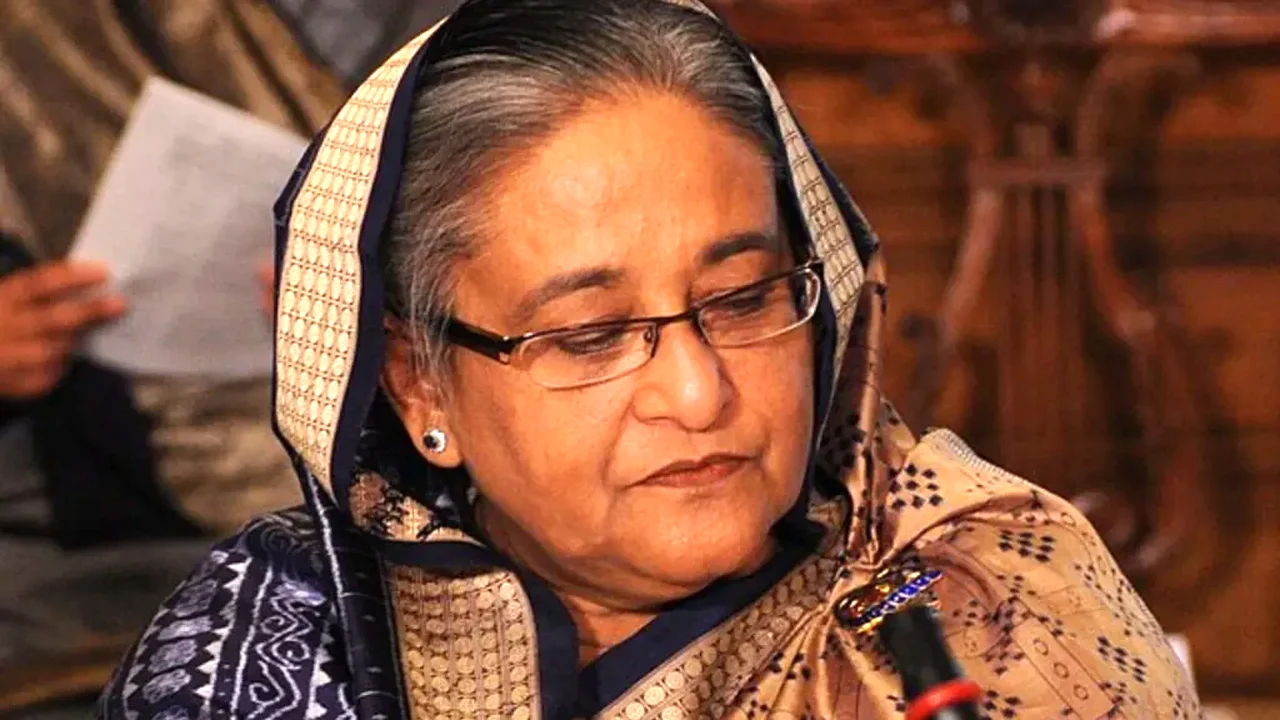
Senior Indian officials have said the final decision on whether to send back deposed former Prime Minister Sheikh Hasina will rest with India’s courts. They also said discussions are ongoing between Dhaka and New Delhi on the matter, with efforts underway to find some movement away from the current firm stance on extradition.
According to a report in The Indian Express, the request Prime Minister Tareque Rahman’s government has made to India for Sheikh Hasina’s return to Bangladesh must go through India’s judicial process.
A senior Indian government official told The Indian Express that the final decision on Sheikh Hasina’s extradition will not be made politically or diplomatically — India’s courts will decide the matter. The court process will primarily examine whether the offenses Bangladesh has alleged against Sheikh Hasina also constitute crimes under Indian law.
Another Indian official said Bangladesh’s request for Sheikh Hasina’s return cannot be viewed separately from the current diplomatic discussions between Dhaka and New Delhi. Talks between the two countries on the matter are ongoing.
India’s foreign ministry spokesperson had earlier said at a press briefing regarding Prime Minister Tareque Rahman’s extradition request that the matter is being examined according to established procedures, and that any new information would be shared.
Officials at India’s foreign ministry told The Indian Express that Bangladesh’s request for Sheikh Hasina’s return was accompanied by the necessary legal documents required under the 2013 extradition treaty between the two countries.
Sheikh Hasina has been residing in India since the mass uprising in Bangladesh in August 2024. The report noted she has spent the past two years under security and shelter at an undisclosed location in New Delhi.
On August 5, Sheikh Hasina stated her firm position on returning to the country at a virtual press conference from New Delhi.
Several current and former Awami League lawmakers claim that despite being in India, Sheikh Hasina remains in contact with party leaders and activists, occasionally holding direct meetings with them. They say the 78-year-old is planning to return to Dhaka later this year.
Bangladesh’s request for Sheikh Hasina’s return is based primarily on the death sentence handed down by the International Crimes Tribunal in November 2025, which found Sheikh Hasina guilty of crimes against humanity.
However, Awami League leaders say that once the legal extradition process begins in India, the verdict will be challenged on various grounds. One of their key arguments will be that the verdict was delivered during Bangladesh’s interim government period, when Muhammad Yunus headed the government.
India and Bangladesh signed an extradition treaty in 2013. The treaty outlines each country’s obligation to return individuals accused or convicted of crimes, or wanted to serve a court-imposed sentence.
However, the treaty also includes a provision barring extradition for offenses considered politically motivated. At the same time, it specifies that 12 categories of crimes — including murder, homicide, assault, use of firearms, and incitement to murder — will not be considered political offenses.
India’s Extradition Act of 1962 also outlines the legal process for returning fugitives hiding abroad.
Under the law, after receiving an extradition request, the relevant authority may examine the matter and assign a magistrate to investigate. If the investigation finds a prima facie basis for the allegations, the magistrate may recommend extradition. Conversely, if there is insufficient preliminary evidence to support the allegations, there is also an option to release the individual.
The Indian Express said that, as a result, Sheikh Hasina’s return to Bangladesh is no longer confined solely to a diplomatic decision between the two governments’ administrations — India’s legal and judicial process will also play an important role in the matter.
বাংলায় মূল প্রতিবেদন পড়ুন · Read the original Bengali report