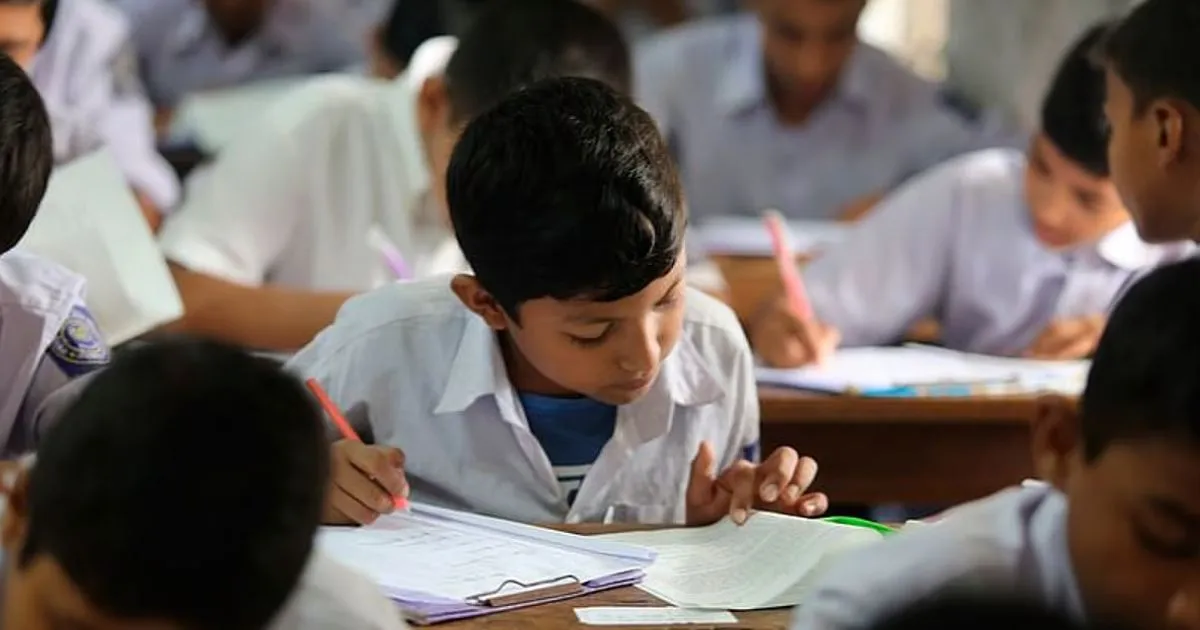
The education systems of the world’s low- and lower-middle-income countries are facing an acute crisis. Although education is one of people’s basic rights, these countries now spend more on servicing the interest on their debt than on education itself, according to a recent report by UNESCO, the UN’s education, science and culture agency.
According to the report, titled “Policy Paper on Restoring Fiscal Space to Save Education,” a vast global population is now at risk of being deprived of the basic right to a quality education. The main reason, it says, is that a large share of government spending in low- and middle-income countries goes on repaying debt, forcing governments to prioritize loan installments over social development. Lower-middle-income countries spend 3.3 times as much on debt repayment as on education, the report says, and in 113 Global South countries – home to about 6.1 billion people – debt-servicing costs now exceed total government spending on education.
Bangladesh, which attained lower-middle-income status in 2015, is now in the process of graduating from least-developed-country (LDC) status to a middle-income country, though the government has formally requested that the graduation be pushed back another three years given the recent situation. Growing pressure to repay external and domestic debt has become a major concern for the country’s macroeconomy, directly affecting allocations to key public sectors such as education. An analysis of the current budget shows that in the 2026-27 fiscal year the government will spend more than three times its education allocation on debt repayment. Education has been allocated Tk 136,606 crore in the current budget, while, according to government estimates, the government will have to spend about Tk 435,000 crore next fiscal year on repaying the principal and interest of past loans, even without any new borrowing.
Professor Dr. Md. Abdus Salam of the Institute of Education and Research at the University of Dhaka said that when a government is busy repaying huge external or domestic debts, other sectors naturally suffer, and in South Asia the effect is most visible in education and health. But cutting the education budget to manage debt was not inevitable, he said; the government could keep education allocations intact by trimming spending in other sectors, because education is a long-term investment that produces a skilled workforce and improves a country’s economic standing. The government now treats education as a priority, he said, and if it wants to ensure sustainable development it must maintain that priority – and keep education out of any spending cuts made to service debt.
According to UNESCO, since 2017 real education spending has fallen by an average of $0.28 for every additional $1 allocated to debt repayment. Because of this, most countries have failed to increase their education spending since 2015, and 137 countries are unable to meet the internationally agreed minimum standards for education financing. As a result, low- and middle-income countries now face a permanent financing gap of $97 billion a year to achieve Sustainable Development Goal 4 (SDG-4) by 2030.
UNESCO says another major driver of the crisis is domestic debt. Although historically only external debt has been discussed, domestic debt has now become even more damaging to education systems, as it usually carries short terms and very high interest rates in developing countries. About 62 percent of total debt repayments are now domestic, and 101 countries spend more than half of their total debt repayments on domestic commercial banks and lenders.
According to the Finance Ministry and Bangladesh Bank, the largest part of Bangladesh’s debt-repayment obligations in 2026-27 will go toward maturing domestic treasury bonds and bills – Tk 164,000 crore, the highest in a single fiscal year in the country’s history – while about Tk 98,000 crore in savings certificates will mature. Beyond that, Tk 127,500 crore has been set aside in next year’s budget for interest payments alone, and the principal on external loans will require about $3.78 billion, or roughly Tk 46,000 crore. All told, the government’s debt repayments next fiscal year come to about Tk 435,000 crore.
বাংলায় মূল প্রতিবেদন পড়ুন · Read the original Bengali report