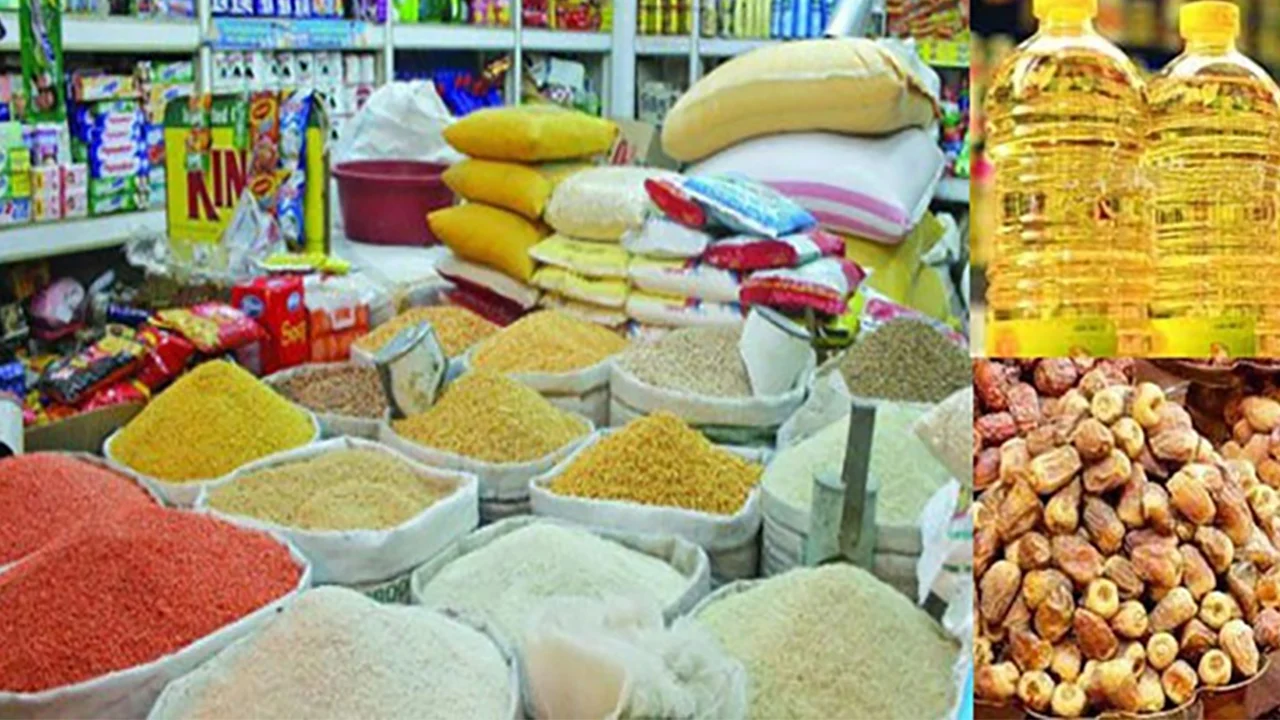
The Commerce Ministry has begun advance preparations to give ordinary people relief ahead of next year’s Ramadan. Demand for daily essentials typically rises above normal levels once Ramadan begins, with six products in particular seeing the highest demand during this period. Each year, a section of unscrupulous traders and syndicates create artificial shortages to drive up prices for these goods, putting extra pressure on those observing the fast. With that in mind, the Commerce Ministry has moved early this time to stay alert. The ministry has taken steps to build up adequate stockpiles of the goods whose demand rises during Ramadan. Alongside this, since a section of syndicates typically becomes active ahead of Ramadan, the ministry has also taken steps to further strengthen market monitoring. Commerce Ministry sources say monitoring will be at its highest level to keep the prices of daily essentials stable ahead of next Ramadan.
Separately, the Trading Corporation of Bangladesh (TCB) wants to purchase 12,500 tonnes of chickpeas and 3,300 tonnes of dates through international tender ahead of next Ramadan. TCB Chairman Brigadier General Mohammad Faisal Azad recently sent a letter on the matter to the commerce secretary.
According to reports, TCB will sell subsidized edible oil, sugar, lentils, chickpeas, and dates to 10 million low-income families ahead of next Ramadan. TCB currently has 7,284,648 active cards. That number is expected to rise in phases to 8.5 million by next Ramadan. TCB will sell one kilogram of chickpeas to these cardholder families, and one kilogram of dates to an estimated 1.3 million active cardholder families across the country’s 13 city corporations. Alongside this, on the commerce minister’s instructions, one kilogram of loose chickpeas and half a kilogram of dates will be sold to 4 million beneficiaries through truck sales.
Ramadan is expected to begin in the first week of February next year.
Experts say that every year, ahead of Ramadan, some unscrupulous traders create artificial shortages that destabilize the market. Even when the country’s stockpiles are adequate, prices begin rising as soon as Ramadan approaches, and consumers bear the brunt. Some token raids are later carried out, but no year has seen strict action taken against the culprits. As a result, this syndicate has continued its wrongdoing unhindered year after year. To prevent a repeat of that pattern this time, experts have called for effective monitoring in advance and exemplary punishment as soon as irregularities are found.
Commerce Secretary Ataur Rahman Khan NDC said advance preparations are under way to ensure there is no supply shortage of Ramadan goods in the country. “We are taking advance preparations so that people can observe their fasts and celebrate Eid in peace next Ramadan,” he said. “We hope there will be no shortage.”
Reports suggest Ramadan is likely to begin on February 7 or 8 next year. According to statistics, the country’s annual demand for edible oil is roughly 2.5 million tonnes, of which roughly 300,000 tonnes is needed during Ramadan; 500,000 tonnes is produced locally. Annual demand for lentils is roughly 700,000 tonnes, of which 80,000 tonnes is needed during Ramadan; roughly 150,000 tonnes is produced locally. Annual sugar demand stands at 2 to 2.1 million tonnes, of which roughly 300,000 tonnes is needed during Ramadan. Annual demand for chickpeas is at most 200,000 tonnes, most of which is needed during Ramadan. Annual demand for dates ranges from 90,000 to 110,000 tonnes, of which 60,000 to 80,000 tonnes is needed during Ramadan.
S M Nazer Hossain, vice president of the Consumers Association of Bangladesh (CAB)’s central committee, said the government would likely repeat its usual assurance this time too: that there will be no shortage of daily essentials during Ramadan. But how much reassurance consumers actually draw from that promise is now the bigger question, he said. If all of the government’s preparations follow the same old pattern as before, he said, field-level officials may well declare that “everything is fine,” even as large corporate groups and importers create artificial shortages to squeeze money from ordinary people’s pockets, while field-level administration and the Commerce Ministry play the role of silent spectators.
He further said: “We at CAB have repeatedly said that strict oversight of imports and demand must be ensured. Any obstruction to the supply of imported and stockpiled goods across the country must be dealt with firmly. At the same time, accurate data on imports, stockpiles, and distribution must be monitored, and demand and supply must be kept under constant watch.”
বাংলায় মূল প্রতিবেদন পড়ুন · Read the original Bengali report