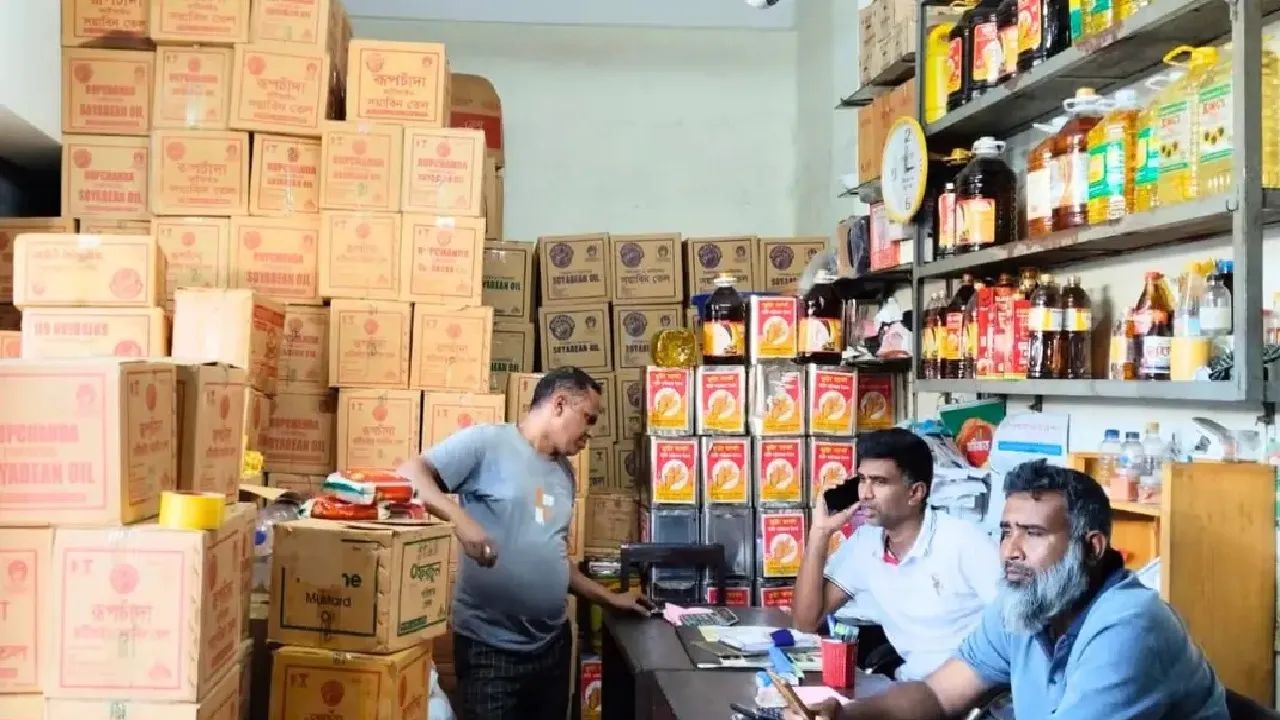
Although prices of palm and soybean oil have fallen in the international market, the effect has not been seen in Chattogram’s Khatunganj wholesale market. Instead, citing a supply shortage, both types of edible oil are being sold at about Tk300 more per maund.
According to World Bank commodity price data, the average price of palm oil in the international market during June-August was $1 thousand 107.33 per ton. During April-June, the average was $1 thousand 128.67.
In other words, on a three-month average, the price fell by $21.34, or 1.9 percent.
The same trend was seen in soybean oil. During April-June, the average price per ton was $1 thousand 721.33. In June-August, it fell to $1 thousand 678.67.
In other words, the average price fell by $42.67, or 2.5 percent.
However, in Khatunganj, soybean oil is currently selling at about Tk7 thousand 500 per maund, or 37.32 kilograms, palm oil at Tk6 thousand 600 and super palm oil at Tk6 thousand 800. One and a half months ago, soybean oil was about Tk7 thousand 200 per maund. That means the price has risen by about Tk300 during this period.
Traders claim the price of palm oil has also risen by about Tk300 per maund during the same period.
Khatunganj trader Shahjalal said oil supply in the market is comparatively low. Although dealers are supplying oil, the amount is lower than demand, so prices have risen.
The effect has also reached the retail market as well as the wholesale market. Currently, loose soybean oil is selling at Tk208 to Tk210 per kilogram, palm oil at Tk175 to Tk180 and super palm oil at Tk190 to Tk195.
About 90 percent of Bangladesh’s edible oil demand is met through imports. As a result, along with international market prices, the dollar exchange rate, freight, port and transport costs, duties and taxes, banking costs, refining and packaging costs affect local market prices.
Khatunganj importer Ala Uddin said that when comparing domestic wholesale prices with the international market, it is not enough to consider only the per-ton price. The full cost structure from import to Khatunganj and the supply situation must also be considered.
According to Chattogram Customs data, 65 thousand 956 tons of edible oil were imported under the relevant HS code from July to September 23. Of this, palm oil accounted for 50 thousand 896 tons and soybean oil 15 thousand 61 tons.
This year, the government has adjusted soybean oil prices in two phases. Most recently, on September 2, the maximum retail price of a one-liter bottle of soybean oil was raised by Tk5 to Tk204 and the price of a five-liter bottle was set at Tk1 thousand.
Consumers Association of Bangladesh, or CAB, central vice president SM Nazer Hossain said Ramadan is ahead. It is necessary to regularly monitor how much benefit consumers are receiving from the fall in international prices. At the same time, the reasons for price increases at wholesale and retail levels should also be kept under watch.
বাংলায় মূল প্রতিবেদন পড়ুন · Read the original Bengali report