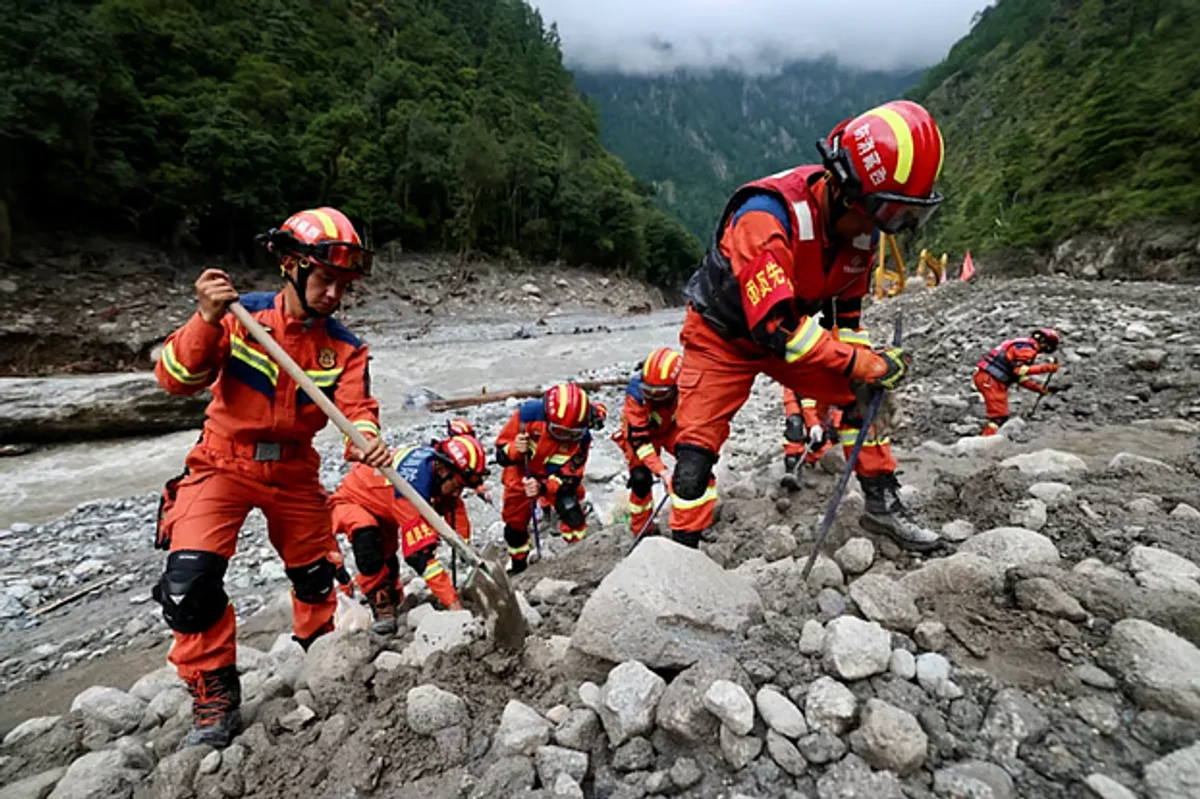
Following the devastating flood at the Nepal-Tibet border, more than a hundred Indian nationals remain missing. They were largely traveling through Nepal toward Tibet to take part in the Kailash-Mansarovar pilgrimage. Thousands of people take part in this annual pilgrimage each year, traveling remote and hazardous routes through the Himalayas.
Mount Kailash in Tibet is considered highly sacred among Hindus, believed to be the abode of the god Shiva. Similarly, Lake Mansarovar is one of the holiest pilgrimage sites for Hindus. Devotees travel there hoping to attain spiritual purity through prayer and religious rituals.
The significance of the Kailash-Mansarovar pilgrimage is not limited to Hindus alone. Kailash and Mansarovar are also important religious sites for Buddhists and Jains. For many, completing this pilgrimage at least once in their lifetime is a long-held spiritual aspiration.
However, the pilgrimage is extremely arduous. To reach Tibet, many Indian pilgrims first enter Nepal, then attempt to travel through Nepal’s mountainous routes into the Chinese-controlled Tibet region. Alongside altitude-related risks, this route is also especially prone to landslides and flash floods during the monsoon season.
Nepal’s Rasuwa area is one of the most important entry points for the Kailash-Mansarovar pilgrimage, the route through which pilgrims cross from Nepal into Tibet. But Wednesday’s devastating flood swept away the Miteri Bridge on the Nepal-China border in the Rasuwa area. Several roads were also damaged.
The flood also disrupted mobile phone and fiber communication networks, making it difficult to determine exactly where the pilgrims are located, to contact them, or to relay information about the situation to their families.
Many pilgrims had been staying in various parts of Nepal awaiting their turn to cross the border. With communications cut off by the flood, their family members and tour organizers have grown anxious. Rescue efforts to locate the missing Indian pilgrims have also become more complicated.
The Kailash-Mansarovar pilgrimage typically requires crossing remote mountain roads, high-altitude regions and border areas. When the Himalayas experience heavy monsoon rainfall, the risk of flash floods and landslides in these areas rises sharply.
In this disaster, a massive surge of water from melting glacial ice and landslides came rushing down into the river valley, destroying bridges and roads and severely disrupting communication with the border area.
As a result, these Indian pilgrims, traveling toward Kailash-Mansarovar to fulfill religious beliefs and long-held aspirations, are now trapped amid a devastating natural disaster. What has happened to many of them remains uncertain. Rescue teams are working to locate the missing.
বাংলায় মূল প্রতিবেদন পড়ুন · Read the original Bengali report