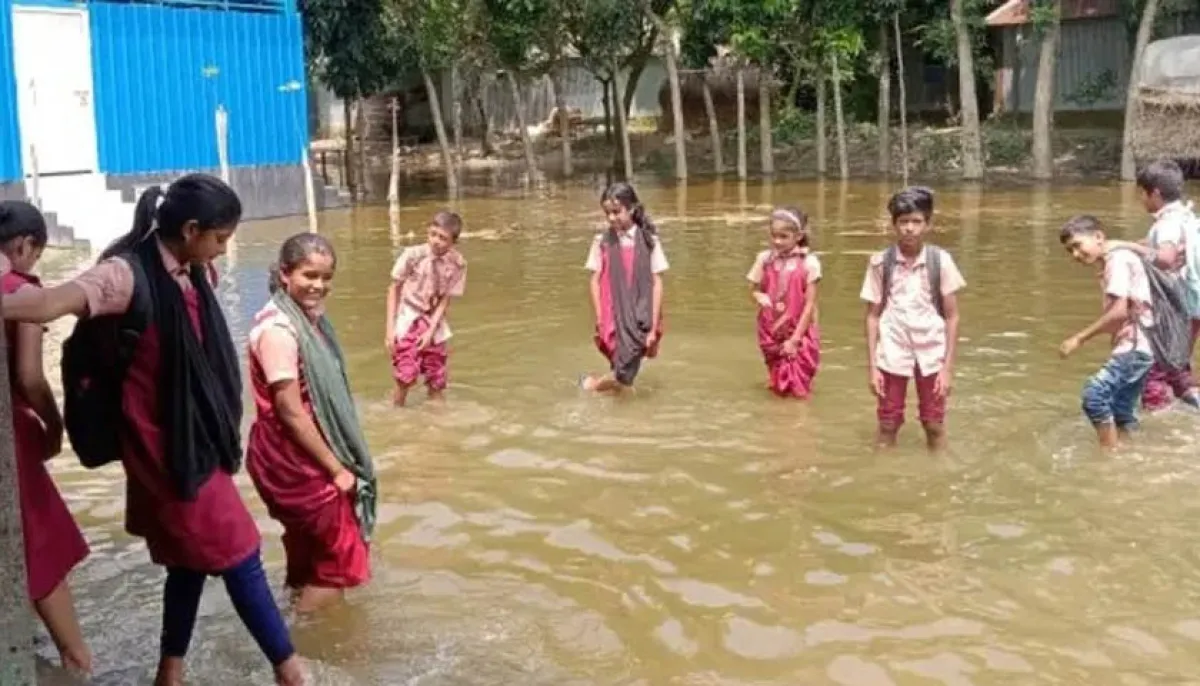
Rapidly rising water in the Padma River has flooded extensive low-lying areas of Daulatpur, Kushtia. Considering the risks to students’ commute and safety, classes have been temporarily suspended at 16 primary and two secondary schools in Chilmari and Ramkrishnapur unions. However, the upazila administration has not made any formal announcement about closing educational institutions.
According to the Water Development Board (WDB), water levels in the Padma have been rising rapidly since September 2 due to floodwaters coming down through the Farakka barrage from upstream. Water has been rising by an average of 10 to 14 centimetres per day. Over the past week, Padma water levels at the Hardinge Bridge point have risen by about 88 centimetres.
By Thursday afternoon, Padma water at the Hardinge Bridge point was flowing at 12.88 metres. The danger level at that point is 13.80 metres, meaning the water remains about 92 centimetres below the danger mark. However, with water levels continuing to rise, concerns have grown that the flood situation in Daulatpur’s low-lying areas could worsen further.
Local residents said most roads and communication routes in Chilmari and Ramkrishnapur unions have gone underwater as a result of the rising water. This has left more than 50,000 people in the two unions nearly cut off from the mainland. Floodwater has entered cropland in the Philipnagar, Moricha, Chilmari and Ramkrishnapur areas, damaging transplanted aman paddy, banana and chilli crops, among others.
According to preliminary estimates from the upazila agriculture department, about 350 hectares of cropland in the low-lying areas have been damaged. With water approaching homesteads, residents of the affected areas are also concerned about possible shortages of livestock safety, cattle feed and safe drinking water.
Sheikh Nurujjaman, president of Chilmari union BNP and a former union parishad member, said: “New areas are being flooded every day. Thousands of people are stranded by water and facing extreme hardship. If the water keeps rising and the flooding continues, there could be a severe shortage of safe drinking water, dry food and cattle feed. Government relief and emergency assistance need to reach flood-affected people quickly.”
Abdul Mannan, chairman of Chilmari union parishad, said the sudden rise in Padma water from upstream floodwaters has inundated all the villages and cropland in the union. With most roads submerged, the communication system is nearly cut off. Ordinary people are living in misery, stranded by water, he said, adding that the upazila administration is being kept regularly informed as the situation is monitored around the clock.
After inspecting the flood-affected area, upazila education officer Mushtaq Ahmed said the rising water has created risks for young students’ commute and safety. Although the upazila administration has not formally announced the closure of educational institutions, students at 18 schools in the flood-affected area are being discouraged from attending classes for now, and classroom teaching has been suspended.
He added that the school buildings will remain open so that people made homeless by the flooding can take safe shelter there.
Upazila agriculture officer Rehena Parvin said about 350 hectares of cropland in low-lying areas have been damaged. Agriculture department officials are working in the field to fully assess the damage. A list of affected farmers will be prepared to provide necessary support and agricultural advice.
Daulatpur Upazila Nirbahi Officer (UNO) Anindya Guha said the administration remains alert in tackling the flood situation and is regularly monitoring conditions in the affected area. Emergency relief operations are being arranged in coordination with public representatives to support and protect people stranded by the water.
The UNO said food items have already been distributed on a limited scale among helpless and distressed families in Chilmari union.