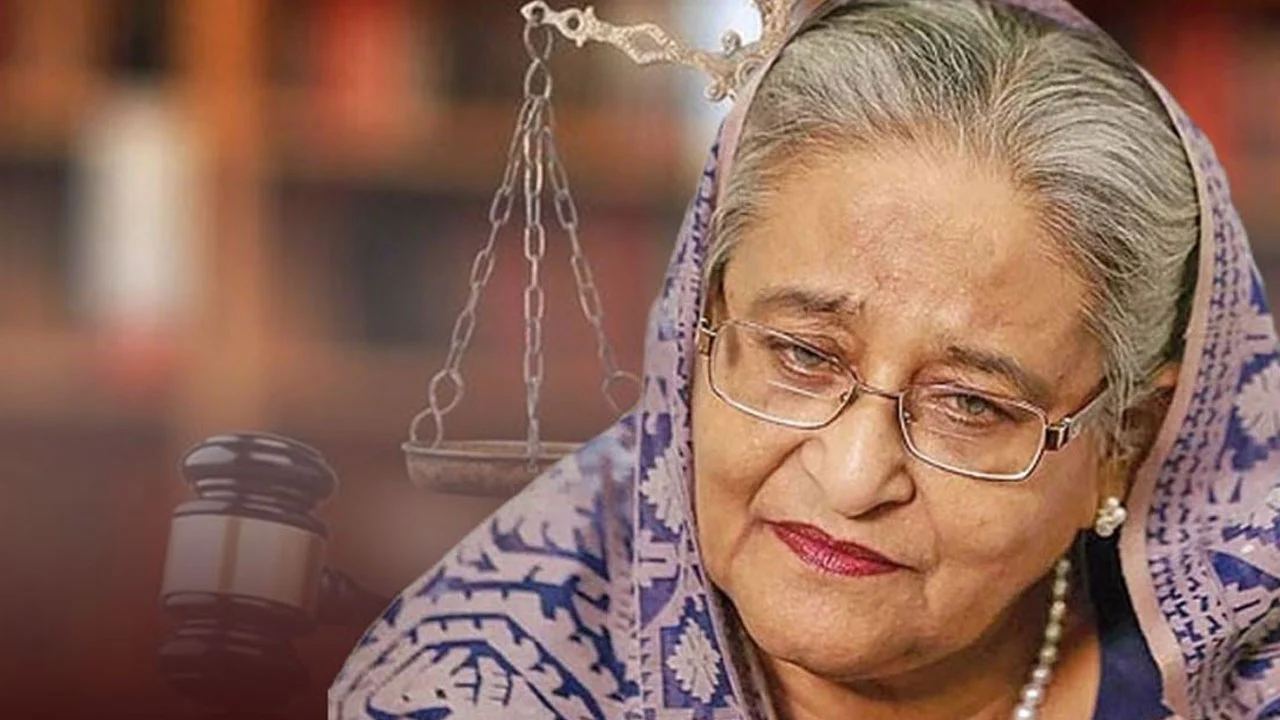
Bangladesh’s foreign ministry has expressed strong anger and deep concern over Sheikh Hasina — a fugitive in India, convicted and sentenced to death for crimes against humanity — being given a live media interaction in New Delhi. In a statement on Wednesday, the ministry said Hasina and her associates had made vitriolic remarks against the Bangladeshi state and people at the event, which was highly condemnable.
The statement said Bangladesh had earlier conveyed its concerns to the Indian government about the event’s likely negative impact. Despite this, such an event had been permitted, which Dhaka had noted with deep regret.
It said that on the very day Bangladesh’s people were remembering the martyrs on the second anniversary of the July revolution, Sheikh Hasina’s such media presence on Indian soil was an affront to Bangladesh’s sovereignty and a grave insult to the martyrs of the July revolution.
The statement further said that, in denying the brutal killings of innocent civilians, including children, in July-August 2024 as established by the United Nations, Sheikh Hasina and her associates were making a failed attempt to reverse the course of history. But the people of Bangladesh had rejected such attempts, as in the past, and would do so in future too.
The foreign ministry said that, upholding the spirit of the July revolution, the people of Bangladesh were firmly committed that the country would never return to the darkness of fascism and would never become a state subordinate to any other. The statement also said the convicted Hasina and her associates had no further place in Bangladesh’s political arena.
On Bangladesh-India relations, the statement said Bangladesh wished to maintain a constructive, mutually beneficial and forward-looking relationship with India on the basis of sovereign equality, mutual respect, non-interference in each other’s internal affairs, and national dignity.
However, it said, no response had yet been received from the Indian government to Bangladesh’s repeated requests to return the convicted Hasina under the 2013 Bangladesh-India extradition treaty. Rather, by giving her the opportunity to speak publicly in the media, New Delhi had hurt the feelings of the Bangladeshi people — damaging to the development of cordial relations between the two countries.
বাংলায় মূল প্রতিবেদন পড়ুন · Read the original Bengali report