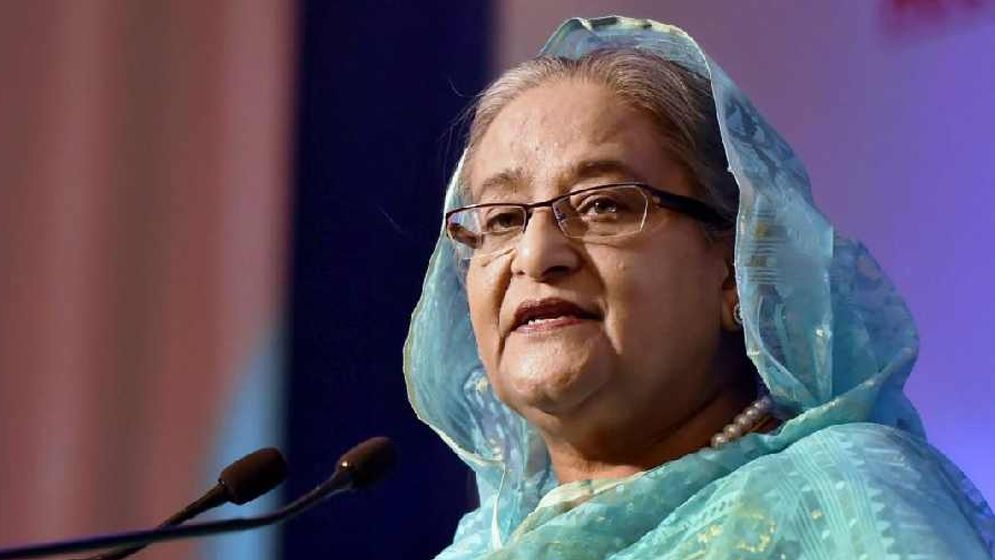
Bangladesh-India relations are once again uneasy over ousted prime minister Sheikh Hasina. Remarks she made in New Delhi last week have created fresh tension between the two countries.
At a press conference, Sheikh Hasina, her son and several Awami League leaders cast doubt on the August 2024 mass uprising — the very uprising in which Hasina and the Awami League were driven from power.
They claimed a students’ movement had been used for their own ends by self-interested political groups, and alleged that Islamist extremists and militants are now able to operate freely in Bangladesh.
As expected, the Bangladesh government led by Prime Minister Tareque Rahman has strongly condemned these remarks. Dhaka has also criticised the Indian government for allowing Sheikh Hasina and her associates to speak in New Delhi.
The Bangladesh government has also called on India to swiftly repatriate Sheikh Hasina, who has been convicted of crimes against humanity in Bangladesh and sentenced to death. The demand for her extradition was reiterated on Monday at Prime Minister Tareque Rahman’s meeting in Dhaka with India’s High Commissioner, Dinesh Tribedi.
The matter has become still more sensitive for New Delhi after Sheikh Hasina hinted at returning to Bangladesh. India now needs to strike a delicate balance in its policy: it cannot abandon an old ally, yet it should not give Sheikh Hasina any kind of veto over Bangladesh-India relations.
That balance will not be easy for India to maintain. But at such a sensitive moment in an important bilateral relationship, more cautious and skilful diplomacy is needed.
Many of Sheikh Hasina’s fiercest critics are, in turn, known for their anti-India positions. They blame India — and its long-standing support for Sheikh Hasina — for much of the wrongdoing and repression committed during her rule.
So many of those loudly demanding Sheikh Hasina’s return see her as close to India, or as India’s “proxy” — something New Delhi is well aware of. India therefore cannot compromise with them, and nor should it assume it can easily turn them into partners in future.
At the same time, there is no scope to damage India’s important relationship with Bangladesh in any way.
Encouragingly, the events of the past few months have shown that there is a way forward. Tareque Rahman’s Bangladesh Nationalist Party (BNP) has created an opening to advance ties afresh, and both governments have since tried to seize it.
But that progress now depends largely on whether Dhaka and New Delhi can step out of Sheikh Hasina’s long shadow and make the bilateral relationship broader and more future-oriented.
If the two countries can move forward in this way, tensions on both sides of the border may also ease. For now, clear positions, restraint and peaceful dialogue are what is most needed to avoid diplomatic complications.
বাংলায় মূল প্রতিবেদন পড়ুন · Read the original Bengali report