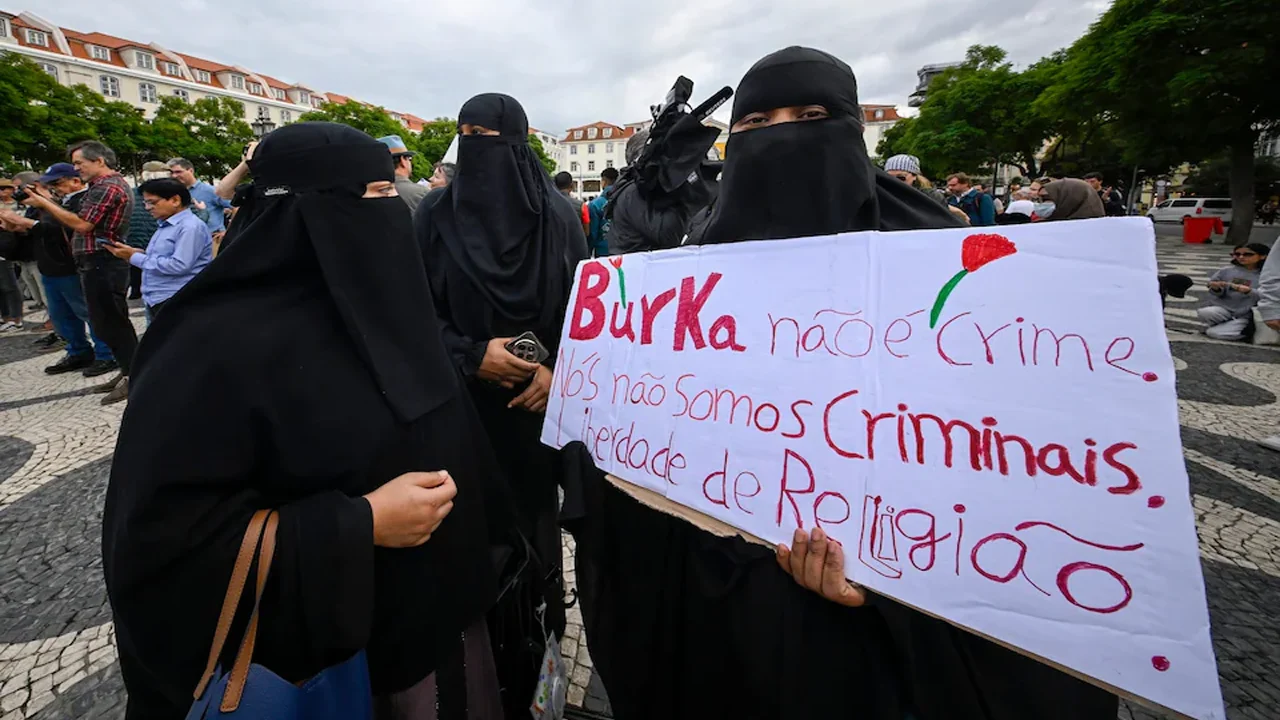
Portugal has imposed a ban on covering the face in public. The new law sets fines ranging from 150 to a maximum of 3,000 euros, depending on the nature of the offense.
The law took effect after President António José Seguro gave his approval. Known locally as the “burqa law,” it bans clothing that covers the entire face or otherwise obstructs identification.
The law includes exemptions for face-covering required for health reasons, professional duties, industrial activities or weather conditions. The ban also does not apply in places of worship, diplomatic missions or aircraft.
The law also bans forcing anyone to cover their face because of their gender, religion, age or ancestry.
Defending the law, President Seguro said the face plays an important role in a person’s identity and in interpersonal communication. In his view, keeping the face uncovered is one of the foundations of building mutual trust in Portuguese society.
Political controversy over the law
The new law has sparked intense political and social controversy in Portugal. The proposal, put forward by the right-wing Chega party, was approved by parliament in July. The ruling right-wing coalition and hard-right parties backed it, while left-wing parties opposed the proposal.
Various lawyers’ organizations have also criticized the law. Groups including the Portuguese Bar Association, the High Council of the Public Prosecutor’s Office and the Portuguese Association of Women Lawyers have raised questions about its legal and constitutional aspects.
Leaders of the center-left Socialist Party, Livre and the Portuguese Communist Party have warned that the law could fuel Islamophobia and discriminatory attitudes. The Socialist Party alleges the proposal’s language carries a risk of Islamophobia and could directly harm certain religious communities.
The Portuguese Communist Party has also said the law has no direct connection to women’s rights or safety, and instead risks creating an opening for greater hostility toward people of different religions and identities.
Livre likewise criticized the right wing’s position, saying the argument of protecting women’s rights is being used to manufacture unfounded panic in Portugal over a supposed “Islamic invasion.”
Portugal’s move follows a broader pattern among several European countries of restricting or banning face-covering clothing in public. France, Belgium, Bulgaria, Austria, Luxembourg, Denmark and the Netherlands have previously imposed various bans or restrictions on face-covering garments.
বাংলায় মূল প্রতিবেদন পড়ুন · Read the original Bengali report