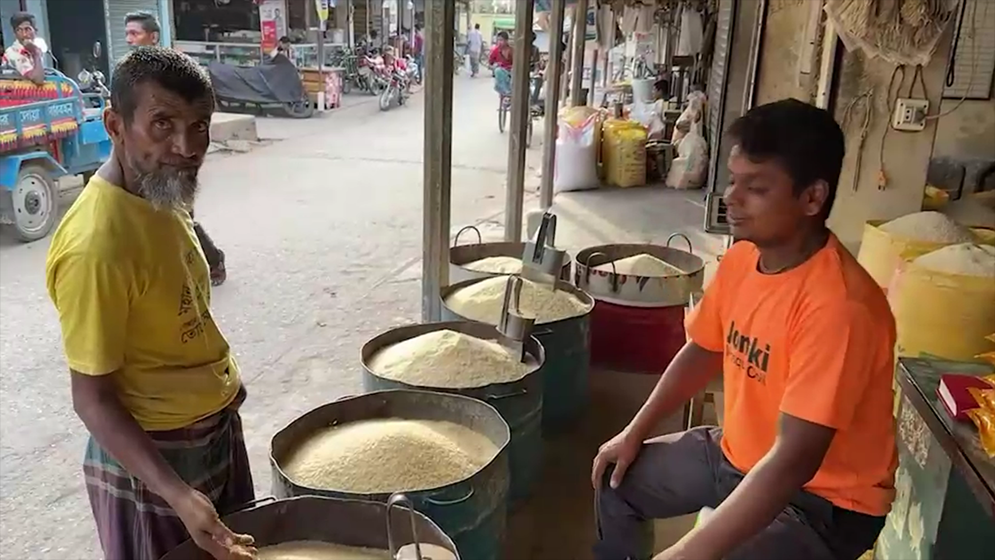
A frightening picture of the well-organized, grotesque deception that has gone on for years in this country over rice — our staple food — has been laid bare in Jugantor’s Saturday investigative report. From agricultural scientists to policymakers, all acknowledge in one voice that there is no paddy variety called “minicket” in the country, and no official recognition of it. Yet, as if by some strange illusion, this so-called fine rice has for years been sold with impunity in every market, big and small, across the country. It emerges that a class of dishonest millers buys coarse and medium paddy varieties — mainly Swarna, Paijam and BR-28 — cheaply from farmers and stockpiles them. In modern automatic rice mills, these grains are then over-milled, abraded and artificially polished with chemicals to give them a glossy, slender shape, rebranded as minicket. Through this trickery, not only is roughly 4,500 crore taka (about 45 billion) a year looted from consumers’ pockets, but the entire nation is being pushed toward a long-term health risk that can in no way be accepted. According to nutritionists, over-milling and polishing completely destroy the rice’s natural and essential nutrients — such as vitamins B1 and B6, iron and fibre. Eating this over-refined rice raises blood-sugar levels rapidly, fuelling a rise in serious non-communicable diseases such as diabetes, obesity and heart disease. Notably, a specific law was enacted in 2023 to curb this deception, providing for stern penalties — up to two years’ imprisonment and fines of up to 10 lakh taka (1 million) — for printing unscientific or fictitious names on rice sacks. Regrettably, thanks to lax monitoring agencies and a lack of regular market oversight, dishonest traders openly carry on their brisk trade in this banned rice.
To protect ordinary people from this anti-public food fraud, the government must take stern, practical steps at once. To ensure full enforcement of the 2023 law, coordinated nationwide comb-out drives must be run to bring the culprits to justice. At the same time, it must be made mandatory to print the real paddy variety and the milling date on rice sacks from the mill stage onward, and any sack found using the word “minicket” must be seized. Consumers, too, must be made more aware. The government should, where necessary, run media campaigns to spread the message that outwardly beautiful, glossy white rice is not nutritious — that it is a kind of poison — and to educate people about the nutritional value of coarse and red rice. We hope policymakers will break the millers’ syndicate to end this looting of 4,500 crore taka and this health-destroying trade. Our expectation is that the government will take effective steps to secure the people’s right to food security and nutrition.
বাংলায় মূল প্রতিবেদন পড়ুন · Read the original Bengali report